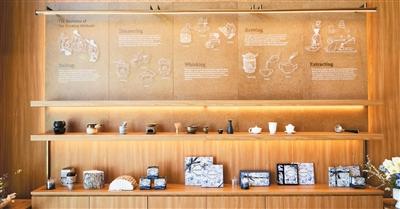
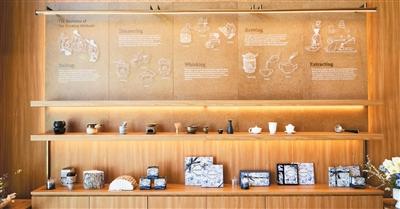
Photos show tea-drinking culture and tea ware on display at the first North American store of Chinese new-style tea brand Chagee. (Photo courtesy of interviewee)
This year marks a significant moment for Chinese new-style tea brands as they expand their footprints internationally. With the opening of new stores across various regions, these brands aim to introduce their unique offerings to a global audience, highlighting their innovative approach to traditional tea culture.
Rapid Expansion of Chinese New-Style Tea Brands
China’s new-style tea brands are accelerating their overseas expansion this year. Naisnow inaugurated its first store in Silicon Valley on January 30, making its debut in the western U.S. Shortly after, Heytea launched its first Canadian store in Toronto on February 16, followed by Mixue, which opened its first South American location in São Paulo, Brazil, on April 11.
According to the China Chain Store and Franchise Association (CCFA), “new-style tea” refers to freshly prepared beverages made with raw tea leaves or tea infusions blended with fresh fruits, vegetable juices, dairy products, or other ingredients, excluding instant powdered drinks.
In April, the CCFA published a list of the top 50 Chinese restaurants and new-style tea brands making strides in global markets. Mixue operates over 4,000 stores abroad, while Chagee has more than 200 international locations. Other brands like Heytea, ChaPanda, Naisnow, Chahalo, and Molly Tea are also establishing their presence outside China, as evidenced by long lines outside many of their outlets.
New Heights in International Demand
Upon its opening, Naisnow’s Silicon Valley store attracted significant attention, with customers lining up for over three hours. Within its first three days, the store generated over $94,000 in revenue.
Premium tea quality is a major factor driving the international appeal of Chinese new-style tea brands. For example, Molly Tea emphasizes that its drinks are crafted with jasmine flowers from Hengzhou city and premium tea leaves from Ya’an city, which are processed using advanced techniques to achieve remarkable flavors.

Customers enjoy afternoon tea and snap photos inside Chinese new-style tea brand Naisnow’s Silicon Valley store. (Photo courtesy of interviewee)
Commitment to Quality
To ensure product quality, brands like Mixue and Guming Holdings have established direct-sourcing operations and proprietary growing systems in key tea-producing regions. This strategy allows them to maintain control over the process from cultivation to retail.
Chinese new-style tea brands are also captivating international consumers with their packaging and store designs that merge traditional Chinese tea culture with modern aesthetics, creating an appealing fusion.
Chagee, for example, incorporates historical references in its drink names, transforming each beverage into a cultural statement. Its Boya Jasmine Green Milk Tea, popular among Thai students, honors the ancient Chinese myth of Bo Ya and Ziqi, symbolizing profound friendship.
“At first, we just loved the refreshing taste,” shared one student. “But once we learned the story behind it, ordering the tea with friends took on a whole new significance. Many people have started to appreciate Chinese tea culture because of it.”
Interactive Tea Experience
At Heytea’s Toronto location, a specialized tea lab allows customers to observe the complete process of tea preparation — from selecting tea varieties and brewing equipment to flavor testing and final preparation, enhancing the overall experience as they wait for their orders.
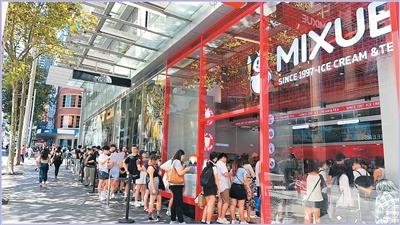
Customers line up outside a store of Chinese new-style tea brand Mixue in Australia. (Photo courtesy of interviewee)
Cultural Influence and Localization
Experts point out that these new-style tea brands are creating environments where social interaction and consumption harmonize, fostering a sense of cultural identity. The concept of “Becoming Chinese” is trending on social media worldwide, with drinking Chinese new-style tea emerging as a new way for young consumers globally to connect with Chinese heritage.
As they make inroads into international markets, Chinese new-style tea brands are also adapting their offerings to suit local tastes. Understanding local consumer preferences is essential for their success.
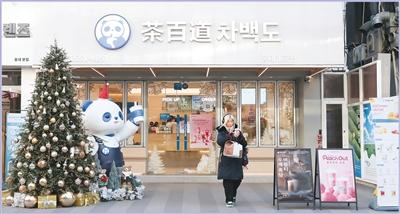
Photo shows a store of Chinese new-style tea brand ChaPanda in Seoul, South Korea. (Xinhua/Yao Qilin)
Industry insiders note that China’s tea sector has achieved a world-leading level in supply chain integration, product innovation, and digital operations. With a focus on quality and culture, China’s new-style tea brands are successfully merging age-old traditions with modern consumer expectations, propelling their growth into global markets.
Key Takeaways
- Chinese new-style tea brands are expanding rapidly across international markets.
- Premium quality and traditional sourcing practices are key to their global appeal.
- These brands incorporate cultural storytelling into their products, enhancing consumer connections.
- Interactive experiences are becoming essential in tea shops to engage customers.
- Localization strategies are critical for successfully catering to international tastes.
FAQ
What distinguishes new-style tea from traditional tea?
New-style tea is characterized by freshly prepared beverages made from raw tea leaves or tea infusions, often combined with fruits or other ingredients, rather than using instant powdered mixes.
How are these brands ensuring quality in their products?
Brands like Mixue and Guming Holdings maintain quality by establishing direct-sourcing bases and proprietary growing systems in key tea-producing regions.
Why are these tea brands popular among younger consumers?
These brands resonate with younger consumers due to their blend of traditional tea culture with modern aesthetics and interactive experiences, which appeal to social media-savvy audiences.
How do these brands adapt to local markets?
Chinese new-style tea brands often conduct extensive research into local consumer preferences to tailor their offerings, ensuring they resonate with the tastes and interests of the local population.
(Web editor: Hongyu, Liang Jun)