Artificial intelligence tools present a significant opportunity to enhance cyber-security defenses, provided they are properly secured, according to the UK’s leading cyber official.
The emergence of AI systems like Claude Mythos has captured global attention after its developer, Anthropic, disclosed that it possesses exceptional hacking capabilities.
In response, Anthropic is limiting access to this model to assist governments and major corporations, such as banks, in fortifying their systems as the cyber-security community prepares for its broader release.
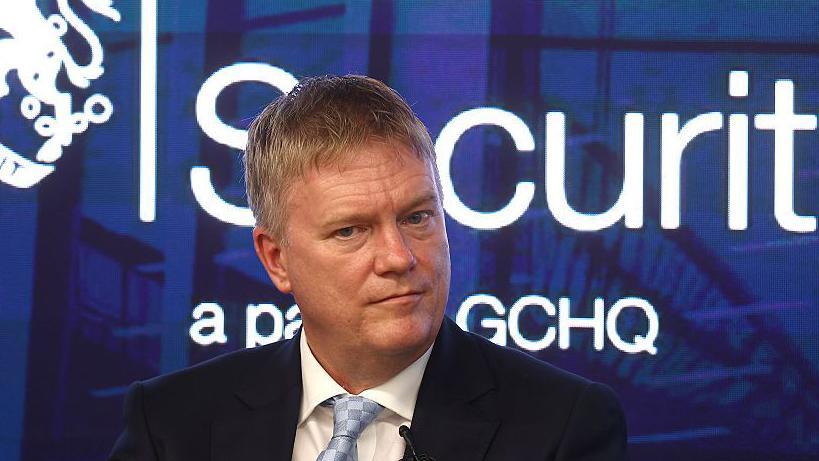
Richard Horne, head of the National Cyber Security Centre (NCSC), asserts that sophisticated AI technologies can be a beneficial addition to public cyber-security if safeguards against misuse are implemented.
This announcement coincides with the UK’s security minister urging AI developers to “collaborate with the government on national cyber-defense initiatives.”
While Anthropic has not yet announced the release date for its newest model, Mythos, the company has raised concerns by claiming that the bot is an adept hacker, possibly outperforming human experts.
There are apprehensions that if Mythos falls into the wrong hands or operates uncontrollably, it could result in significant data breaches or disruptive cyber-attacks.
During his speech at the NCSC’s annual CyberUK conference, Horne will present a more optimistic perspective, arguing that AI tools could enhance security measures.
He emphasizes that businesses and organizations should not fear new AI-related threats, but rather concentrate on ensuring they are effectively addressing fundamental cyber-security practices.
“As highlighted in recent media, advanced AI is quickly facilitating the discovery and exploitation of existing vulnerabilities on a large scale, underscoring the need to address basic cyber-security fundamentals,” he is expected to state.
Horne’s warnings are similar to messages delivered in recent years, which emphasize the urgency of updating system software and replacing outdated IT infrastructure.
He also calls on AI developers to secure their models by adhering to newly established European safety regulations.
At the same CyberUK event, Security Minister Dan Jarvis will urge AI firms to partner with the government in this “generational endeavour” to ensure AI is utilized to defend critical networks from cyber threats.
Most powerful and advanced AI models, referred to as frontier AI, are currently developed outside the UK, predominantly by leading companies in the US and China.
This situation means that the UK depends on organizations like Anthropic for access to Mythos and lacks control over the design, training, or deployment of these technologies.
OpenAI has also introduced a cyber-security model, named GPT 5.4 Cyber, which it claims is highly capable.
During the CyberUK conference, speakers will reiterate the persistent threat posed by nation-state actors and hacktivists, especially from countries like Russia and China.
The NCSC warns that cyber warfare now represents “the home front” of defense in the UK, with recent incidents, such as attacks attributed to Iran, illustrating the critical role of cyber capabilities in modern conflicts.

[BBC]
Sign up for our Tech Decoded newsletter to keep up with the biggest tech stories and trends. Outside the UK? Sign up here.