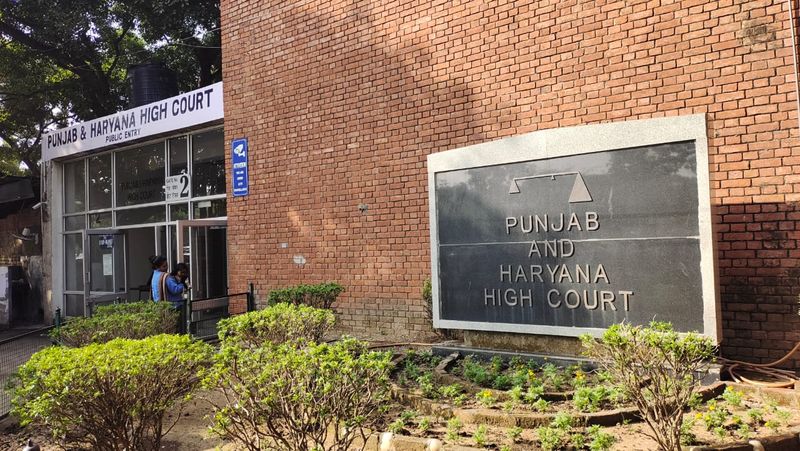
The Punjab and Haryana High Court has issued a directive to judicial officers, prohibiting the use of Artificial Intelligence (AI) tools such as ChatGPT, Gemini, Microsoft Copilot, and Meta AI for drafting judgments and conducting legal research. The court cautioned that any non-compliance with this instruction will be taken very seriously.
The decision, which will be communicated to district and sessions judges across Punjab, Haryana, and the Union Territory, emphasizes the Chief Justice’s directive that clearly states: “Hon’ble the Chief Justice has directed you to instruct the Judicial Officers working under your authority not to employ AI tools, including but not limited to ChatGPT, Gemini, Copilot, and Meta, for the writing of judgments and legal research. Any breach of these guidelines will be treated seriously.”
This ruling positions the Punjab and Haryana High Court as the second court to restrict AI use following the Gujarat High Court’s earlier decision on April 4. The Gujarat High Court established a comprehensive framework that delineates AI’s limitations in legal adjudication, allowing only its use for supportive tasks.
Specifically, the Gujarat court prohibited AI from being involved in any decision-making processes, judicial reasoning, drafting orders, preparing judgments, or considerations related to bail sentencing, effectively safeguarding the integrity of the legal process.
According to its policy, AI should serve to enhance the speed and quality of justice delivery without encroaching upon the essential aspects of judicial reasoning.
This directive from the Punjab and Haryana High Court emerged shortly after a judicial advisory underscored the risks of hastily integrating AI into the legal system. During the recent North Zone-I Regional Conference on “Advancing Rule of Law through Technology: Challenges & Opportunities,” Justice Ashwani Kumar Mishra expressed strong reservations about the early adoption of AI in judicial decision-making, cautioning against systemic risks if executed without a solid legislative and institutional framework.
Justice Mishra emphasized that direct application of AI in adjudication raises significant concerns, particularly as lower courts often follow precedential cues set by higher courts. “We must proceed with extreme caution… When we endorse a specific viewpoint, the lower judiciary tends to follow suit. This could lead to serious complications,” he remarked.
Furthermore, Justice Mishra highlighted that the current legal environment is not adequately prepared for AI’s involvement in essential judicial functions. “Once we introduce it into the judicial process itself, we risk entering a very serious situation—a crisis of sorts,” he stated.
The administrative instruction reflects these concerns, advocating for a measured approach where technological assistance can be recognized, but the fundamental process of judicial decision-making remains protected from unregulated AI use.