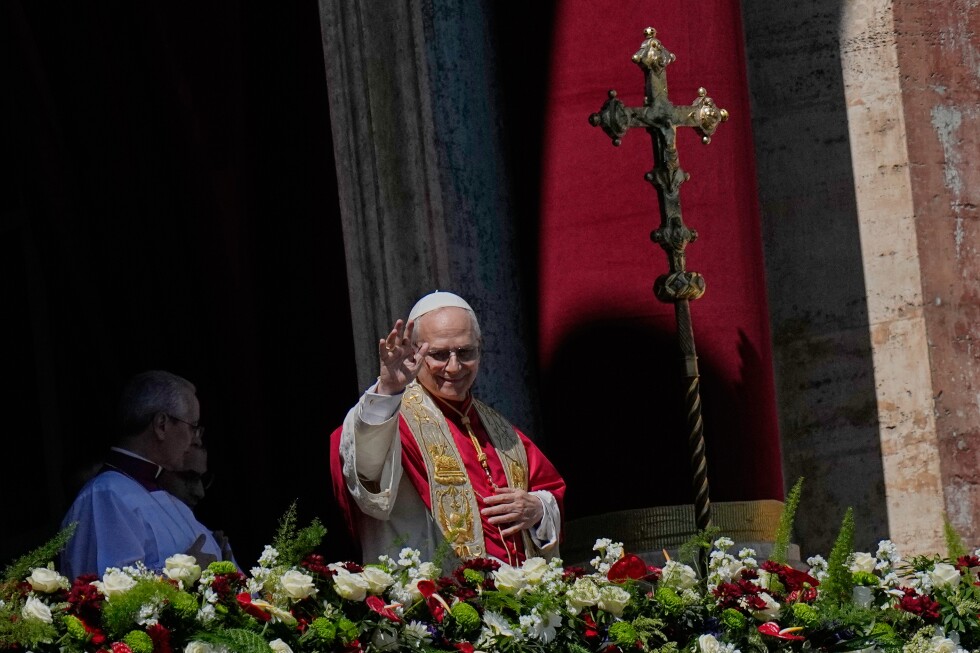
The recent Easter Mass celebrated by Pope Leo XIV marked a new chapter for the pontiff. He urged for an end to global conflicts through dialogue—a departure from the usual tradition of enumerating the world’s troubles during the Urbi et Orbi blessing from St. Peter’s Basilica loggia.
As the first U.S.-born pope, Leo highlighted Easter’s message of hope, celebrating the resurrection of Jesus.
“Let us allow our hearts to be transformed by his immense love for us! Let those who have weapons lay them down! Let those who have the power to unleash wars choose peace! Not a peace imposed by force, but through dialogue! Not with the desire to dominate others, but to encounter them!” the pope implored.
In light of the ongoing conflicts, including the U.S.-Israeli war with Iran and Russia’s campaign in Ukraine, Leo recognized a disconcerting indifference toward the significant loss of life and the societal repercussions of such violence.
While refraining from naming specific conflicts, Leo echoed his predecessor, Pope Francis, who had remarked on the alarming daily occurrences of violence and death.
Francis passed away the following day on Easter Monday, after a long illness.
The Urbi et Orbi blessing, which means “to the city and the world,” has traditionally included a list of global issues. However, Leo adhered to this tradition during his Christmas blessing—this departure remains unexplained.
Earlier in the day, Leo addressed approximately 50,000 attendees from an altar adorned with white roses in St. Peter’s Square, where spring flowers filled the steps leading to the piazza, echoing the themes of renewal in his message.
He encouraged the congregation to maintain hope, even in the face of challenges that arise from social injustices, environmental degradation, and the horrors of war.
From the loggia, the pope also announced a prayer vigil for peace scheduled for April 11 in the basilica.
Small Shifts in Traditions
In a revival of tradition, Leo greeted people in 10 different languages, including Arabic, Chinese, and Latin—something his predecessor had not continued.
Before retreating inside, Leo stepped into full view and waved to the enthusiastic crowd below. He later greeted attendees in the piazza from the popemobile, traversing Via della Conciliazione toward the Tiber River and back.
Throughout Holy Week, he also reinstated the practice of washing priests’ feet on Holy Thursday, a gesture of support toward the clergy, as opposed to Francis’s more inclusive approach of washing the feet of women, non-Christians, and prisoners.
At 70, Leo distinguished himself as the first pope in decades to carry a light wooden cross throughout all 14 stations during the Way of the Cross on Good Friday.
Christians in the Holy Land Mark a Subdued Easter
In the Church of the Holy Sepulchre, a site deeply revered by Christians as the location of Jesus’ crucifixion and resurrection, ceremonies were toned down following an agreement with Israeli police. Restrictions on public gatherings were enacted due to ongoing missile attacks.
These limitations have also affected recent Muslim celebrations during Ramadan and Eid al-Fitr, along with current Jewish observances of Passover. On Sunday, the typically large Jewish priestly blessing at the Western Wall was restricted to just 50 attendees.
This situation has strained the relationship between Israeli officials and Christian leaders, as authorities prevented two senior church officials, including Latin Patriarch Pierbattista Pizzaballa, from celebrating Palm Sunday at the Church of the Holy Sepulchre.
Gaza’s Tiny Palestinian Christian Community Celebrates First Easter Since Ceasefire
At the Holy Family Church in Gaza City, Catholics of all ages gathered for festive Easter Mass. As they sang, congregants formed a line to kiss a representation of Jesus held by clergy, who carefully cleaned the glass frame between each turn.
“There is great joy, especially after the ceasefire and after nearly three years of suffering and being unable to celebrate all the holy holidays,” shared George Anton from Gaza City. “People feel somewhat relieved and more stable.”
Armenian Christians Aim for Normalcy by Celebrating in Iran
In Iran’s capital, Armenian Christians observed Easter at a local church, working to maintain a sense of normalcy amid ongoing conflict.
Families embraced, and children exchanged decorated eggs at St. Sarkis Cathedral, despite Tehran experiencing daily airstrikes since the war’s escalation on February 28.
“Whether we like it or not, we have young children who do not understand what’s going on,” noted Juanita Arakel, an English teacher. “They just need to feel normal.”
With a population of about 90 million, Iran is home to around 300,000 Christians, predominantly Armenians, three of whom have reserved seats in parliament.
“Our calls and prayers are that we will be able to end this war,” added Sepuh Sargsyan, the archbishop of the Armenian Diocese of Tehran.
Key Takeaways
- Pope Leo XIV’s first Easter Mass emphasized peace through dialogue rather than violence.
- He acknowledged the indifference toward global conflicts and the resulting tragedies.
- The pope revived traditions such as greeting in multiple languages and washing priests’ feet.
- In the Holy Land, Easter celebrations were subdued due to public gathering restrictions.
- Palestinian Christians in Gaza celebrated their first Easter since a ceasefire.
- Armenian Christians in Iran sought normalcy amid ongoing war through their Easter celebrations.
FAQ
What does Urbi et Orbi mean?
Urbi et Orbi translates to “to the city and the world,” referring to the pope’s blessings bestowed from St. Peter’s Basilica.
Why did Pope Leo XIV change the Urbi et Orbi message?
While there was no official explanation, this shift reflects his focus on promoting peace and dialogue rather than listing global woes.
How did Pope Leo XIV address the faithful during Easter?
He spoke to approximately 50,000 attendees in St. Peter’s Square and revived the tradition of greeting in multiple languages.
What are the implications of the gathering restrictions?
The restrictions have impacted various religious observances, including Christian, Muslim, and Jewish celebrations, creating tension between Israeli authorities and religious leaders.
In conclusion, the Easter celebrations this year carried themes of hope and dialogue amidst ongoing global challenges. Pope Leo XIV’s approach signifies a desire for peace, inviting followers to take action toward a more harmonious world.