

In a puzzling contradiction, many people enjoy warm sun on their skin yet still receive low Vitamin D readings in routine tests. This discrepancy raises questions about why, despite adequate sunlight, deficiencies persist. Understanding the underlying factors that affect Vitamin D production and absorption is crucial, especially in a sunny country like India.
So what is going wrong?
When sunlight isn’t truly effective
Dr. Chirag Tandon explains, “Vitamin D production only occurs when skin is directly exposed to sunlight, specifically between 10 am and 3 pm.” This statement highlights a critical issue. Many individuals venture outdoors earlier or later in the day, mistakenly thinking they are getting sufficient sunlight. However, UVB rays—which are vital for Vitamin D synthesis—are strongest during midday.
Further complicating the situation are hidden barriers. For instance, sitting by a sunny window doesn’t count, as glass blocks UVB rays. Wearing too much clothing or using high-SPF sunscreen can also limit Vitamin D production. Additionally, pollution hampers UVB penetration, as evidenced by studies referenced in government health reports.
The sun may be shining, yet the body might not receive its benefits.
Skin tone, lifestyle, and the unseen slowdown
Various factors influence how our bodies react to sunlight. Darker skin contains more melanin, which can hinder Vitamin D production, requiring longer periods of exposure. Lifestyle choices also play a role; long hours spent indoors, screen-centric routines, and minimal outdoor activity limit meaningful sun exposure.
Dr. Tandon notes that elements like pollution and darker skin can further slow down Vitamin D synthesis. Together, these factors create a quiet accumulation of obstacles that can lead to deficiencies.

Pollution, skin tone, low-fat diets, and magnesium deficiencies further complicate the Vitamin D issue.
The absorption problem most people miss
Even with adequate sunlight, that’s only part of the story—your body also needs to effectively absorb and activate Vitamin D. Dr. Tandon explains, “Even with sufficient sunlight, your body may not absorb or utilize Vitamin D adequately.”
Several factors influence this:
- Issues with gut health can impair nutrient absorption
- Liver and kidney conditions affect the conversion of Vitamin D
- Obesity can trap Vitamin D in fat tissue
- Low magnesium levels hinder activation
A surprisingly critical factor is diet. Since Vitamin D is fat-soluble, it requires dietary fat for effective absorption. Adopting a low-fat diet, often pursued for weight control, can inadvertently hinder this process. Stress and inactivity further impact metabolism, complicating nutrient processing and allowing deficiencies to persist despite best efforts.
Small, thoughtful shifts that actually work
Addressing Vitamin D deficiency doesn’t necessitate extreme lifestyle changes but rather precise adjustments. Dr. Tandon suggests a balanced strategy: “Ensure adequate sun exposure without barriers, consume Vitamin D-rich foods, and maintain a diet with healthy fats and magnesium from sources like nuts and seeds.”
Here’s a practical daily guide:
- Spend time outdoors between 10 am and 3 pm for at least 15-30 minutes
- Expose arms, face, and legs without sunscreen for short periods
- Incorporate foods like eggs, fortified milk, and fatty fish
- Include nuts, seeds, and whole foods for magnesium intake
- Engage in physical activity to enhance metabolic function
While supplementation can help, it should be guided by blood tests to determine the appropriate dosage. The National Institute of Nutrition also emphasizes the importance of periodic micronutrient monitoring, especially for those at higher risk.
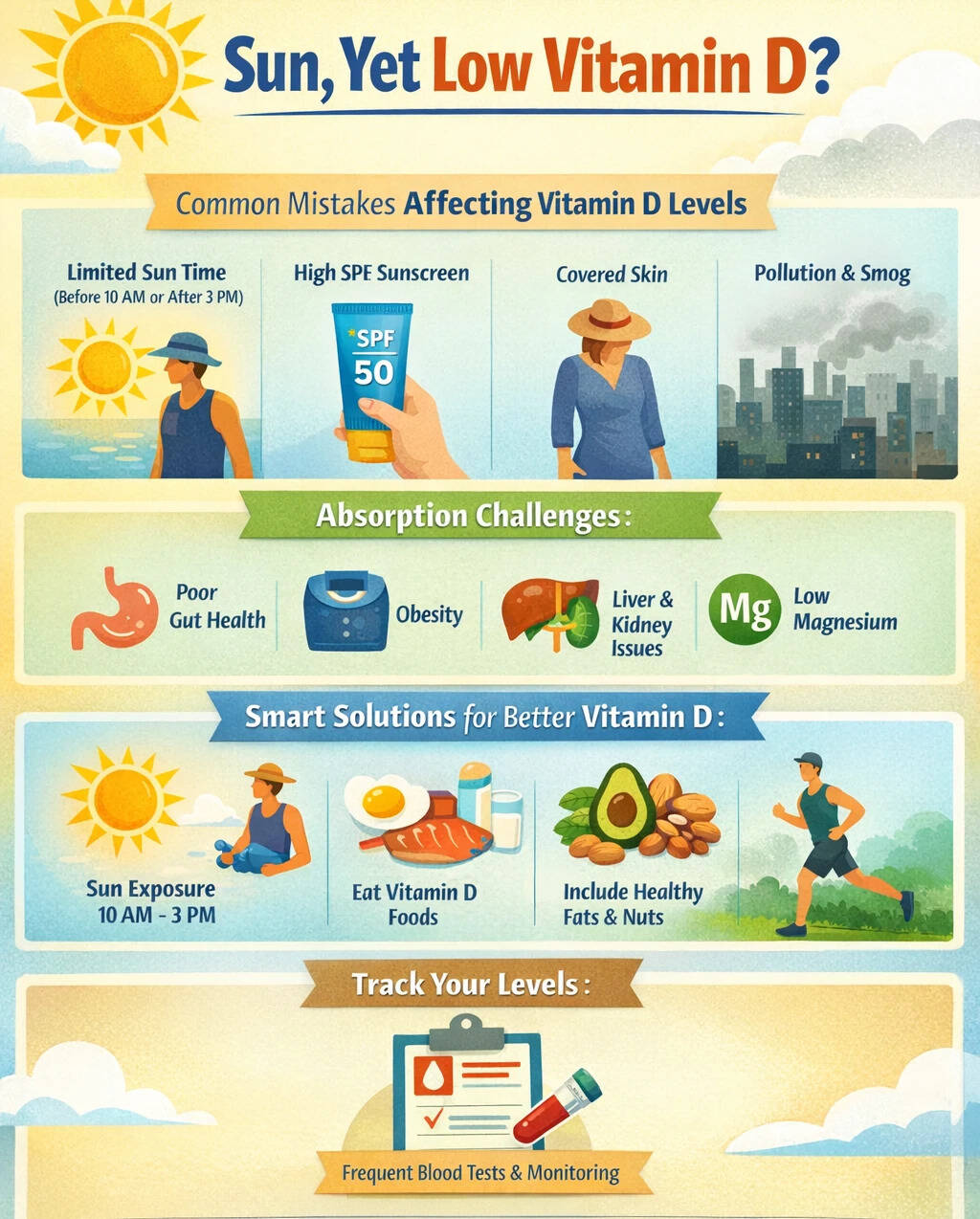
Effective restoration of Vitamin D levels is possible through targeted sun exposure, improved nutrition, and regular monitoring.
Why tracking matters more than guessing
Vitamin D deficiency rarely manifests with noticeable symptoms at first, making it particularly hazardous. Symptoms like fatigue, body aches, or feelings of low mood may be dismissed as mere stress or lack of sleep. Over time, deficiencies can adversely impact bone health, immunity, and metabolic balance. Regular blood tests can provide clarity, replacing uncertainty with data.
As Dr. Tandon states, “Regular blood tests should be conducted to monitor levels and adjust treatment accordingly.” This approach isn’t about inducing fear; it’s about fostering awareness.
Vitamin D deficiency is often misinterpreted as simply lacking sunlight. However, the reality is more complex, involving timing, exposure, absorption, and overall health. Simple, consistent changes can yield significant improvements over time.
Medical experts consulted
This article includes insights provided by:
Dr. Chirag Tandon, Director – Internal Medicine, ShardaCare-Healthcity.
These insights illustrate why Vitamin D deficiencies can persist despite regular sun exposure, common mistakes affecting absorption, and approachable corrective measures.