The coffee landscape in China is evolving swiftly, with major brands taking significant steps to refine their strategies and broaden their market reach. Cotti Coffee and Luckin Coffee are at the forefront of this shift, adapting their approaches to enhance customer experiences both domestically and internationally.
Cotti Coffee Adjusts Strategy
Starting this year, Cotti Coffee has scaled down its discount campaign which offered drinks for as low as RMB9.9 (US$1.4), a strategy that helped bring its number of stores to 18,000 over 28 countries since its establishment in 2022.
The chain also said it would stop accepting franchise and joint-operation applications in key cities, and instead prioritize building a number of self-operated showcase stores to improve customer experience.
Mixue Bingcheng’s Potential Coffee Venture
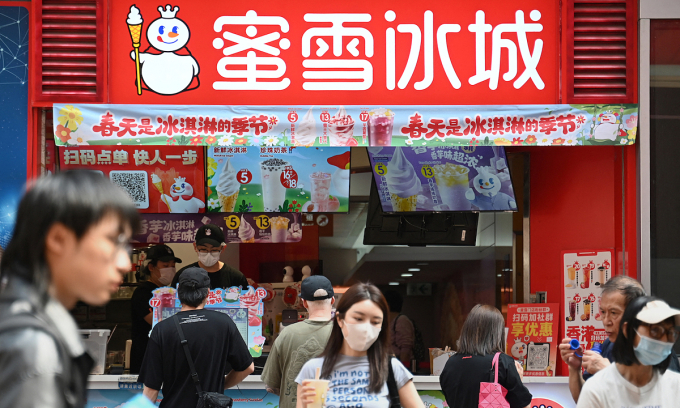
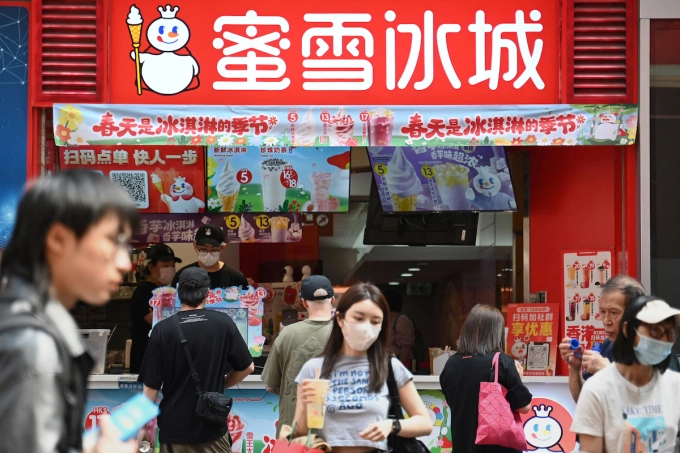
At the same time, speculation emerged on social media that Mixue Bingcheng may expand into freshly ground coffee, according to a report by China Restaurant Insider as published by Singapore-based news platform KrAsia.
Coffee that is ground immediately before extraction promises better flavor and aroma compared to pre-ground beans. Previously, Mixue primarily utilized drip coffee made from powder.
 |
|
People walk past a Mixue Ice Cream & Tea store in Hong Kong on March 26, 2025. Photo by AFP |
The company is also preparing product upgrades, including fully automatic coffee machines, new offerings, better-quality beans, milk, and other core ingredients.
Market Dynamics and Challenges
These shifts in strategy indicate that leading Chinese coffee brands are exploring new methods to enhance customer experience, particularly as plans for overseas expansion intensify amid signs of saturation in mainland China’s food and beverage market.
“Overseas consumers have long associated Chinese brands mainly with cost performance,” remarked Fu Yifu, a special research fellow at Su Merchants Bank.
“To succeed globally, the core is to build a presence rooted in China’s operational efficiency while blending into local cultures,” Fu stated, as noted in the South China Morning Post.
Luckin Coffee last month celebrated the opening of its 30,000th store, having expanded to various markets outside mainland China in recent years, including Hong Kong, Singapore, and Malaysia.
Further expansion into Western markets is on the horizon. In November, co-founder and CEO Jinyi Guo mentioned plans for a U.S. relisting after being delisted from Nasdaq in 2020 following a revenue fraud case involving $310 million.
Luckin’s largest shareholder, Centurium Capital, recently agreed to acquire the global physical store assets of Blue Bottle Coffee from Nestlé for under $400 million, according to Bloomberg. Luckin declined to comment on the acquisition.
Fu mentioned that the acquisition aims to fill gaps in premium positioning and brand development. “Whether it can integrate the brand and build a unique overseas identity remains to be seen,” he noted.
Last year, Luckin opened 30 self-operated stores in Singapore, nine in the U.S., and 70 franchised outlets in Malaysia, employing localized strategies and differentiated products.
“As one of the world’s largest and most mature coffee markets, the U.S. presents a key long-term opportunity for us. At this initial stage, our priority is to validate our business model and gain operational experience,” Guo stated during a results briefing last month, adding that international expansion is pivotal to Luckin’s long-term strategy.
Success Not Guaranteed
Other Chinese coffee brands are also expanding rapidly overseas. Lucky Cup, part of Mixue Group, surpassed 10,000 global stores by November, becoming the third Chinese coffee chain to reach that milestone after Luckin and Cotti.
Analysts remain uncertain whether these Chinese coffee brands will successfully replicate their achievements from mainland China in other markets.
“These Chinese coffee brands benefit from mature supply chains and highly replicable store models,” noted Fu. “Yet, the sustainability of their cost-effective strategies is uncertain, as high overseas expenses for rent, labor, and compliance pressure gross margins.”
“Consumer habits also vary from the domestic market. In mature Western markets, shoppers value brand image, quality, and experience over price alone.”
 |
|
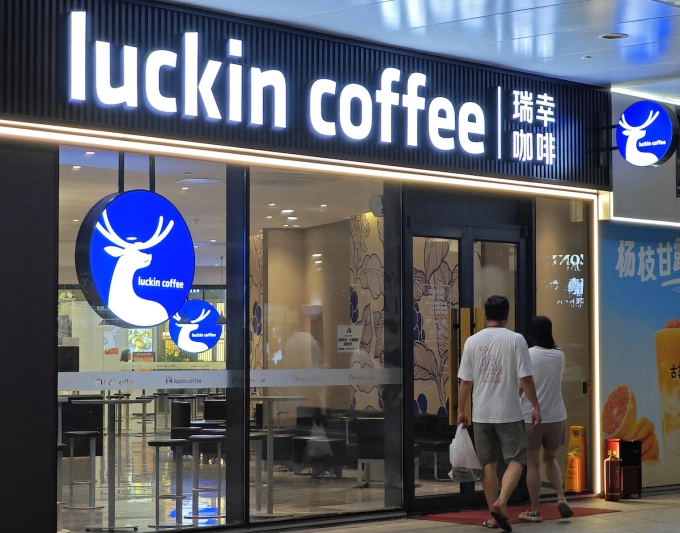
Customers walk into a Luckin coffee shop in Yantai, China, on July 26, 2024. (Photo by Costfoto/NurPhoto) Photo by NurPhoto via AFP |
Zhu Danpeng, an independent food and beverage analyst based in Guangzhou, emphasized that quality will be crucial for overseas success, stating that only by consistently providing quality can brands expand their scale and cultivate a loyal customer base.
Compared to mature markets such as the U.S., Europe, and Japan, the fresh-made beverage sector in China and Southeast Asia continues to grow.
S&P Global Ratings projected that the segment will expand at a compound annual growth rate of 15-20% in the coming years.
Focusing on quality rather than simply attracting customers with inexpensive drinks could open new avenues for growth for Chinese chains. Since launching a coffee machine pilot in early 2026, tea chain Tianlala has reported a 27% increase in coffee sales at its initial batch of nearly 50 stores, elevating overall revenue by over 50%.
GoodMe, operating over 13,000 stores, has also mandated coffee machines in new outlets, according to China Restaurant Insider.
For Centurium, acquiring Blue Bottle fills a gap in the mid- to high-end market, leveraging strong brand equity in specialty coffee culture. The firm appears to be pursuing a multi-brand strategy to target different consumer segments and consumption occasions.
“While China may not reach the same penetration levels as the U.S., we see substantial growth potential driven by enhanced drink quality and variety, increased consumer spending on small indulgences, and rapid expansion by different chains,” remarked Sandy Lim, a consumer analyst at S&P Global Ratings, as cited by South China Morning Post.
She added that although Chinese coffee companies have secured considerable investment and expanded swiftly, there remains a risk of price wars that may erode margins and lead to cannibalization of stores in certain markets.
Key Takeaways
- Cotti Coffee is reducing its discount campaign and focusing on self-operated showcase stores.
- Mixue Bingcheng may venture into freshly ground coffee, improving flavor and aroma.
- Luckin Coffee aims for further expansion, including plans for a U.S. relisting.
- Chinese coffee brands face challenges in replicating domestic success overseas.
- Quality will be pivotal for growth and customer loyalty in foreign markets.
- Investment in quality, and localized strategies appear to be emerging trends for expansion.
FAQ
Why is Cotti Coffee changing its discount strategy?
Cotti Coffee is shifting focus to enhance customer experience through self-operated showcase stores rather than relying on aggressive discounts.
What is Mixue Bingcheng’s potential new product?
The chain may expand into freshly ground coffee, which is believed to offer better taste and aroma than powder-based options.
What challenges do Chinese coffee brands face internationally?
They must navigate higher operating costs and differing consumer preferences that emphasize quality and brand image in mature markets.