Introduction
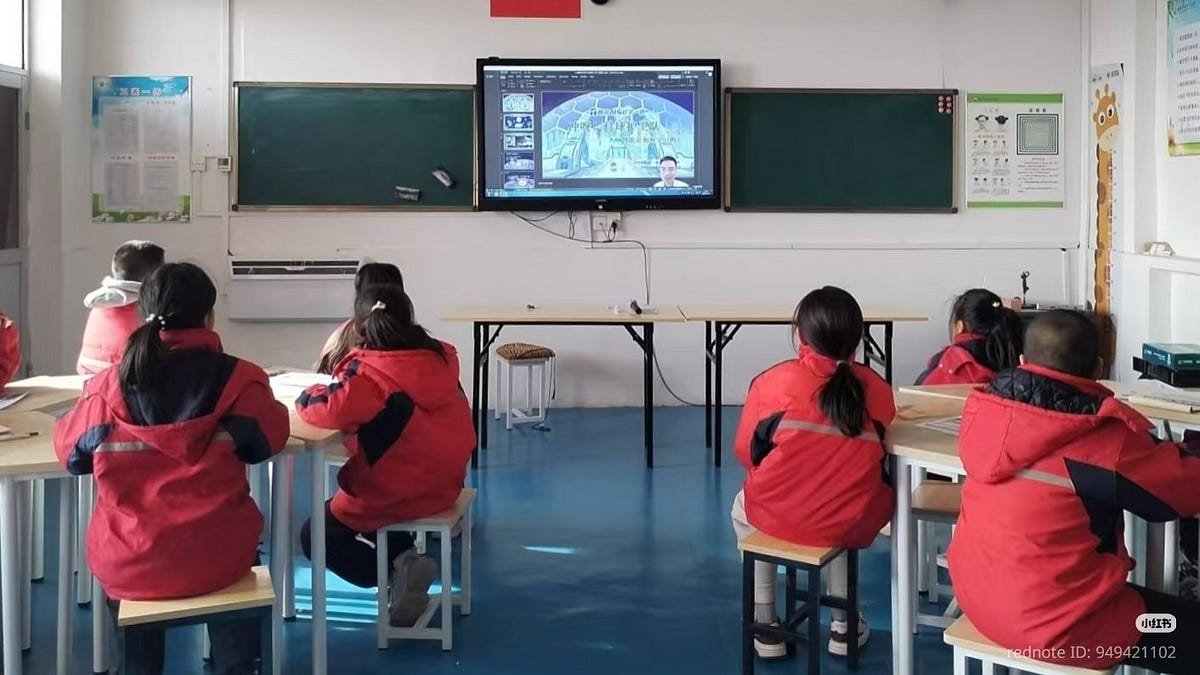
The integration of artificial intelligence (AI) into China’s educational landscape is an accelerating focal point for the government. Pilot schools are already leveraging AI to assess children’s artwork, gauge their emotional responses during lessons, and screen for psychological issues. As the Ministry of Education (MOE) motivates institutions nationwide to adopt these technologies, the implications for education in rural areas remain a critical concern.
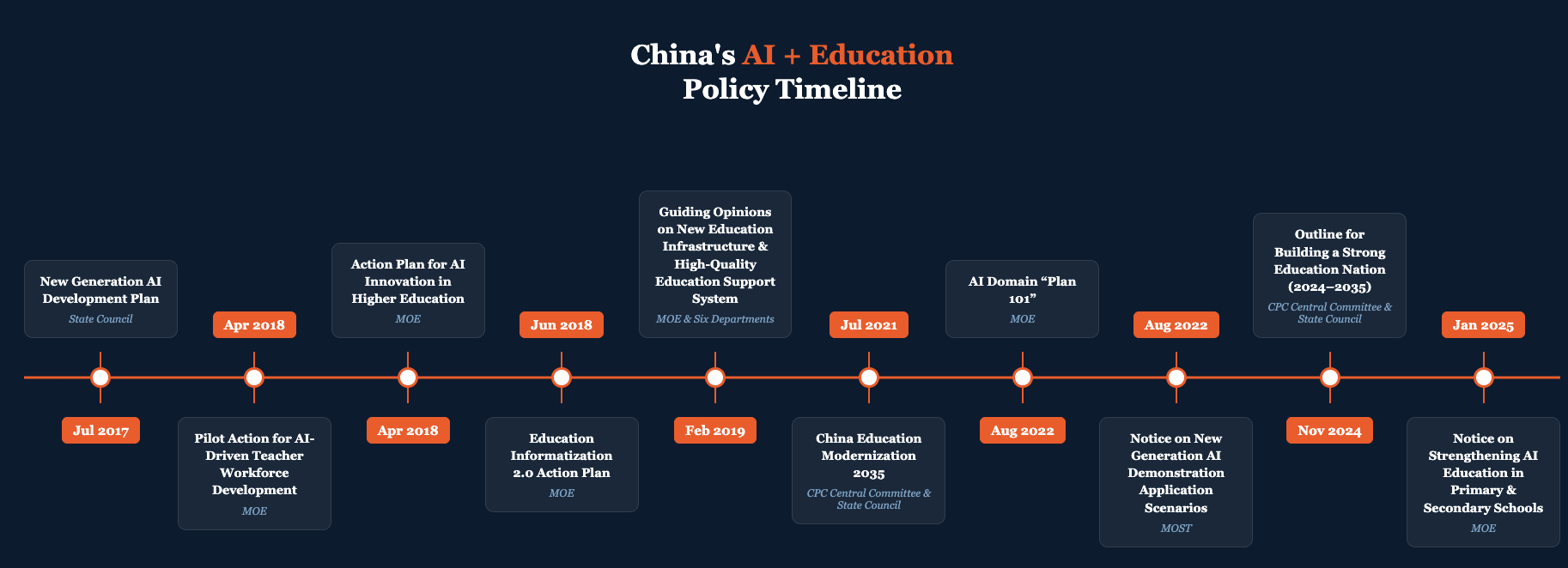
AI’s introduction into education has swiftly become a priority for the Chinese central government. The belief is that AI can bridge the significant educational gaps across the country and enhance the productivity of future workers. The State Council has recognized education as a crucial area in the “AI+” initiative, with specific mentions in the 15th Five-Year Plan. In May 2025, the Ministry of Education (MOE) published a comprehensive white paper, heralding 2025 as the start of a new era in educational reform shaped by intelligent technologies. The MOE aims to ensure universal access to AI in primary and secondary schools by 2030. This call to action has prompted industries, notably Alibaba Cloud, to develop their own AI-focused educational framework, releasing a white paper shortly after the MOE’s guidance.
Notably, there exists a significant divide between the aspirations of Beijing and the realities in rural China. This report will delve into the Party’s motivations for implementing AI in education, the hopeful applications highlighted by the MOE, and the obstacles to effective execution. While today’s focus is on K-12 education, future discussions will shine a light on university-level AI initiatives.
Following the MOE’s declaration in 2021 that all counties had achieved a baseline level of quality in compulsory education, discussions surrounding a “post-equity era” have emerged. This marks a shift in focus from mere access to education toward enhancing its quality. The 14th Five-Year Plan (2021-2025) specifically emphasizes the need to improve rural educational infrastructure through initiatives such as the “county-level high school revitalization initiative,” which seeks to equip classrooms with smart technologies like digital blackboards. During this time, substantial resources were allocated to ensure internet connectivity in nearly every school.
However, rural education in China continues to grapple with significant structural challenges. Leo He, a research fellow at the Hoover Institution, who conducted NGO work in rural China from 2019 to 2023, asserts that every locality has designated “elite” schools that attract talented students from surrounding areas. Consequently, educational resources become concentrated in these areas, leaving rural regions significantly under-resourced. While high-performing students may benefit from this competitive system, the majority remain deprived of necessary educational support.
According to China’s 2020 census, only 30.6% of the population has ever attended high school (including vocational secondary institutions), a rate noted by Stanford professor Scott Rozelle to be lower than that of South Africa, Turkey, and Mexico. In 2022, approximately 40% of middle school graduates did not proceed to high school, and of those who did, national policies directed that about half were funneled into vocational schools without an academic pathway to college.
Understanding the motivations behind AI integration in education requires an examination of the political and economic factors that spur Beijing’s interest in rural students. Presently, increased investment in education does not guarantee economic growth, especially with real youth unemployment hovering at approximately 20%. The push for educational improvement is politically charged, as it resonates with the populace.
When Rozelle’s team surveyed 1,800 rural mothers about their aspirations for their children, over 95% expressed a desire for their children to attend college. In China, a degree from a prestigious university not only leads to higher earnings but also unlocks access to better healthcare and coveted job opportunities, enhancing social status. Research from Stanford in 2023 found that Chinese families allocate about 17.1% of their annual income to education, with the poorest quartile spending an astonishing 56.8% of their income on educational pursuits. This expenditure remains steadfast across all income levels.
As anthropologist Andrew Kipnis points out, educational reform is critical for the Party as it cultivates public satisfaction. The promise of a pathway to university helps create a vested interest in the system among parents, yet not all children can achieve this goal. In a strictly hierarchical system, anyone gaining an advantage subsequently disadvantages another. Thus, the Party must maintain the illusion that children are progressing, with physical school infrastructure serving this purpose. New and impressive facilities garner immediate popularity; however, if students fail to enroll in university later, the responsibility is placed on them.
This sets the stage for what could be the world’s largest AI education experiment. China’s ambitions in AI education are unparalleled globally. While South Korea has pursued rigid national implementation strategies and India’s edtech landscape is primarily led by private enterprise, China’s efforts stand apart in both scale and scope.
The MOE’s white paper on AI in education emphasizes four main domains for integration: teacher workload reduction, enhancement of rural education, analysis of student biometric data, and support for students with disabilities.1 The guidance encourages schools to incorporate AI throughout the teaching process, from class preparation to post-class engagement.
“鼓励学校将人工智能融 入课前、课中、课后等教育教学全过程。”
“Schools are encouraged to integrate AI into the entire teaching process — before, during, and after class.”
~ MOE’s white paper, pg. 23
Teacher workload reduction is seen as the most promising application, with expectations for AI to assist in grading, lesson planning, and academic counseling as outlined in Ali Cloud’s documentation.
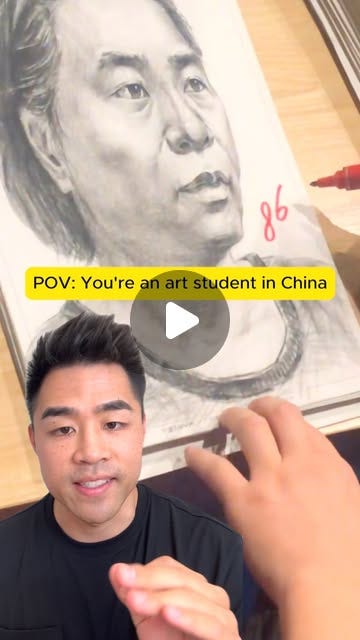
The idea of utilizing AI for art evaluation may seem counterintuitive, yet it’s a reality for some aspiring art students:
As discussed in the previous AI education report, the teacher-to-student ratio in China is lower compared to the U.S., resulting in larger class sizes. The government has set a standard of 45 students per primary school class; however, “super-size” classrooms with over 56 students remain common, particularly in rural areas struggling with teacher shortages as experienced instructors flock to urban schools. Historically, as of 2023, senior teachers only accounted for about 6.8% of China’s educational workforce, in stark contrast to the 26% of U.S. public school teachers who have over 20 years of experience.
The latest effort from Beijing to address these challenges is the “County-managed, school-hired” system, where teachers belong to a collective pool and are assigned to schools by county authorities. Teachers work on three-year contracts and face mandatory transfers, even to rural areas. Unsurprisingly, this has led to resentment among educators. While the structure is designed to retain salaries and benefits for teachers transferred to rural positions, the system often fails to uphold such commitments.
“开展数字支教试点,推动高校师生利用国家智慧教育平台的优质资源,帮助乡村学校开齐、开足、开好国家规定课程。目前,活动已在全国10个省份、95个区县落地,为252所乡村学校6万余名送去1万多小时优质课程,有效缓解乡村学校师资结构性短缺问题。”
“[The MOE] launched digital education support pilots, promoting the use of quality resources from the National Smart Education Platform to help rural schools fully offer all state-mandated courses. Currently, the program has been implemented in 10 provinces and 95 districts/counties, delivering over 10,000 hours of quality courses to over 60,000 students at 252 rural schools, effectively alleviating the structural teacher shortage in rural schools.”
~ MOE’s white paper, pg. 12
Narrowing the educational gap in rural areas is of utmost importance for the government for various reasons. A key challenge remains that students from these regions encounter a massive resource deficit, which is evident in their gaokao examination results.
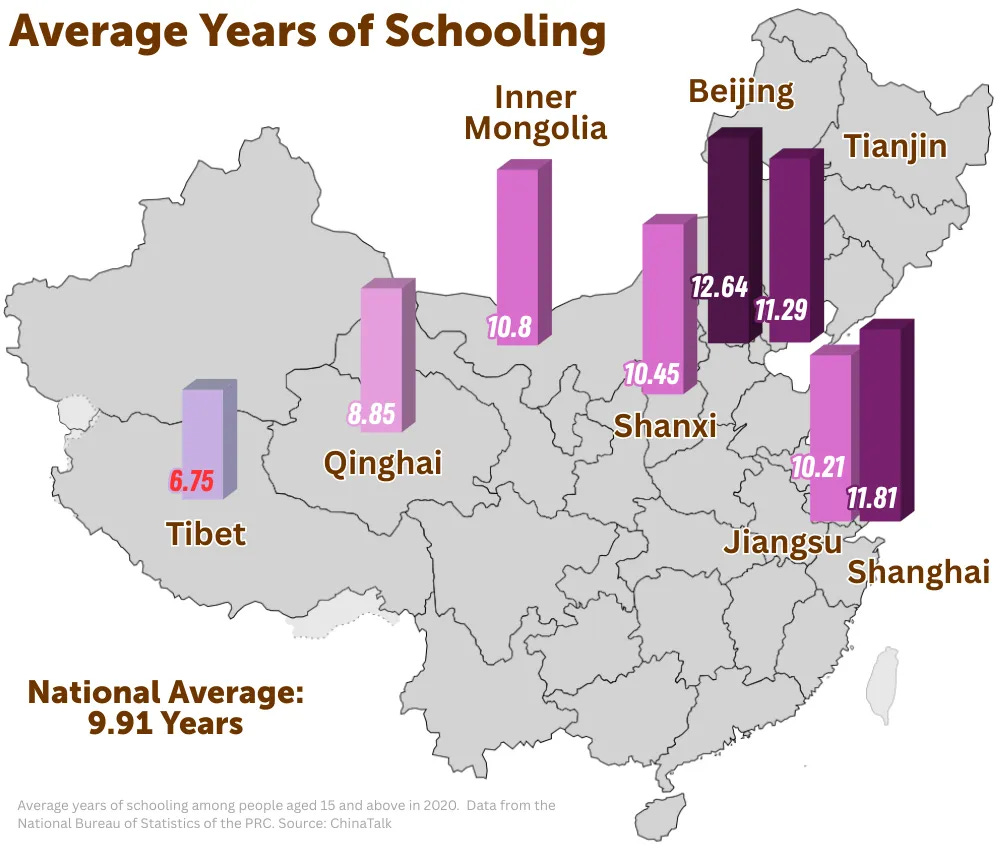
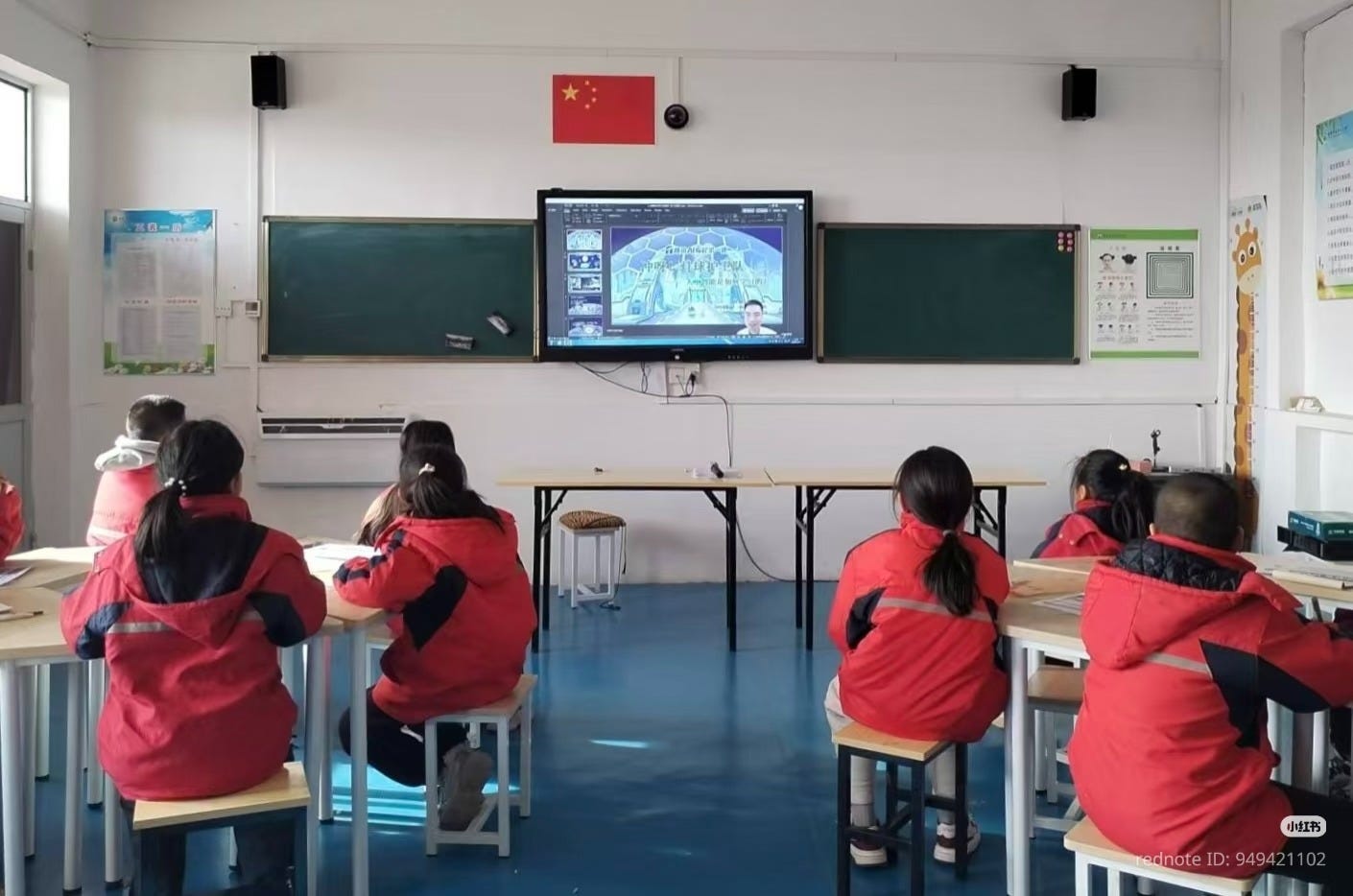
The implications of these policies are particularly urgent for rural schools, where ad-hoc lessons on AI usage are being provided by college students volunteering their time. One volunteer voiced frustration on social media, expressing concern over the outdated methods prevalent in rural educational settings:
Before the lesson, I asked the local teacher if there was anything I should pay attention to. The teacher said, “Nothing, the students in this class are quite obedient.” Rural areas already lag behind developed areas in educational infrastructure and philosophy by more than 10 years.
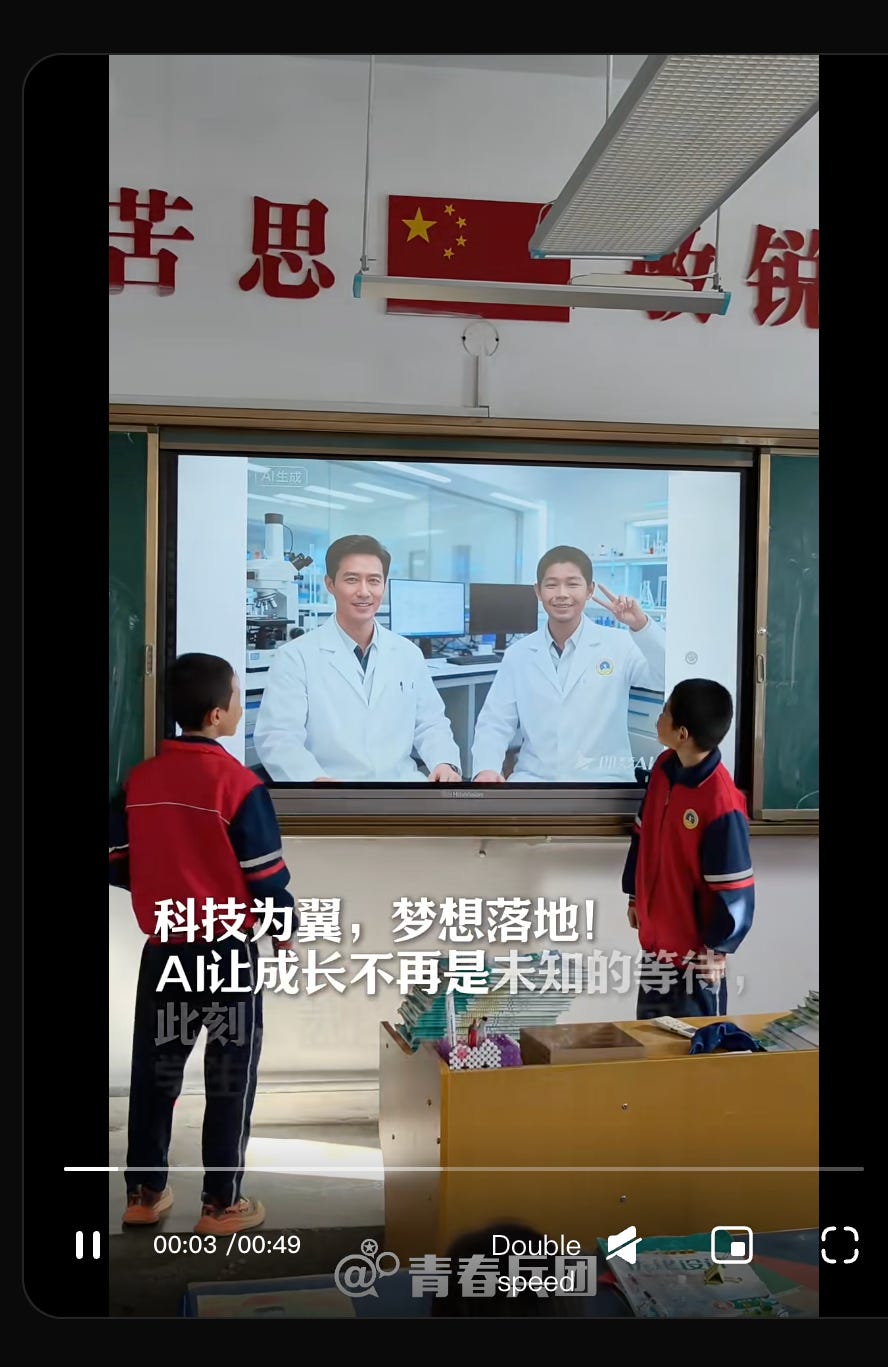
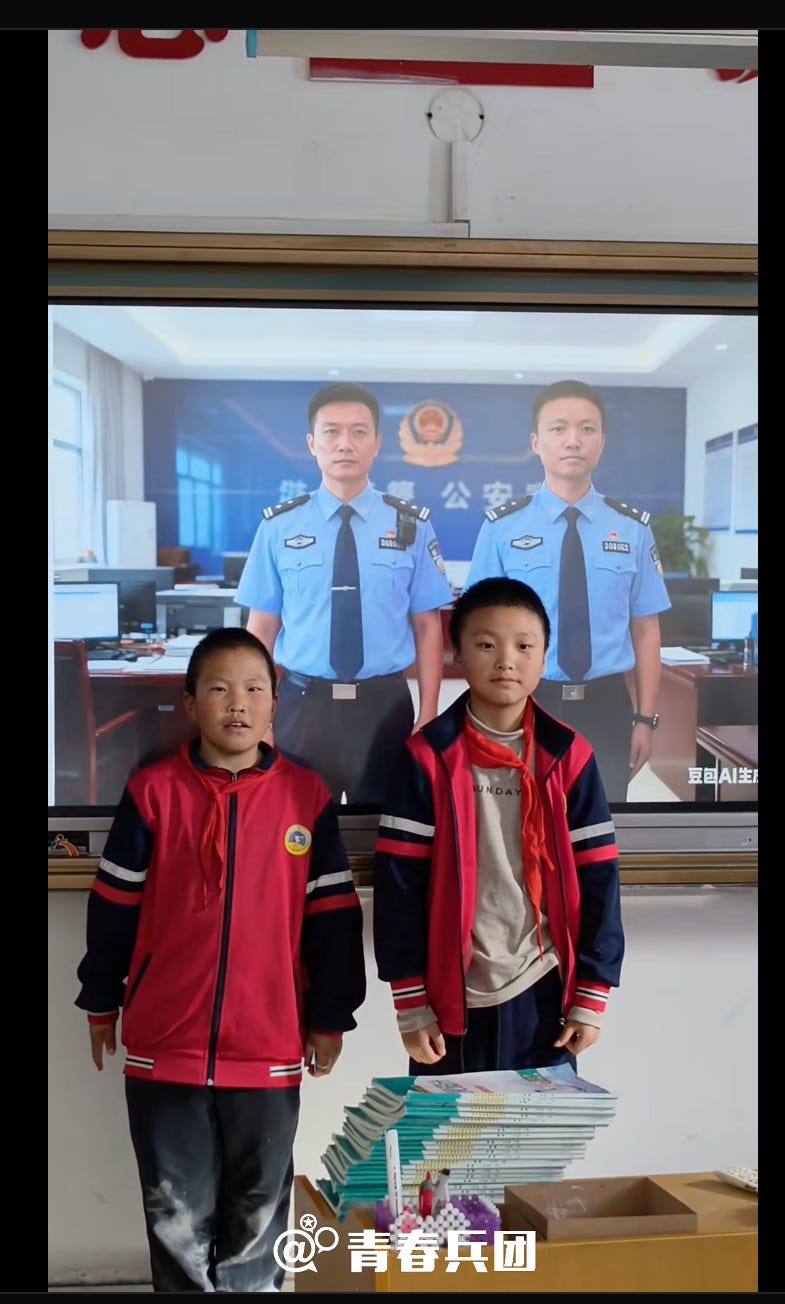
“通过大数据技术全面掌握学生的学 习、实践、生活情况,建立用户画像,制定个性化培养 方案,使大规模因材施教成为可能”
“By leveraging big data technologies to comprehensively monitor students’ learning, practical activities, and daily lives—thereby creating user profiles and formulating personalized development plans—it becomes possible to implement large-scale, individualized instruction tailored to each student’s specific needs.”
~ MOE’s white paper, pg. 31
The third major focus is on student data collection and analysis, which involves smart campuses that track attendance and behavioral biometrics. For instance:
Guanggu No. 9 Primary School in Wuhan incorporated AI-driven psychological assessment services that evaluated over 800 students, identifying several with serious mental health issues. The school can now conduct ongoing mental health checks with precision AI tools.
Zhongguancun No. 3 Primary School in Beijing employs intelligent systems to analyze learning data, constructing comprehensive student profiles for personalized education.
Shuanglin Primary School in Chengdu utilizes smart cameras to monitor in-class behavior and engagement levels, aiding the evaluation of teaching quality.
While these initiatives are ambitious, they reveal the inherent propaganda at play. The technology on the ground has yet to reach a level of pervasive surveillance, yet the aspirations outlined in the white papers point toward a significantly monitored educational environment.
Moreover, while AI applications for assisting students with disabilities were discussed, they appeared notably underdeveloped, primarily showcasing products designed for broader markets rather than specifically for disabled students.
Although supporting disadvantaged students is commendable, the effectiveness of AI education tools is under scrutiny, given the brand new challenges they present. There are systemic barriers that AI cannot resolve:
Universities in China reserve spots specifically for local students, but as these institutions are predominantly located in urban centers, rural students often miss out on opportunities. In 2025, 85% of the gaokao examinees from Shanghai were admitted to four-year universities, contrasting sharply with only 32% from Anhui.
The hukou, or internal passport, ties one’s access to public services to their birthplace, often resulting in children of rural migrants being left behind. Funding for schools is linked to local economic performance, leaving rural institutions frequently under-resourced. The government’s efforts to upgrade facilities in rural schools have inadvertently fueled the trend of centralizing educational resources, where larger schools in wealthier areas are favored over smaller, local institutions.
This ongoing process has resulted in larger class sizes and contributed to a deficit in personalized attention for students. Research by Stanford’s Rural Education Action Program (REAP) has indicated that conditions in boarding schools can lead to increased rates of anxiety, loneliness, and behavioral issues among students who are separated from their families.
As of 2025, a study revealed that a staggering 82% of rural children displayed developmental delays. The harsh reality is that no AI intervention can compensate for the developmental disadvantages that many children face prior to even entering the educational system.
AI educational tools are largely driven by commercial interests, and companies often hesitate to create customized platforms for underserved populations in rural schools. The potential market for such tools is significant, yet the diversity in the needs and capabilities of rural institutions creates challenges for generalization.
The implementation of these tools often confronts barriers tied to cost. For instance, leading AI products can be prohibitively expensive; some software contracts have exceeded a quarter of a million dollars, prompting concerns about sustainability. Access to devices—also a requirement for utilizing AI in education—remains problematic in rural areas for a variety of reasons, including financial constraints on families.
The suggestion to issue devices for educational purposes appears straightforward, yet several hurdles hinder progress. Concerns over excessive screen time and the need for effective allocation of funds complicate device accessibility. Historical mismanagement of educational budgets further exacerbates fears about investing in technology that may lack effectiveness.
Recent scandals related to education-related device purchases have intensified skepticism towards distribution programs. Many schools are reconsidering how to approach educational technology distribution, particularly in light of governmental directives prohibiting coercive practices.
Despite the advances in AI tools, the underlying issues of educational inequality in rural China persist. Urban students are already reaping the benefits of sophisticated AI tools, while many rural students still rely on outdated educational methodologies.
Ultimately, the MOE’s frameworks signal educational priorities but do not enforce necessary funding or regulation nor establish clear success metrics. Without concrete backing, local governments—much like educational institutions in rural areas—are operating with limited resources.
In closing, the MOE’s hope encapsulated by Ali Cloud’s white paper resonates with the dream of a future where AI transforms education, nurturing every learner and educator towards a balanced development of human intellect.
“May AI become a wise companion for every learner and educator, helping humanity achieve more comprehensive and profoundly balanced development. With reverence for education and unwavering confidence in the future, let us jointly compose the magnificent chapter of AI empowering education, striving tirelessly for the inheritance and elevation of human wisdom.”