Innovative AI Platform Boosts Malaria Drug Discovery
The urgent fight against malaria is receiving a boost through a groundbreaking AI-powered platform that accelerates drug discovery. This initiative, a collaboration between Medicines for Malaria Venture (MMV) and deepmirror, aims to revolutionize access to cutting-edge technology for researchers worldwide, especially in resource-limited environments.
The Drug Design for Global Health (dd4gh) platform employs both predictive and generative AI technologies to provide researchers, particularly those in underserved regions, with access to resources that would typically be unavailable, according to a recent MMV press release.
The dd4gh platform was developed with contributions gathered during co-creation workshops held in Ghana and Switzerland, engaging global drug discovery experts.
AI models utilized in the platform are trained on diverse data sets sourced from various studies conducted by global health researchers, allowing scientists to leverage insights from widespread research initiatives.
“In a time when the global health sector faces substantial challenges, dd4gh exemplifies the strength of collaboration,” stated MMV CEO Dr. Martin Fitchet. “By providing scientists in low and middle-income countries (LMICs) with free access to advanced AI tools, we aim to expedite the development of lifesaving medicines that are directed by those most familiar with the diseases we intend to conquer.”
The platform utilizes active learning, a technique enabling AI and machine learning (ML) to enhance predictions by integrating new data. It analyzes extensive data sets to identify the most promising compounds for laboratory exploration.
Shorter Timelines, Lower Costs
The technologies embedded in this platform hold the promise to significantly shorten the timelines and lower the costs associated with drug discovery. This efficiency allows researchers to concentrate their efforts on strategies with a higher likelihood of success, facilitating faster development of treatments for major global health issues.
“Africa faces an unequal burden of numerous infectious and non-infectious diseases, yet the solutions developed on the continent remain scarce. Tools like dd4gh can profoundly enhance Africa’s capacity for drug discovery research,” asserted Prof. Richard Amewu, head of the drug innovation group at the University of Ghana, which has utilized the platform.
Dr. Godwin Dziwornu, a senior investigator in medicinal chemistry at the University of Cape Town’s (UCT) H3D, added that the platform is “simple to access and user-friendly.”
“I have found it particularly beneficial for generating new compound designs and using the models available to evaluate compound properties and predict their drug-like characteristics, addressing liabilities such as absorption, distribution, metabolism, and excretion. This insight helps me make informed decisions about synthesizing high-quality compounds, saving valuable time and resources,” Dziwornu explained.
Caroline Maina, a UCT PhD candidate involved in a co-creation workshop, noted that while there are other AI tools for drug discovery, the costs of licenses can be prohibitive in resource-limited settings.
“Making dd4gh open access for researchers in global health enables more of us to explore new ideas and apply AI to find treatments for diseases that impact our communities,” Maina stated.
Dr. Max Jakobs, co-founder and CEO of deepmirror, emphasized that the free platform aims to foster “a more inclusive global scientific ecosystem,” stressing that access to advanced AI should not be contingent on geographical or logistical constraints faced by scientists.
deepmirror specializes in developing chemistry-based models for biopharmaceuticals and research institutions, integrating AI directly into research workflows. This synergy combines proprietary data with models refined using larger, curated datasets, continuously improving their capabilities over time.
MMV, a nonprofit product development partnership, is dedicated to discovering, developing, and delivering effective medicines to combat malaria. Since its inception in 1999, its collaborative medicines efforts have benefitted over 1.3 billion individuals.
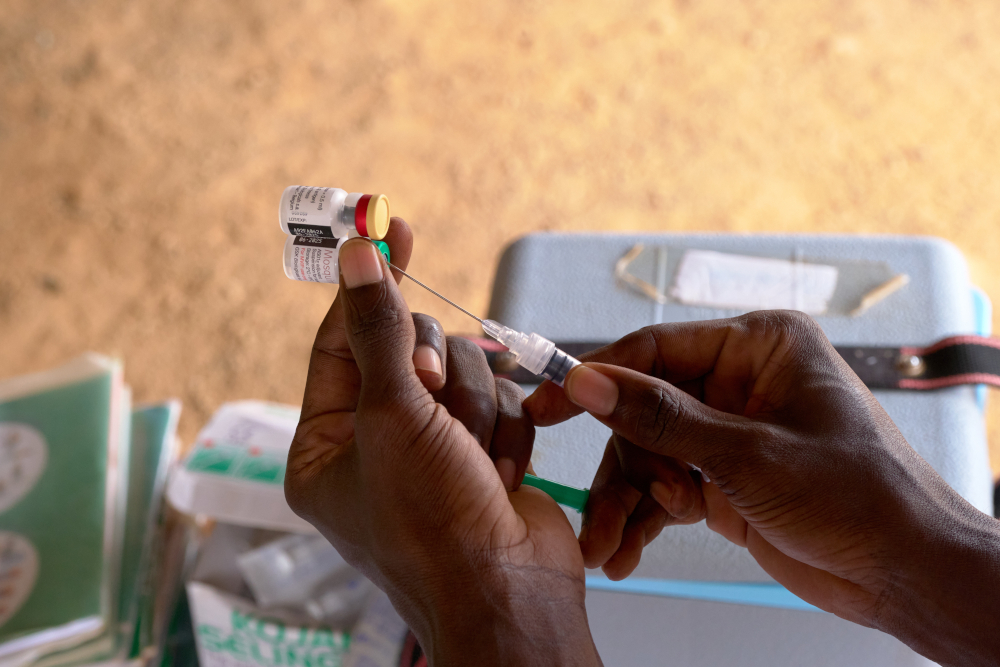
Image Credits: WHO/Fanjan Combrink.
Combat the infodemic in health information and support health policy reporting from the global South. Our growing network of journalists in Africa, Asia, Geneva, and New York connects the dots between regional realities and major global discussions, providing evidence-based, open access news and analysis. To contribute personally or organizationally, click here.