Have you ever come across Scarlyy2’s catchy tune “Banc de touche” or the poignant country ballad “Mercy on My Grave” by Aventhis? Both of these songs share an intriguing characteristic: they were entirely crafted by artificial intelligence (AI) and gained significant traction on streaming platforms, often without listeners realizing they were not composed by traditional artists. Together, these tracks have amassed millions of streams, illustrating the transformative power of AI in the music industry.
AI-generated music, created using tools like Suno and Udio, is no longer relegated to the sidelines of the streaming world. These tracks strive to seamlessly integrate into mainstream music, often sneaking their way onto charts without listeners being any the wiser.
In the past, it was relatively easy to spot AI-generated music: the audio quality was subpar, tracks were often brief, and they bore a striking resemblance to one another. However, advancements over the last two years have changed this dynamic. Tools like Suno now empower users to produce complete songs in mere seconds from simple prompts, significantly enhancing the credibility of AI-generated music.
Do Platforms Identify AI-Generated Content?
For music streaming platforms, distinguishing AI-generated tracks poses a considerable challenge. Listeners face the added dilemma that these platforms are not required to label such content. Spotify, the leading music streaming service, tends to minimize the issue, perceiving AI as just another tool for creativity. “The use of AI in itself is not a problem,” stated Romain Takeo Bouyer, head of content analysis at Spotify, in an interview with Le Monde. “What we penalize are abuses like identity theft, unauthorized cloning, and fraud.”
Conversely, the French platform Deezer has adopted a proactive approach towards AI-generated content. In an industry flooded with new material, Deezer takes pride in its commitment to transparency, marketing itself as a service capable of detecting and clearly labeling music that is entirely AI-generated.
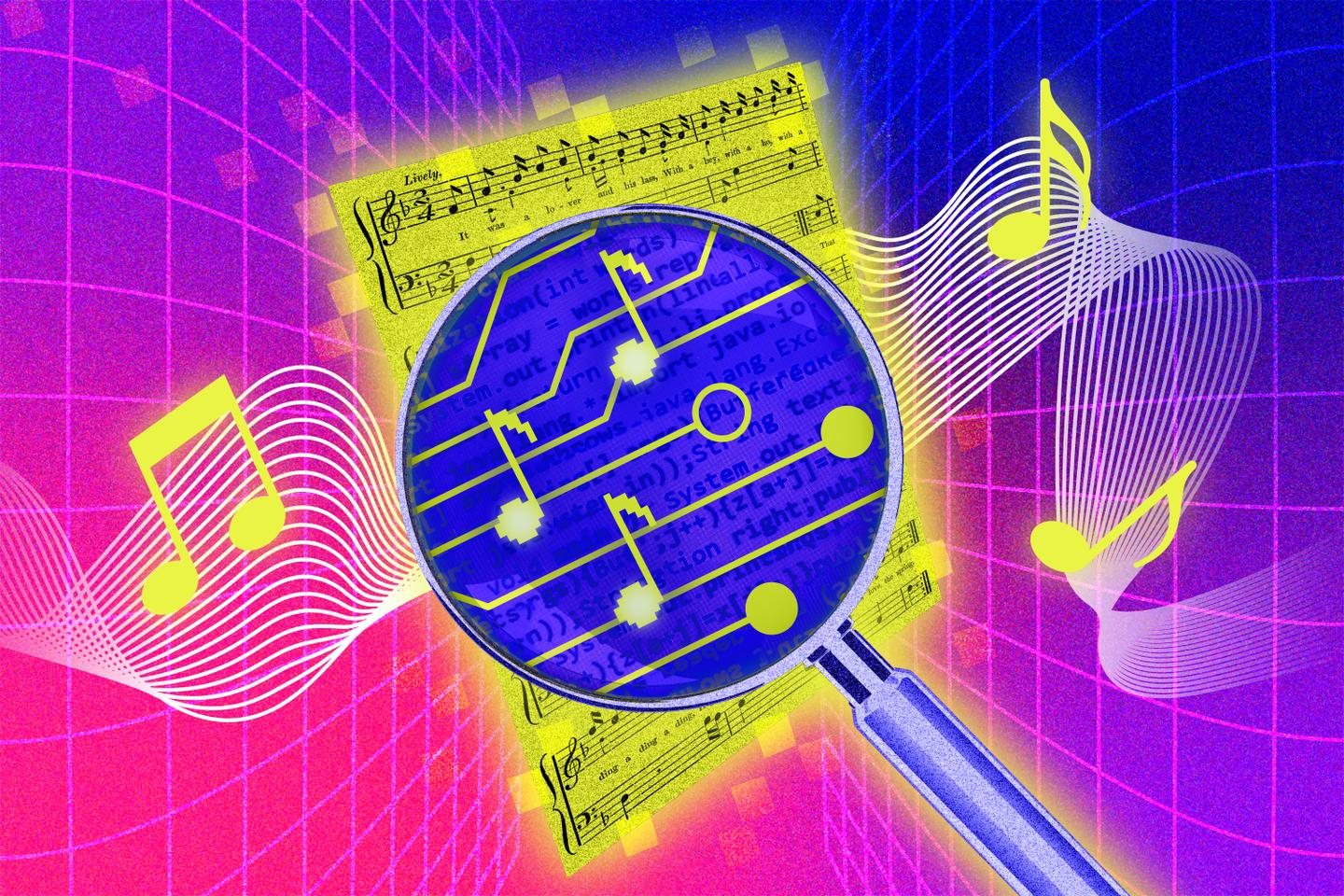
Darius Afchar, a researcher at Deezer, along with his team, developed a detection tool that has been operational since early 2025. “We found that the most popular AI music generation programs leave behind a type of fingerprint in the frequency representation of each track,” he explained from his office in Paris’ 9th arrondissement. He displayed a spectrogram, illustrating frequency variations across a song’s duration. “Our research has shown that despite not serving any melodic purpose, specific frequency spikes occur in certain tracks, which are actually artifacts caused by AI,” he noted.
You have 60.85% of this article left to read. The rest is for subscribers only.
As AI continues to evolve, its influence on the music landscape is undeniable. With streaming platforms grappling to distinguish between human and AI-created music, listeners may soon find themselves navigating a profoundly transformed musical experience. The future of music creation promises to be as exciting as it is complex.