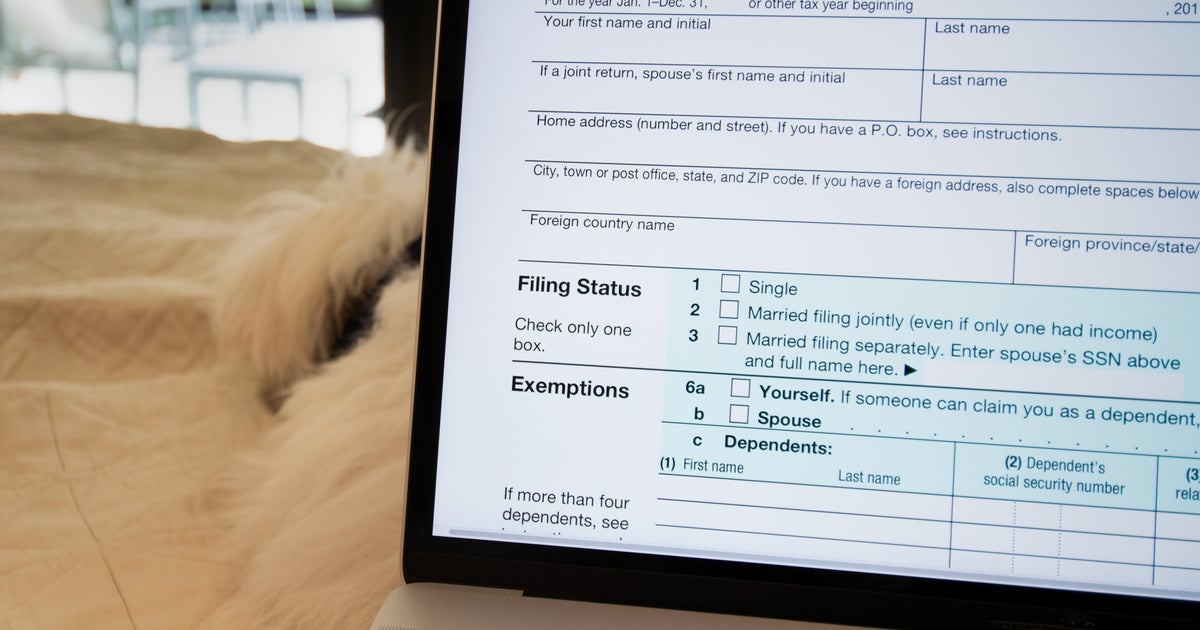
As tax season approaches, many Americans are increasingly relying on artificial intelligence tools like ChatGPT and Claude to assist in preparing their tax returns. However, experts caution that these technologies may provide outdated or inaccurate information, heightening the risk of costly errors.
According to recent polling from Adobe, around 26% of people are using AI for their 2025 tax filings this year, a significant increase from 11% in the previous year. In a recent post on X, Elon Musk mentioned that his Grok AI chatbot “can help with your taxes,” referencing a user who claimed the tool boosted their tax refund by $1,400.
Despite the rising trend, tax professionals warn that relying on AI could be risky. Such chatbots may not reflect the most current tax laws, especially recent changes associated with the Republicans’ “one big beautiful bill act,” or OBBBA.
“Using AI for taxes isn’t new; it’s integrated into tax preparation software to generate returns,” explained Caroline Bruckner, a tax professor at American University’s Kogod School of Business, in a conversation with CBS News. “But caution is essential when utilizing widely available AIs. AIs alone are not equipped to generate accurate tax returns.”
The challenge arises primarily because government websites, like IRS.gov, often host outdated information. Large language models may pull content from these sources and unintentionally present it as current.
“Our tax laws are incredibly complex, and the website needs to include information relevant from 2020 to 2025,” Bruckner stated. “However, tax laws and deductions can change significantly over a few years. This can lead generative AI to provide summaries of deductions that may no longer apply for the current tax year.”
How can AI assist with your taxes?
Despite its limitations, there are ways in which AI can be beneficial in tax preparation, according to Bruckner and other experts.
“You can inquire about tax questions without sharing identifying information,” Bruckner noted. For instance, she suggested asking about intricate tax concepts like, “What is the no tax on tips deduction?” if you’re a worker earning tips.
“AI can effectively translate complex tax jargon into simpler terms,” she added. Nevertheless, it is crucial to think critically about the AI-generated output and to verify the sources it cites.
Lisa Greene-Lewis, a tax expert at Intuit, the company behind TurboTax, stated that while using free, publicly accessible AI for basic tax education can be acceptable, she advises against using these tools for actual tax filing. “There’s a distinct difference between those AIs and TurboTax AI models, which are trained on millions of tax returns and financial data points, ensuring they are up to date with the latest tax codes and validated by professionals,” she explained.
Potential pitfalls
While AI may help clarify changes in tax law under the OBBBA, it cannot replace the expertise of a seasoned tax professional or specialized software, cautions Mark Gallegos, a tax accountant at Porte Brown firm.
“Currently, AI isn’t ready to prepare your tax return. We might reach that point in the future, but we’re not there yet,” he emphasized.
Danny Werfel, former IRS commissioner (2023-2025), told CBS News that tools like ChatGPT and others aren’t inherently designed for tax-specific queries and lack rigorous accuracy testing. He also advised against sharing sensitive personal information with these models.
“Be very cautious when using AI and ensure that your data will not be harvested or used for commercial purposes,” he warned.
No free filing tool available
According to Julie Siegel, the former deputy chief of staff at the Treasury Department, many people are resorting to large language models (LLMs) due to the absence of a free, government-provided filing tool. The IRS had eliminated its Direct File tool, which was established during the Biden administration and saved taxpayers an average of $160.
Moreover, LLMs tend to struggle with distinguishing between outdated and current information, partly due to potential misconceptions stemming from the IRS’s materials.
For example, an IRS form might have the heading “No tax on overtime,” leading an LLM to wrongly conclude that no taxes are owed on overtime pay—an incorrect assumption.
“Thus, even when LLMs reference authoritative sources like the IRS, they could still provide erroneous tax calculations,” she cautioned. “Ultimately, individuals are responsible for ensuring the accuracy of their returns. If Claude misinterprets IRS information and results in a mistake that costs you significantly, you bear the burden.”