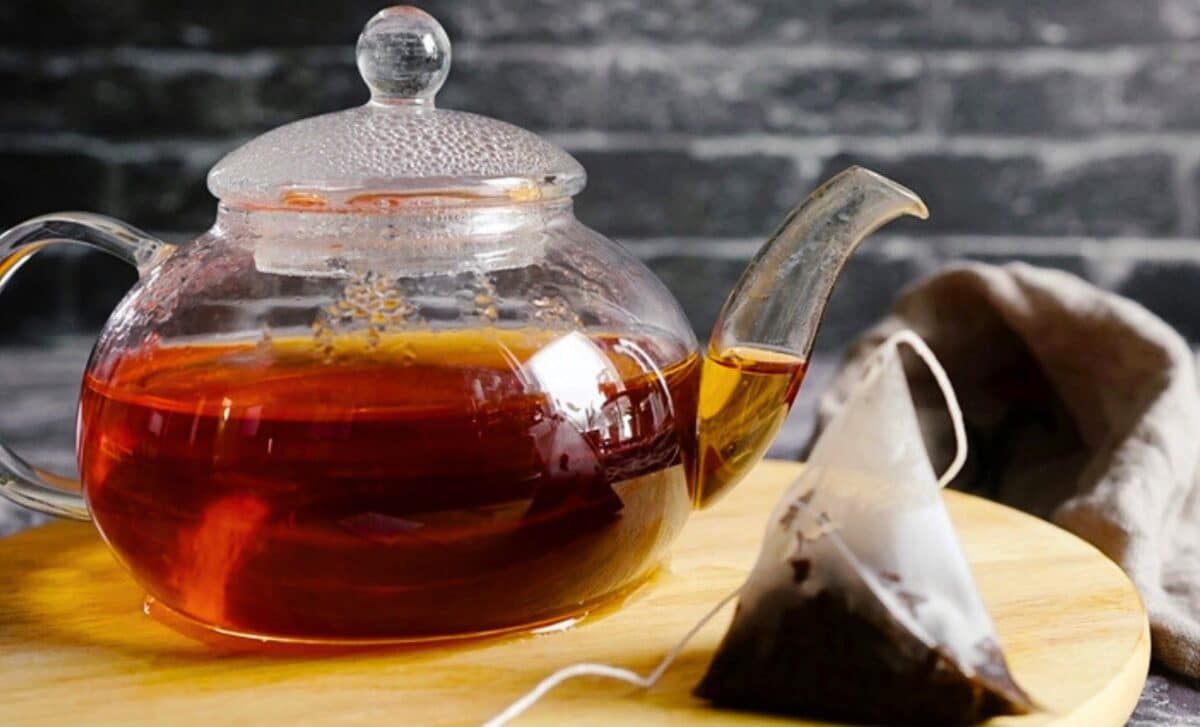
Tea, a beloved beverage enjoyed worldwide, often appears straightforward to prepare: just hot water, dried leaves, and a few minutes of steeping. However, recent research has drawn attention to an unexpected component of this daily ritual: the teabag itself. Emerging studies raise concerns about the presence of microplastics and nanoplastics in tea, particularly from the materials used in teabags.
A recent review in Food Chemistry consolidated findings on microplastics and nanoplastics in tea-based drinks, revealing that these particles can enter tea through various channels, such as production water, packaging, contaminated tea leaves, and teabags immersed in boiling water. Of these sources, the review identifies teabags as the primary contributor to plastic contamination.
While this does not imply that every cup of tea is equally affected, nor does it provide conclusive evidence regarding health implications, it highlights that a seemingly paper-based product can, under certain conditions, release considerable amounts of plastic during the brewing process.
Why the Teabag Became the Main Focus
The review, authored by Neamatollah Jaafarzadeh Haghighi Fard, Faezeh Jahedi, and Andrew Turner, analyzed multiple studies on tea beverages, packaging, and teabags themselves. The principal takeaway is clear: teabags steeped in boiling water are a significant source of microplastics and nanoplastics present in tea.
This finding may contradict what many consumers assume. While some teabags utilize paper-like materials, others are made from plastic mesh or composite materials. Earth.com highlights that pyramid-style sachets may contain plastic mesh, while other bags combine plant fibers and plastic. Even bags made of cellulose might include polypropylene as a heat-seal layer, which keeps the seams intact in hot water.

The review also found that biodegradable and plastic-cellulosic composite bags are not exempt from this issue. Considerable quantities of microplastics and nanoplastics were detected in those materials, even if the amounts were sometimes lower than those from fully plastic teabags.
The Particle Counts Can Reach Into the Billions
One of the most striking findings of the research is the magnitude of contamination. The review indicates that steeping a single plastic teabag in boiling water can release over 10^9 plastic particles, amounting to more than one billion particles in certain experiments.
According to Earth.com, specific studies cited in the review revealed staggering numbers: one experiment recorded approximately 14.7 billion tiny particles released from a plastic teabag, while another noted around 1.3 billion particles per bag.

While these figures are significant, the review emphasizes that they should not be considered uniform across all tea drinkers. Variations in laboratory methods, especially in the size cutoffs used for capturing and identifying particles, can lead to differing results. A filter designed to catch only larger fragments may overlook much smaller particles detected by finer methods—this variability is a key reason for the discrepancies among studies.
Why Measuring Tea Contamination Is So Difficult
Measuring the presence of plastic particles in tea involves more complexity than merely pouring a brewed cup and counting what remains. The particles can be extremely minute, requiring confirmation of their plasticity and polymer type. The review highlights that variable isolation and identification techniques contribute significantly to the inconsistencies observed among different brands and studies.
Moreover, the specter of contamination persists. Earth.com notes that fibers from clothing, particles in lab water, plastic equipment, and airborne dust could all compromise testing samples if procedures are not meticulously controlled. This renders method design a critical component of the research narrative.
The review thus communicates two concurrent ideas: plastic particles are frequently found in tea-based beverages, warranting concern, while the precise quantities reported vary significantly based on the methodologies employed by researchers.
Plastic Particles Are Not the Only Issue in the Cup
The review also emphasizes an additional point of concern: chemical additives and residues linked with plastics. Some studies indicate leaching of plastic additives during steeping, though it remains uncertain whether this occurs directly from intact teabags or from particles released into the brew.
According to Earth.com, compounds such as plasticizers, breakdown products, and bisphenol-type chemicals have been detected in tea infusions. The underlying mechanism remains unresolved; hot water may extract these chemicals directly from the materials of the bag, from detached particles, or through contamination introduced during processing and preparation.
When discussing health implications, the review adopts a careful stance. Although teabags can generate heightened concentrations of microplastics and nanoplastics compared to other food products, it refrains from claiming that harm has been definitively established in humans. Earth.com references preliminary laboratory studies involving water fleas and human intestinal cell models; however, these findings do not equate to clinical evidence for human health.
Ultimately, the key takeaway is not that tea itself presents a problem, but rather that a common packaging material can significantly contribute to plastic contamination when it interacts with boiling water. The review underscores that while microplastics and nanoplastics are present in various tea-based beverages, the teabag emerges as the most notable contributor.
Key Takeaways
- Teabags are a significant source of microplastics and nanoplastics found in tea.
- Plastic and composite materials in teabags lead to substantial particle release during steeping.
- Particle counts can reach over one billion particles from a single plastic teabag.
- Different methodologies result in varied findings regarding plastic contamination levels.
- Chemical additives also pose potential health concerns in tea infusions.
FAQ
What types of materials are used in teabags?
Teabags can be made from a range of materials, including paper-like substances, plastic mesh, and biodegradable composites. Some even combine plant fibers with plastics.
How do microplastics enter tea?
Microplastics can enter tea through various means, such as the composition of teabags, contaminated tea leaves, and the water used in production.
Are the levels of plastic contamination the same for all brands of tea?
No, the levels of plastic contamination can vary significantly between different brands due to differences in materials and brewing methods.
What health implications are associated with consuming microplastics in tea?
While there is concern due to the presence of microplastics, the review does not provide conclusive evidence of harm in humans, emphasizing the need for further research.