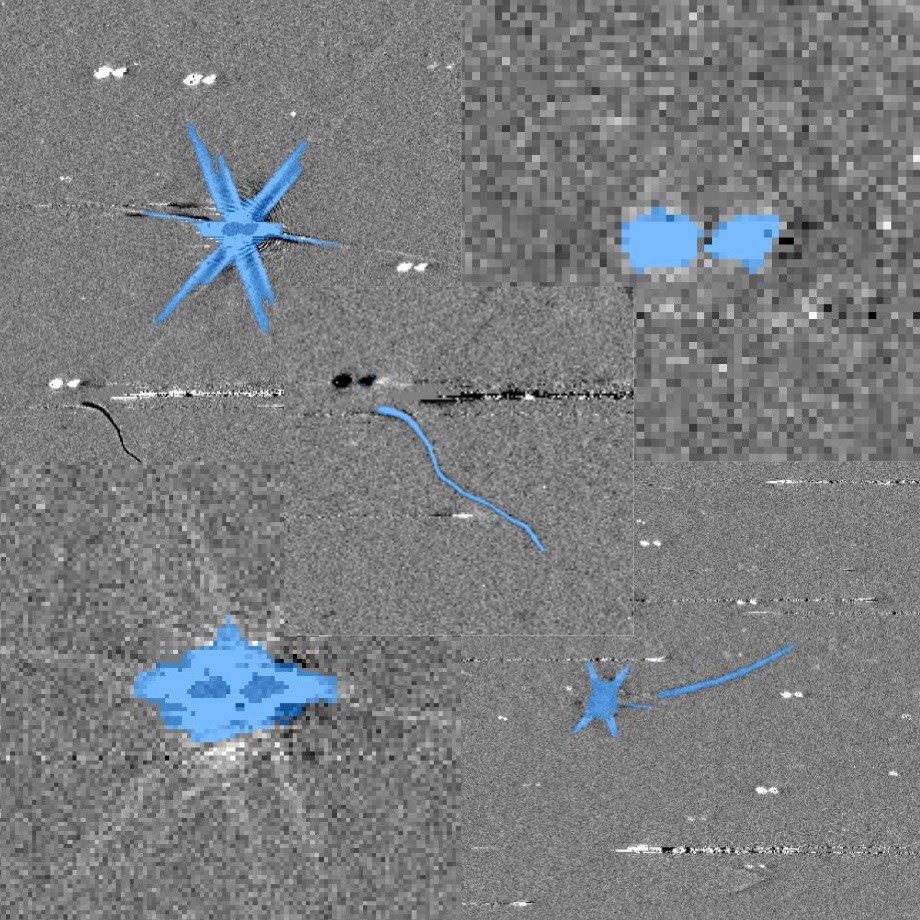
The article discusses the NASA project called Artifact InSPECtor, which invites public participation in enhancing the accuracy of telescope data from missions like the Euclid and Nancy Grace Roman Space Telescopes. By training artificial intelligence (AI) to recognize and remove data artifacts—errors not caused by actual astronomical objects like galaxies—participants can contribute to scientific discoveries about the universe and dark energy.
Here’s a summary of the main points:
-
Project Purpose: The aim is to improve the analysis of telescope data by removing inaccuracies.
-
Role of Telescopes: The Euclid and Nancy Grace Roman Space Telescopes collect light from millions of galaxies, helping answer fundamental questions about the universe’s expansion and dark energy.
-
Data Collection: The telescopes use spectrographs to split light into rainbow patterns (spectra) for analysis, revealing details about distance, star types, and supermassive black holes.
-
Challenge of Artifacts: Data often contains “artifacts” from various sources, such as cosmic rays or instrument quirks, complicating analysis. These are akin to smudges or glare in photos.
-
AI Training: Volunteers help train AI to recognize artifacts by reviewing real data, which enhances the AI’s functionality and scientists’ understanding of the cosmos.
-
Call to Action: The article encourages individuals of all ages to participate via the Artifact InSPECtor platform to assist in this scientific endeavor.
To join and learn more, people can visit the provided link to Artifact InSPECtor.


