Embarking on a fitness journey is a popular New Year’s resolution, and strength training is an excellent place to start. Designing an effective strength training program for either a home or commercial gym can feel overwhelming. To simplify this process, we consulted certified personal trainers and coaches who shared their top workouts and practical tips to help you get started on your fitness journey.
They’ve identified some of the best exercises for building strength and endurance that can easily be adjusted to match your current fitness level—allowing everyone, regardless of where they begin, to join in.
1. Deadlifts
The deadlift is a compound movement that involves lifting a heavy weight off the ground while bending at the hips. It boasts several variations, making it suitable for beginners and experienced lifters alike. Some popular types include the kettlebell deadlift, Romanian deadlift, conventional deadlift, stiff-legged deadlift, sumo deadlift, and trap bar deadlift.
“The deadlift targets a wide range of muscles including the core, back, shoulders, arms, glutes, quads, hamstrings, and calves,” explains John Gardner, a NASM-certified personal trainer. He emphasizes that deadlifts effectively engage both the upper and lower body simultaneously, making your workout time-efficient and calorie-burning.
It is essential to prioritize proper form while performing deadlifts. Common mistakes include squatting too much instead of hinging at the hips and improperly rounding or arching the back, which may lead to injuries. It’s advisable to have a trainer or experienced lifter supervise your technique.
If you have chronic back issues, a spinal injury, or are pregnant, consult a medical professional or a trainer before attempting deadlifts.
2. Push-ups
Push-ups are invaluable for building upper body strength, engaging the chest, triceps, back, and shoulders. While a familiar exercise, push-ups are frequently performed incorrectly, even by seasoned athletes.
“Push-ups can be easily modified to match your skill level,” notes Dr. Brittany Noel Robles, a certified personal trainer and OB-GYN. Variations like inclined push-ups or wall push-ups can help beginners build strength before progressing to standard floor push-ups. Gradually altering hand positioning or tempo can also enhance the challenge.
“Everyone should incorporate push-ups into their routine as they mimic functional movements that are vital in daily life,” says Robles. “They train the horizontal pushing pattern, which translates well to pushing objects away from the body.”
3. Pallof Press
The Pallof press is an anti-rotation exercise that builds core strength while protecting your spine. It can be effectively performed using a cable machine or resistance band. “Your transverse abdominis, acting as a stabilizer, is engaged during this exercise,” explains James Shapiro, a sports performance coach based in LA.
Beginners can start with light resistance while standing or kneeling, ensuring proper activation of the core. Those with lower back concerns can modify the exercise by performing it while seated or lying on their back.
4. Inverted Row
The inverted row is an effective way for both beginners and advanced trainers to strengthen the upper back while improving scapular retraction. This exercise can be performed using TRX straps or a bar positioned above you. Keeping your body horizontally elevated, fully extend your arms while pulling your chest towards the bar.
To increase difficulty, consider lowering the bar or altering body positioning, such as elevating your feet or adding weights. Modifications like moving feet further back or raising the bar can also support less advanced exercisers.
5. Split Squats
The split squat, a single-leg exercise, demands core stability and is excellent for targeting the glutes, quads, and hamstrings. This exercise lacks technical complexity and can be modified easily, making it suitable for all fitness levels. Tools like dumbbells, kettlebells, or even just body weight can be utilized. For a challenging variation, elevate your back foot for a Bulgarian split squat, or keep it on the ground if you prefer a modification.
6. Dumbbell Squat to Press
Also known as a thruster, the dumbbell squat to press is a dynamic full-body exercise that transitions from a squat to an overhead press. This high-powered movement can enhance cardiovascular conditioning when done with appropriate weights and tempo.
“For individuals with knee limitations, consider squatting only to parallel,” suggests Shinekwa Kershaw, a personal trainer. Those struggling with overhead presses can modify the movement to a squat-to-bicep curl instead.
7. Squats
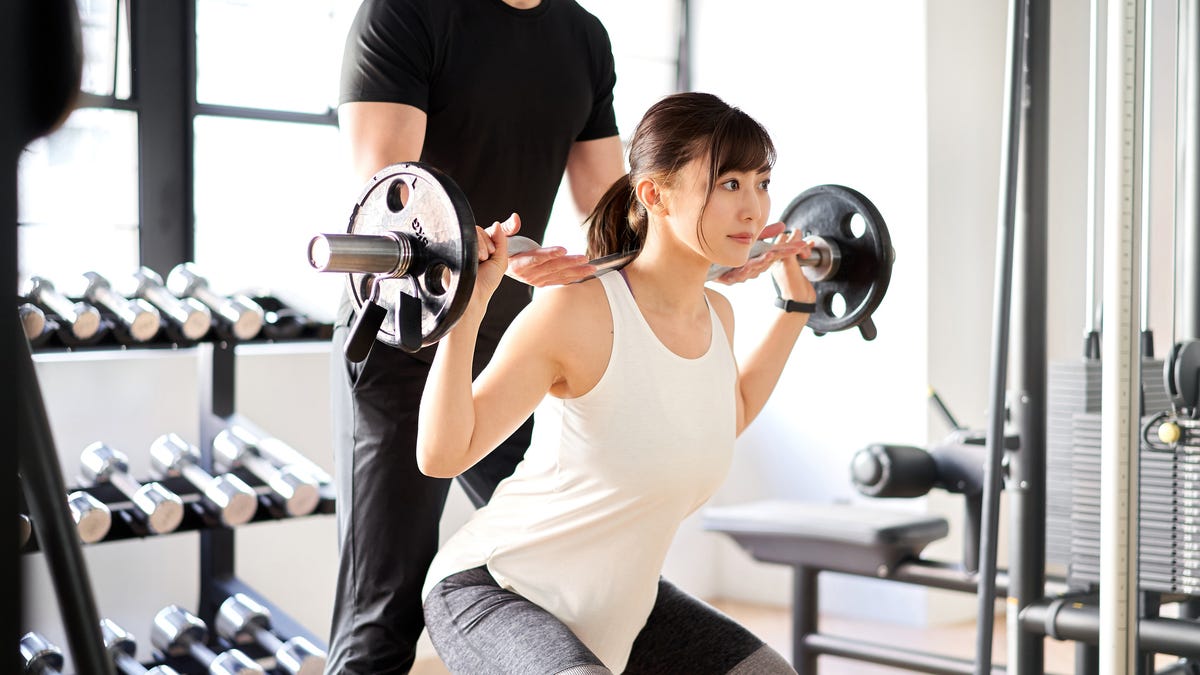
The squat is a fundamental lower-body exercise that targets various muscle groups, including the glutes, quads, hamstrings, and even the abdominals. It can be performed using a variety of weights including dumbbells, barbells, and kettlebells.
“Squats mimic essential daily movements, such as sitting and standing, and they contribute to increased strength through the spine and core,” reveals Natalie Yco, a fitness trainer.
There are numerous squat variations like squat jumps, single-leg squats, and goblet squats. For beginners, wall squats using a stability ball can provide support and help develop proper squat form.
8. Kettlebell Swings
Kettlebell swings are favored for their dynamic movement pattern and full-body benefits. Engaging hips, core, hamstrings, glutes, and upper body, this exercise can effectively combine strength training with cardiovascular conditioning.
“Kettlebell swings build overall strength while enhancing cardiovascular fitness,” explains Jennifer Conroyd, an ACE trainer and USA Track and Field Coach. Given the importance of technique with kettlebell exercises, beginners should work with a knowledgeable instructor to ensure proper form and reduce the risk of injury.
For newcomers, starting with a lighter kettlebell can help ease into the movement before progressing to heavier weights. Those with shoulder or lower back issues should seek guidance from a medical professional before attempting kettlebell swings.
Conclusion
Strength training can serve as a great foundation for your fitness journey, and implementing these exercises can help you build strength and endurance effectively. Remember to prioritize technique over heavy weights, listen to your body, and adjust the exercises to your fitness level. With consistency and the right mindset, you can achieve your fitness goals and maintain a healthier lifestyle. Happy lifting!