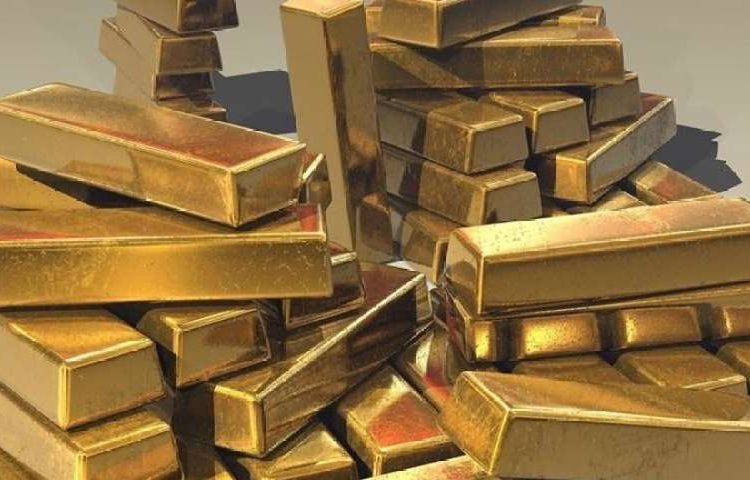
Gold is anticipated to soar to new heights, powered by strong investment demand and purchases by central banks. Recent market fluctuations have begun to attract bargain hunters, although analysts predict that silver will experience continued volatility.
On Tuesday, gold was on track to achieve its most significant daily increase since 2008 following a sharp two-day sell-off. This decline was triggered by President Donald Trump’s nomination of Kevin Warsh for the Federal Reserve Chair position, alongside a rising dollar and profit-taking by investors.
“Inflation continues to exceed targets, debt levels are climbing, and investors are increasingly looking to precious metals as a means to diversify away from equities, bonds, and fiat currencies,” stated Bart Melek, the head of commodity strategy at TD Securities.
Major banks are optimistic about gold’s future; both UBS and JP Morgan project prices to reach between $6,200 and $6,300 by the end of the year, while Deutsche Bank anticipates gold will hit $6,000. Citi maintains its long-term forecast for 2026, predicting an average of $5,000 in the first quarter.
As of 1054 GMT, spot gold experienced a 5.4% increase, reaching $4,915 per troy ounce.
ALL EYES ON PHYSICAL MARKET
Gold and silver reached unprecedented levels of $5,594.8 and $121.6, respectively, on January 29, before experiencing a decline. According to data from LSEG, gold’s 9.8% drop on Friday marked its largest daily decline in 43 years.
Analysts interpret this sudden drop as a healthy correction.
“The physical market will be crucial in establishing a price floor, especially following the Lunar New Year,” said Suki Cooper, an analyst at Standard Chartered. This refers to China, the largest consumer, where the New Year holiday occurs around mid-February.
Investment demand, particularly from retail, has become a vital component in driving gold’s recent surge, especially as other market sectors, like jewelry purchases and central bank acquisitions, have stalled.
“We foresee continued volatility; however, the conditions are ripe for substantial upside this year,” remarked Philip Newman, director at consultancy Metals Focus, who suggested that gold prices could potentially surpass the $5,500 mark.
The volatility observed in the silver market follows its sharp decline from last Thursday’s record high of $121.6 per ounce, influenced by the market’s smaller size. The January surge in silver’s price was primarily driven by momentum trading and significant retail investment inflows.
Silver was last observed increasing by 9.3%, reaching $86.8.
Amid reducing concerns about U.S. tariffs after a critical minerals review in mid-January and easing supply constraints in London, analysts from Mitsubishi indicated that silver has lost a pivotal driver of last year’s gains.
Nevertheless, the pullback in silver prices could positively impact its industrial applications, alleviating intense pressure on the margins of solar producers, analysts noted.
Reporting by Polina Devitt and Anmol Choubey; Editing by Aidan Lewis
Disclaimer: The views expressed in this article are those of the author and may not reflect those of Kitco Metals Inc. The author has made every effort to ensure the accuracy of the information provided; however, neither Kitco Metals Inc. nor the author can guarantee such accuracy. This article is strictly for informational purposes only. It is not a solicitation to make any exchange in commodities, securities, or other financial instruments. Kitco Metals Inc. and the author of this article do not accept liability for losses and/or damages arising from the use of this publication.