 As we enter a new year, many of us seek the chance to start fresh, leaving behind the challenges and difficulties of the previous year. However, lurking just beneath the surface of this new beginning lies a troubling truth: the remnants of last year’s inflated currency still cling to our economic landscape.
This so-called “fake money” cannot be ignored. While we may wish to dismiss it, its consequences are far-reaching and persistent.
The Victorian economist William Stanley Jevons outlined the four essential functions of money in his notable 1875 work, Money and the Mechanism of Exchange: it serves as a medium of exchange, a common measure of value, a standard of value, and a means to store value.
In today’s economy, however, the U.S. dollar and other forms of fiat currency fail to fulfill these critical functions, particularly as a store of value. This realization prompts us to classify today’s money as not genuine—rather, it is counterfeit. The presence of fake money distorts the ways in which individuals earn, save, invest, and spend, profoundly affecting nearly every aspect of economic life.
Consider the dollar: over the past century, it has lost more than 95% of its value. Despite this staggering depreciation, the dollar has one of the more stable tracks compared to its peers; many currencies that existed a hundred years ago have long since disappeared, reduced to mere memorabilia.
Who Will Buy All This Debt?
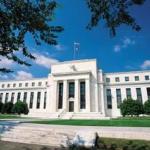
Understanding the challenges facing the dollar requires recognizing its reliance on a debt-driven monetary system, freely minted by the Federal Reserve. How can money serve as a reliable store of value when unelected officials can create it at will?
Following President Nixon’s temporary suspension of the Bretton Woods Agreement in 1971, the future of money transformed irrevocably. The money supply expanded without restraint, with the Federal Reserve augmenting its balance sheet in order to purchase government debt. These Fed acquisitions of Treasury notes have become crucial for financing government expenditures that exceed tax revenues, contributing to fiscal deficits.
Though the Fed is legally barred from directly buying Treasury securities, it cleverly sidesteps this restriction by allowing major banks—known as Dealers—to purchase these securities initially and then resell them to the Fed for a profit. This method, which has been in practice for over a decade, is a troubling obscurity in the larger financial system.
According to the Congressional Budget Office, the federal budget deficit for the initial months of fiscal year 2020 reached $342 billion. At this pace, the U.S. could be on track to add over $2 trillion to the national debt within the fiscal year. But who will invest in this mountain of debt?
The answer is clear: not China, Japan, Saudi Arabia, or even American citizens. Instead, the Federal Reserve will buy it, further swelling its balance sheet. However, such questionable practices come with natural repercussions that will affect your financial well-being—you are already seeing that impact take shape.
Subjective Evaluation
Approximately a decade before Jevons conceptualized the four functions of money, he introduced the concept of marginal utility. This economic principle explains that the satisfaction derived from consuming a good or service diminishes with each additional unit. Thus, this changing utility plays a pivotal role in setting prices within the economy.
However, Jevons’ elaboration on simultaneous determination within complex economic models encountered significant flaws. It relied heavily on artificial representations of reality rather than focusing on tangible, real-world dynamics. Sadly, much of mainstream economics has continued down this convoluted path, enamored with complex theories.
Alternatively, contemporaneous economist Carl Menger took a different approach. Menger, from the University of Vienna, independently explored the notion of marginal utility, applying deductive reasoning to interpret real-world behaviors. For Menger, recognizing individual subjective evaluations was crucial in comprehending how marginal utility operates.
In his influential work, Principles of Economics, published in 1871, Menger described pricing as a result of intentional, voluntary exchanges between buyers and sellers, each informed by their subjective assessments of various goods’ utility. He emphasized that the specific quantities traded and their prices stemmed from each person’s valuation of marginal units.
Menger also discerned that the initial unit of a good provides greater utility than subsequent units, leading to the concept of diminishing marginal utility. This principle is often referred to as the law of diminishing marginal utility.
Money, much like any good, is subjected to this law of diminishing marginal utility. Specifically, increasing the money supply reduces the purchasing power of each unit, resulting in rising prices as people exchange their surplus currency for goods. In essence, the purchasing power of money decreases.
How the Fed Robs You of Your Life
The inflationary expansion of the money supply distorts the pricing of goods and services. While nominal costs may rise, the utility derived from later units often diminishes, undermining individual savings. This effectively robs you, the saver, of your financial stability and, in a broader sense, your life.
When the Federal Reserve injects money into the economy to mitigate deficits, it devalues the dollar. Likewise, by artificially suppressing interest rates, the Fed fuels excessive credit issuance, inflating the money supply further and diminishing the dollar’s purchasing power.
What does this mean for you personally?
Reflect on the moments you could have spent at home with family instead of laboring tirelessly for payment. Consider all the time wasted on commutes and unfulfilling work instead of enjoying precious moments with your children. Recall the sunny days lost to being cooped up in an office, crunching numbers on unworthy jobs.
All this effort, only to see your earnings diminish after taxes and inflation consume your hard work?
Remember, money is not just a commodity—it also signifies the time and sacrifices invested to acquire it. When the Federal Reserve dilutes your money, it steals not only your financial resources but your very life.
With sincerity,
MN Gordon
for Economic Prism
Return from How the Fed Robs You of Your Life to Economic Prism