Meet Lulu: Your Next Adventure Buddy!
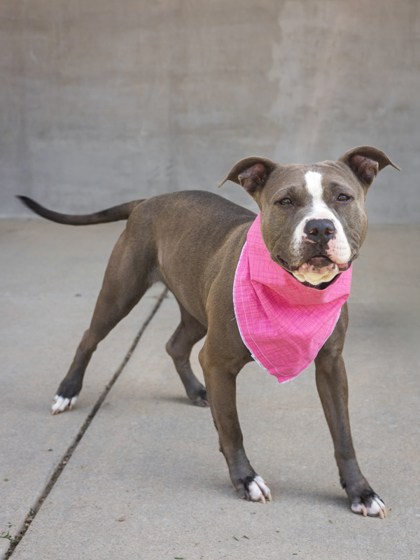
Lulu is a delightful five-year-old Pittie who’s all about fun and adventure! A true princess at heart, she loves making every day a little brighter. Whether she’s exploring new places, meeting new friends, or flaunting her tug-of-war skills, Lulu thrives in the spotlight and is happiest when she’s in the action—especially if treats are involved!
Recently, she showcased her friendly spirit at ArtWalk, endearing herself to kids and staff alike. She had an absolute blast playing tug with firefighters, demonstrating her playful nature and knack for making friends wherever she goes.
Lulu has two key passions: treats and toys. If there’s a toy around, you can count on her to be right there, eager to play.
Ideal Home:
- Lulu is great with children of all ages and enjoys having playmates around who can match her energy.
- She may get along with other dogs after a proper introduction, but she’s not suited for homes with cats.
If you’re looking for a spirited, affectionate companion full of personality, come meet this lovely Pittie princess today!