Cars from the 1990s hold a special allure that is hard to explain. This decade marked a remarkable era when design was daring, engines were genuine technical marvels, and the term ‘analogue’ simply described the mainstream rather than serving as a marketing gimmick. From flashy Italian supercars to everyday vehicles with rally heritage, the 90s produced a diverse range of cars before the era of strict electronics and emissions standards began to mute their charm.
These vehicles defined a generation of automotive enthusiasts and continue to turn heads today, whether spotted at a car meet or cruising down the highway. Here are six iconic models that underscore why the 90s remains a beloved decade for driving aficionados.
Lamborghini Diablo
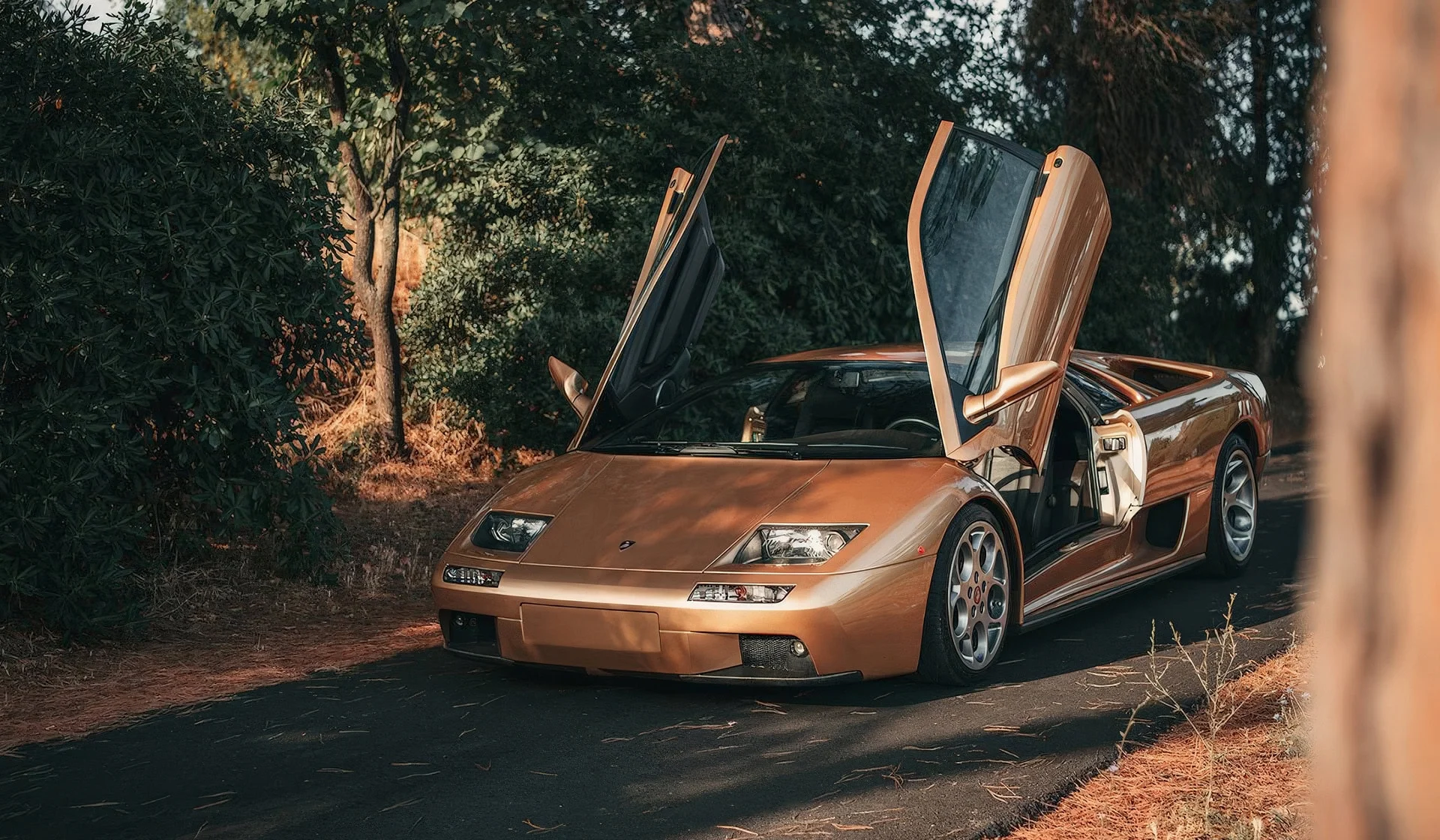
Choosing one supercar to represent the 1990s is no easy feat, but the Lamborghini Diablo stands out with its dramatic evolution. As the long-awaited successor to the legendary Countach, the Diablo made its debut during a tumultuous time for Lamborghini, experiencing a change of ownership from Chrysler to Audi — each bringing its own influence to the brand. Consequently, the Diablo transformed throughout its production run.
By the time it reached its final iteration, the Audi-enhanced all-wheel-drive Diablo GT showcased the model at its finest. With its 6.0-litre V12, which evolved over the years, the last GT version offered exhilarating performance paired with improved handling and a refined gearbox, all supported by quattro confidence.
Giorgetto Giugiaro’s design was on full display, featuring modernized wheels and cleaner aesthetics. While the Countach epitomized 1970s excess, the Diablo embraced 90s flair — audacious, powerful, and glamorous.
Now, spotting a Diablo cruising through traffic feels even more impressive than encountering a Countach, thanks to its rarity and the seamless blend of classic and contemporary design.
BMW M5 (E39)
Most BMW enthusiasts would likely pin the brand’s peak achievements on the E39 generation, particularly the M5 variant. The concept of a discreet super-saloon was not new, but the E39 honed this idea to perfection with typical M Division expertise.
Unlike its contemporary rivals from Audi or AMG, the M5 exclusively featured a six-speed manual gearbox and rear-wheel drive, delivering a level of driver engagement that modern automatic transmissions cannot replicate. Its 4.9-litre V8 was more than just robust for a saloon — it was a true masterpiece, showcasing flexibility and power at low revs while reaching exhilarating heights as it approached the redline.
The M5 also introduced pioneering features still found in today’s performance cars, from a perfectly tuned limited-slip differential to advanced traction control. Its body closely resembled the standard 5 Series, with only the quad exhausts and subtly flared arches hinting at the impressive performance within — a refreshing contrast to the more flamboyant competitors of today.
Honda NSX Type R
Upon its release, the Honda NSX struggled to gain traction among buyers in the UK and Europe. It showcased a supercar that was both civil and practical for daily use, but some critics felt it lacked the dramatic flair of its Italian counterparts.
Fast forward three decades, and the perception has flipped. The NSX Type R has emerged as one of the most sought-after vehicles of its time, often commanding prices that exceed many of the hypercars with which it once competed.
The engineering brilliance of the NSX is what sets it apart. The 3.2-litre naturally aspirated V6 was devoid of turbos and superchargers yet bursting with sophistication, sporting Honda’s advanced variable valve timing technology. This resulted in an engine that was as docile as it was ferocious, perfectly complemented by a manual gearbox that made it one of the most balanced drivers’ cars ever built. Today, encountering one at a supercar gathering signifies an encounter with a true collector’s gem.
Aston Martin DB7
If you seek an elegant, sophisticated British sports car that won’t break the bank, the original Aston Martin DB7 is a top choice. Designed in the early 90s, its sleek curves and newfound fluidity established a visual language that still characterizes Aston Martins today — a significant advancement for a brand previously stuck in the aesthetics of the 1970s.
While early models featured a modest straight-six engine, they remain the truest representation of the design’s philosophy. With their distinctive grilles and turbine-like wheels, these cars evoke the spirit of their era beautifully.
Moreover, most DB7s were tastefully appointed. Owners chose these vehicles not to flaunt wealth but to enjoy quiet, effortless journeys down the M40 from their Cotswolds retreats — a timeless allure that remains captivating.
Audi RS4 Avant
The concept of a speedy estate may be commonplace today, but in the 1990s, Audi was pioneering this category, first with the RS2 and later with the ambitious RS4 Avant. While it might seem like a standard A4 that has undergone extensive workouts, it was uniquely engineered beneath the surface.
Almost every exterior panel was custom, save for the front doors, bonnet, roof, and tailgate. The expanded wheel arches were essential for accommodating larger wheels and tires, designed to capitalize on the power from its exclusive 2.7-litre V6 engine.
This engine, developed with the British engineering firm Cosworth, bore little resemblance to the S4’s motor despite similar specifications. Cosworth’s influence is now evident in many modern hypercars, including the Aston Martin Valkyrie and GMA T.50, with the RS4 serving as one of its pioneering showcases.
As car enthusiasts saw its potential, many began modifying these vehicles for impressive power outputs during the mid-2010s. Today, locating an unmodded example has become challenging, driving up its market value. Driving a stock RS4 Avant reveals why it remains one of the most pragmatic and thrilling performance cars of the 90s.
Subaru Impreza WRX STI
Few cars encapsulated the spirit of the 90s as effectively as the Subaru Impreza Turbo. Its rally heritage — complemented by its iconic blue-and-gold livery — made it an emblem for an entire generation, especially as British drivers dominated the World Rally Championship.
Compact, agile, and powered by a spirited turbocharged flat-four, the Impreza WRX STI became synonymous with genuine performance. Today, owning a factory-standard STI — whether through Japanese import or UK variant — makes a bold statement.
In an automotive landscape increasingly filled with silent electric vehicles and towering SUVs, the WRX STI stands out with its distinctive personality. With a roof rack or a Swiss motorway vignette, it embodies the quintessential ’90s cool icon. Admittedly, it retains a hint of boy-racer energy, but that authenticity is what makes it special.
Unline many trendy enthusiasts who sport retro racing gear for the aesthetics, true STI owners understand and appreciate the culture that transformed these cars into legends.