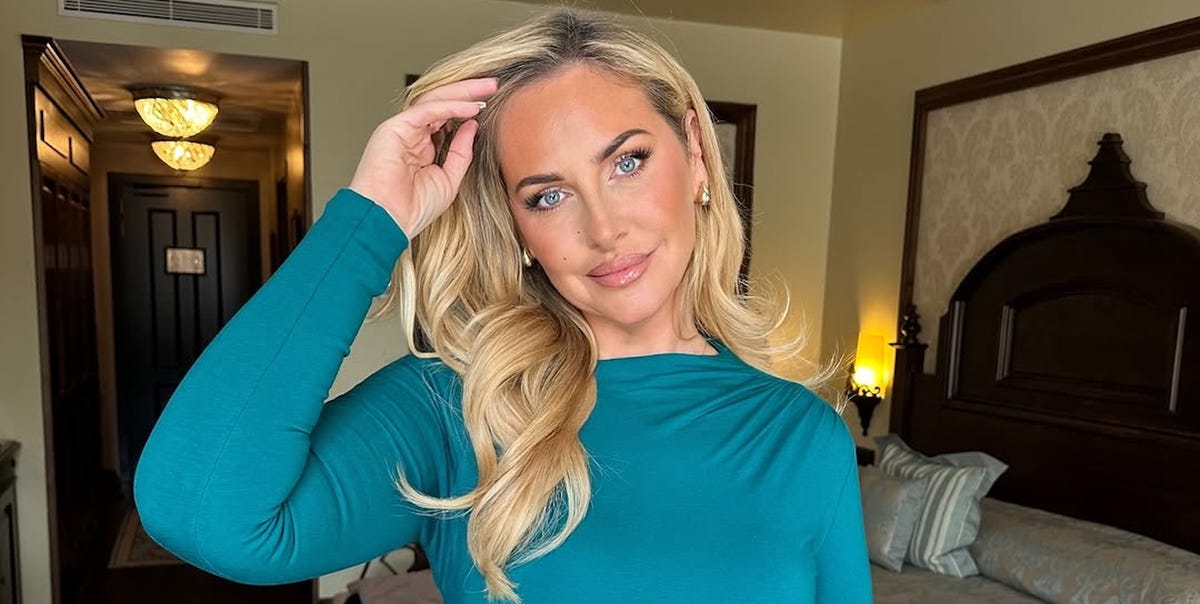
The gym can often feel intimidating, but remember that everyone is there for the same purpose: to improve their fitness. Just like daytime TV star Josie Gibson, who shared her workout routine on a recent Instagram Reel, everyone can find their groove in the gym. Josie posted her workout as a response to the many inquiries about her transformative weight loss journey.
Simple but Effective Workouts
“I hope this inspires someone out there,” Josie remarked. “I was diagnosed with Lipoedema last year, which has made it challenging as my body retains fat differently.”
In her video, Josie demonstrates a workout that begins with a 500m run on the treadmill, followed by strength training with three sets of 20 repetitions. Josie includes exercises like dumbbell squats for her glutes and quads, lat pulldowns for her upper back and arms, and tricep pushdowns to strengthen her triceps.
She also incorporates Swiss ball hamstring curls, engaging her hamstrings, glutes, and core, offering a balanced mix of cardio and full-body workouts.
“I just mix it up, tune in my headphones, and get to work. I always feel amazing after,” Josie shared, acknowledging that gym environments can sometimes feel overwhelming.
Combining Fat Loss with Muscle Gain
Many fitness enthusiasts aim to lose fat while building muscle, which can be challenging but achievable, according to FIIT personal trainer Laura Hoggins. In her four-week plan designed for Women’s Health, you can find guided workouts and nutrition advice tailored to enhance body composition for 2026.

Short but Effective Workouts
Josie’s approach showcases the advantages of short, intense full-body workouts that are easy to follow—a principle championed by Rick Parcell, co-founder of The Body Camp.
“It’s all about simplicity—choosing three or four exercises and repeating them three times a week, like Monday, Wednesday, and Friday,” Rick advises. “For instance, you could do 10 squats, followed by 10 push-ups, and then 10 sit-ups—it’s all about simplicity. Just rotate through those exercises for 10 to 20 minutes at most.”
For an even more efficient routine, Rick suggests focusing on machines. “You can do 10 or 20 reps on one machine before moving to the next without long breaks between machines,” he explains. This advice is particularly useful for those looking to maximize their workouts.
Rick recommends this training style for women over 40, emphasizing intensity and focus. “It’s about pushing your limits for short bursts, then getting on with your day,” he adds.
Establish a Strong Foundation
“If you’re already exercising regularly, you’re more likely to handle high-intensity routines effectively,” Rick advises. Creating a strong foundation is crucial for progress.
When lifting weights, Rick suggests a balanced approach. “Aim to push yourself with heavier weights for fewer reps, about 10 for dumbbells, but consider 20 for machines as they offer more control.” This strategy allows for effective muscle engagement while staying safe.
Conclusion
Incorporating short, intense workouts like those practiced by Josie can provide a fantastic way to achieve your fitness goals without spending hours at the gym. By embracing simple routines and focusing on foundational strength, anyone can enhance their fitness journey and feel great. Remember to listen to your body, maintain consistency, and most importantly, enjoy the process!