Embracing Winter Adventures: Exploring Michigan’s Ice Caves
As winter sets in and temperatures drop, the allure of the outdoors transforms dramatically. Ice caves and ice volcanoes are emerging along the shores of Lake Michigan, offering both beauty and adventure. However, exploring these stunning natural formations requires caution and preparation.
The Beauty of Ice Formations
The recent cold snap has led to an unusual sight—ice caves and ice volcanoes at Lake Michigan. Locals, such as adventurer James Schaberg, have noted that these structures are some of the largest seen in years. “I’m always timid and cautious,” Schaberg shares, emphasizing the rarity of these impressive formations that have formed during this colder-than-average winter.
What Are Ice Caves and Ice Volcanoes?
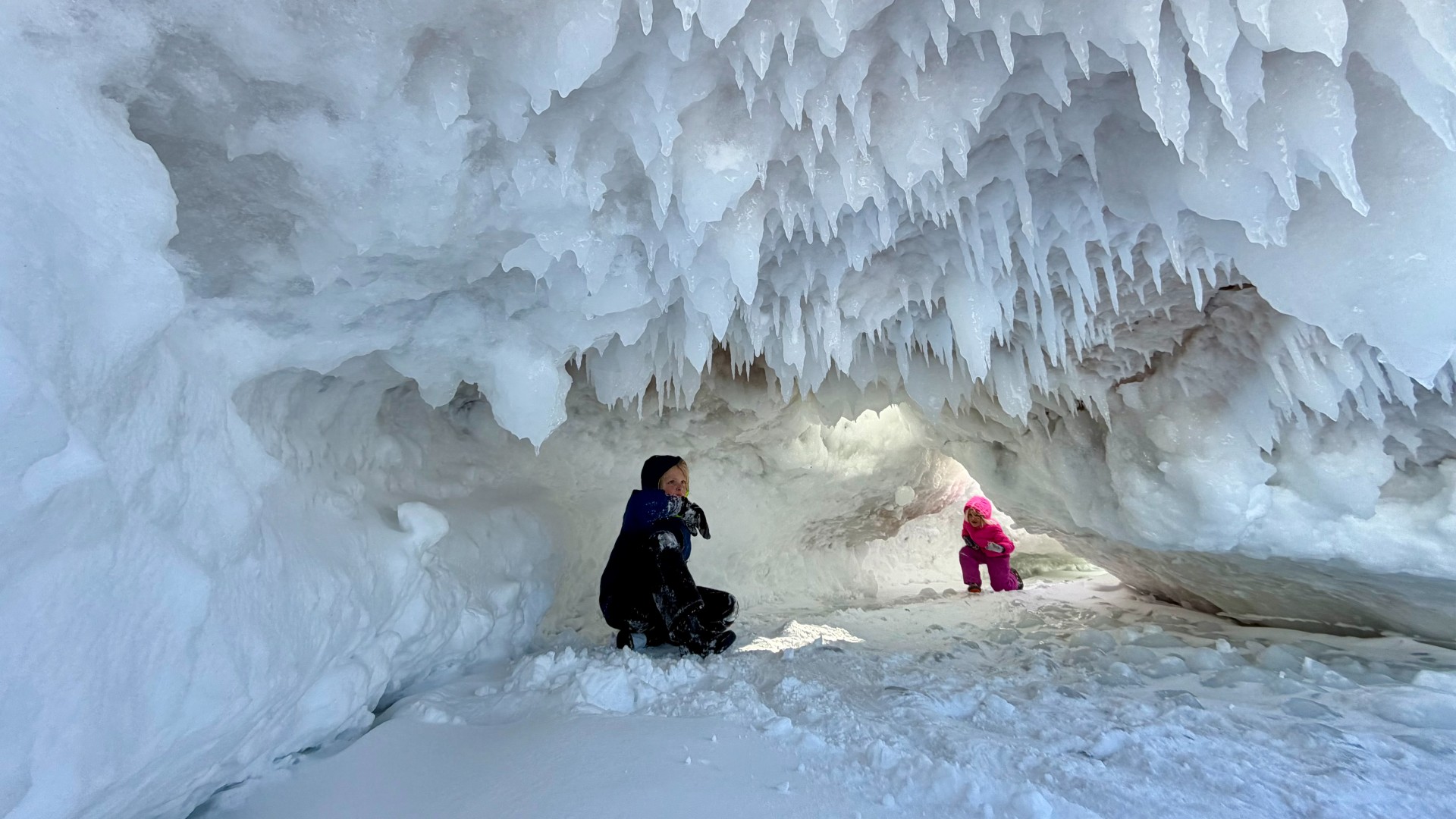
Ice volcanoes are formed when water is forced upward through cracks in an ice shelf by strong waves, creating cone-shaped mounds of ice, slush, and sediment that can reach heights of over 20 feet. In contrast, ice caves form when lake water sprayed onto the shoreline freezes, creating striking ice structures along the coast.

Juniper Schaberg stands tall at the entrance of an ice cave at Sleeping Bear Point over the weekend. (Courtesy of James Schaberg)
Many visitors are drawn to popular locations like Empire, Glen Haven, Leland, and Northport, where strong winds and waves contribute to the formation of these unique ice structures.
Safety First: Exploring Responsibly
While these ice formations are visually captivating, they can also be dangerous. It’s critical to exercise caution when venturing into these icy landscapes. Here are some practical tips for safer exploration:
-
Bring a Companion: Always traverse the ice with someone else. This way, you have assistance in case of emergencies.
-
Stay Equipped: Carry a device capable of calling for help; a reliable communication tool can be lifesaving in unexpected situations.
-
Observe Before Approaching: Maintain a safe distance of at least 100 feet from the water’s edge. Assess the ice formations from a secure spot above before getting closer.
-
Choose Optimal Times to Visit: Sunset offers a breathtaking backdrop, enhancing the icy scenery. Plan your visit for this time for both safety and stunning visuals.
Understanding Current Conditions
This winter, the Great Lakes are exhibiting varied ice coverage. As of early February, over half of the Great Lakes are covered in ice, with Lake Erie being the most frozen, boasting an impressive 95% ice coverage. It’s essential to stay informed about local conditions, as they can change rapidly with temperature fluctuations.

A rare inside look of a Lake Michigan ice cave near Glen Haven in Leelanau County. (Courtesy of James Schaberg)
Local authorities, including the Coast Guard, have issued warnings regarding unpredictable ice conditions. Recent incidents have highlighted the importance of maintaining vigilance while exploring icy terrains.
Conclusion
Whether you are admiring the beauty from a distance or planning a hike through these winter landscapes, understanding the risks and preparing accordingly can profoundly enhance your experience. Take the time to appreciate nature’s icy marvels, but always prioritize safety above all else. Embrace the winter wonderland with respect and caution, and your outdoor adventures will surely be memorable!