In today’s update on the ongoing Iran conflict, we’ll provide a concise overview, dashing through the latest developments which are increasingly dominated by a surge in social media activity. While mainstream coverage of the clashes involving Iran and the Saudi-Ansar Allah alliance might have diminished, the online discourse suggests growing concern among observers. The situation seems poised for significant upheaval, akin to tectonic changes awaiting an earthquake.
A Qatari delegation followed by Pakistan’s General Asim Munir recently visited Tehran, aiming to mediate discussions between the US and Iran. However, experts such as Trita Parsi have expressed increasing skepticism about the prospects for a peaceful resolution, a sentiment echoed by Iran’s recent firming of its position, which has widened the divide between the two parties.
Social media insights reflect this tension. For example, Arya Yadegaar noted:
Iranians have conveyed via Asim Munir that they reject nuclear negotiations and the transfer of nuclear materials unless their seven conditions are met. Importantly, “lifting the blockade and releasing frozen assets are no longer seen as significant concessions by Tehran.”
The outcome of Munir’s initial 30-minute discussion in Qatar led to noteworthy developments. Contrary to earlier restrictions, he announced that the border with Iran has been reopened, indicating that Islamabad is no longer completely yielding to external pressures.
Reacting to the evolving situation, Brett Erickson commented:
There are mounting signals that Iran is resolutely entrenched in its current negotiating stance. Recently, Ghalibaf emphasized that the U.S. must agree to Iran’s seven key conditions before any resolution can occur. Moreover, Mohsen Rezaei, Secretary of Iran’s National Security Council, asserted that not a single gram of Iran’s enriched uranium will be exported. Even President Pezeshkian, typically inclined towards diplomacy, has gone quiet lately.
Iran shows no willingness to provide President Trump with an exit strategy from negotiations. Current sentiments suggest that anyone in Iran still hoping for trust with figures like Pezeshkian and Ghalibaf is now disillusioned.
Despite adopting a relatively restrained approach in the Gulf, many in Iran believe that genuine pressure, rather than diplomatic overtures, is required to resolve the ongoing conflict. The time for a more aggressive stance may be approaching.
Internationally, China’s calls for negotiations appear to have faded. Speculations suggest that despite the costs imposed by disruptions in the Persian Gulf, China might benefit from the enduring damage to U.S. military credibility.
In a segment, Cenk Uygur presented remarks from Israeli Defense Minister Benjamin Katz concerning plans to reignite hostilities with Iran, targeting energy infrastructure among other strategic assets. Trita Parsi aligns with this interpretation, suggesting that Israel’s military intentions were previously constrained by the U.S., but may now be acted upon before impending Israeli elections. The prospect includes the use of MOABs against Iranian sites, a point debunked by Matthew Ho, who cited their ineffective results in the past when used against ISIS.
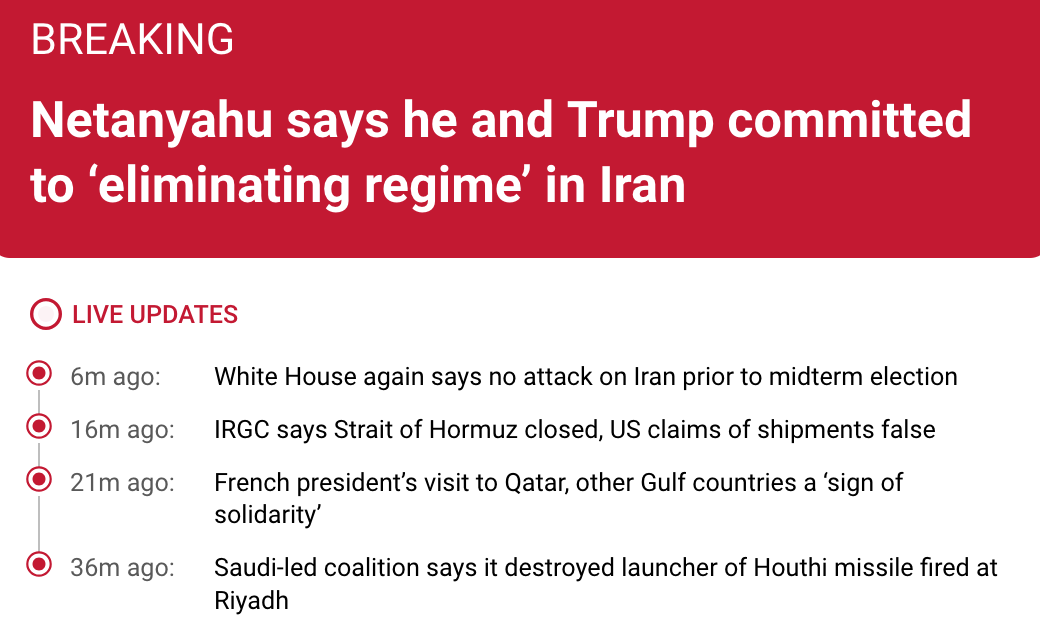
Recent reports indicate tensions are further heightened as Israeli claims of attacks in the Strait of Hormuz rise, with various sources debating their validity. The live news feed updated as of 3:00 PM EDT yesterday includes:
- Israeli Prime Minister Netanyahu affirmed both he and President Trump are committed to the “elimination of the Iranian regime” and that discussions on this matter have taken place.
- Two tankers reportedly caught fire after striking mines in the Strait of Hormuz, drawing conflicting responses from U.S. CENTCOM.
Despite the uptick in military rhetoric, Iran perceives the U.S. as being hesitant to undertake significant military action. As Ehsan Taghadosi noted, current military assets do not suggest an immediate threat of a broad U.S. assault, particularly before upcoming elections. Nonetheless, expectations are for a concentrated strike lasting a few days, with Iran poised for retaliation.
In response, the U.S. continues to fortify its military presence in the region:
BREAKING: The U.S. is dispatching the USS Theodore Roosevelt carrier strike group and the 13th Marine Expeditionary Unit to the Middle East, adding over 10,000 personnel, with an arrival timed around the midterms.
Complicating matters, U.S. officials have expressed to Gulf states that they should not expect unwavering support in the future. As mentioned in a recent Wall Street Journal article, Tom Barrack highlighted the changing nature of America’s role in global security. He indicated that Middle Eastern countries should prioritize self-sufficiency through regional coalitions.
On the front involving Saudi Arabia and Ansar Allah, the Houthis are expanding their territorial gains:
⚡️BREAKING: Yemen’s Houthis have captured Han Mountain from pro-Saudi forces, tightening their grip around Taiz. The siege grows tighter.
Military operations continue to escalate in the region, with severe humanitarian implications. Insufficient food supplies and basic necessities are exacerbating the situation in Taiz as conditions for civilians deteriorate.
Some analysts caution against greater support for the Saudis, suggesting the potential for wider conflicts to emerge in the region:
By moving defensive forces into Saudi Arabia, does this signal preparation for a coordinated attack on Iran? What are the implications?
As interests shift, the prospect of Turkey stepping up its involvement in the conflict remains unclear, particularly given its historical ties and tensions with both sides. The details of the recently proposed Mecca Defense Pact, signifying a potential alliance among Turkey, Pakistan, and Saudi Arabia, raise questions about future dynamics in the region.
As concerns ripple through the international community, a combination of tragic events and rising tensions paints a complex picture for Iran’s engagements with both regional and global actors. Observers continue to monitor developments closely, anticipating deeper ramifications as military posturing intensifies.
In summary, the volatile nature of the Iran situation, bolstered by rapidly evolving alliances, potential military escalations, and international geopolitical shifts, makes the coming days crucial. The ongoing elements of these conflicts bear significant weight on both humanitarian conditions and broader geopolitical stability.
See you again tomorrow!