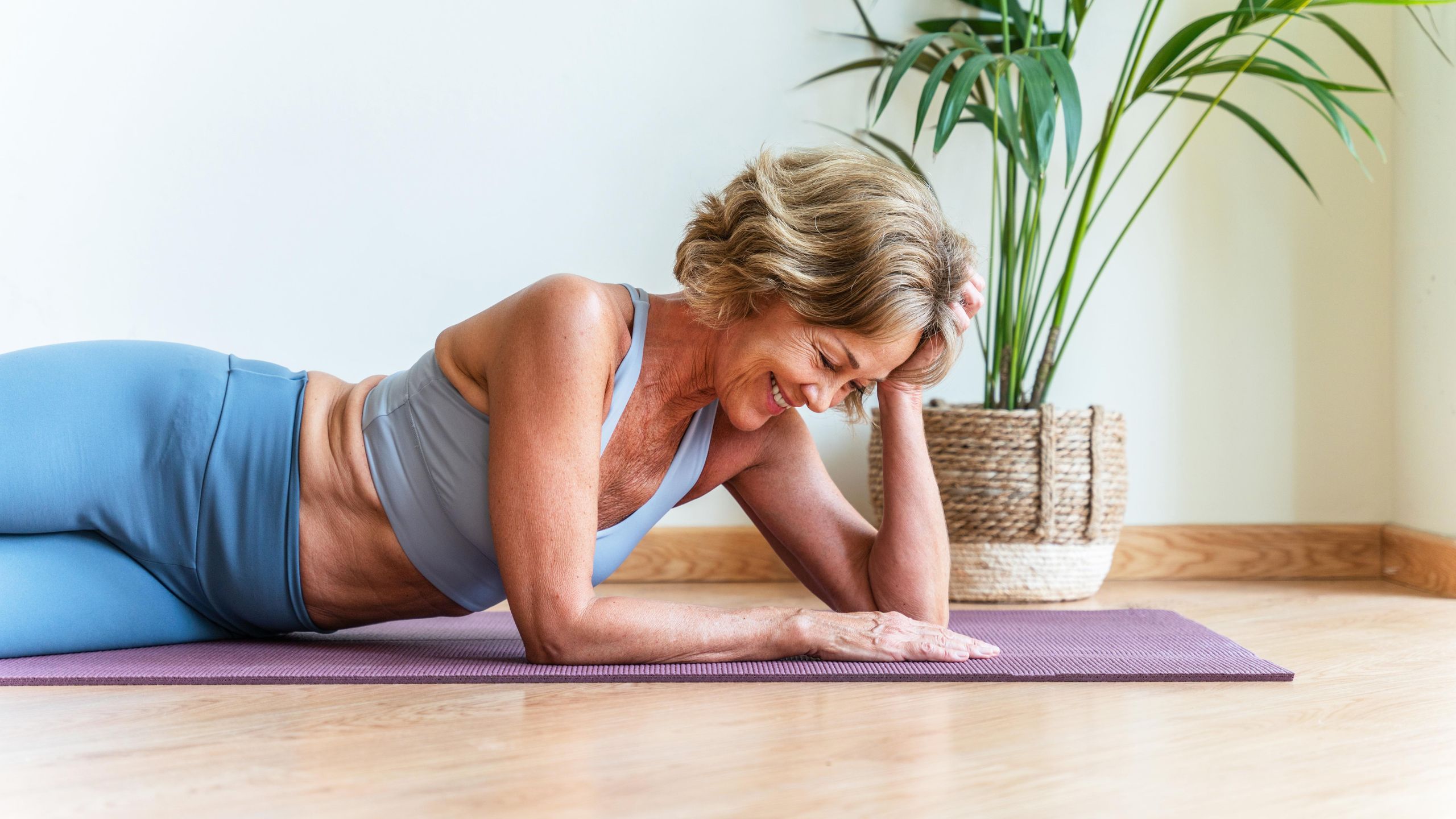
As we age, it’s common to feel that our bodies don’t react to exercise as they once did. While this is a natural part of life, it certainly doesn’t signify the end of strength gains—especially in the core area. With some adjustments to your training approach, you can still achieve impressive results.
Grace Heinrichs, a physiotherapist and personal trainer at X-Club Pilates & Wellness, frequently encounters this issue with her clients. She explains that as we grow older, we may lose muscle mass and flexibility, causing our muscles to activate more slowly. Over time, the deeper stabilizing muscles in your core may take a backseat to larger surface muscles, leading to stiffness instead of the desired strength.
However, the good news is that conditioning the core can be very effective at any age with intentional, low-impact, and well-structured training. Heinrichs shares five core exercises that can be performed easily and safely.
Core Workout Overview
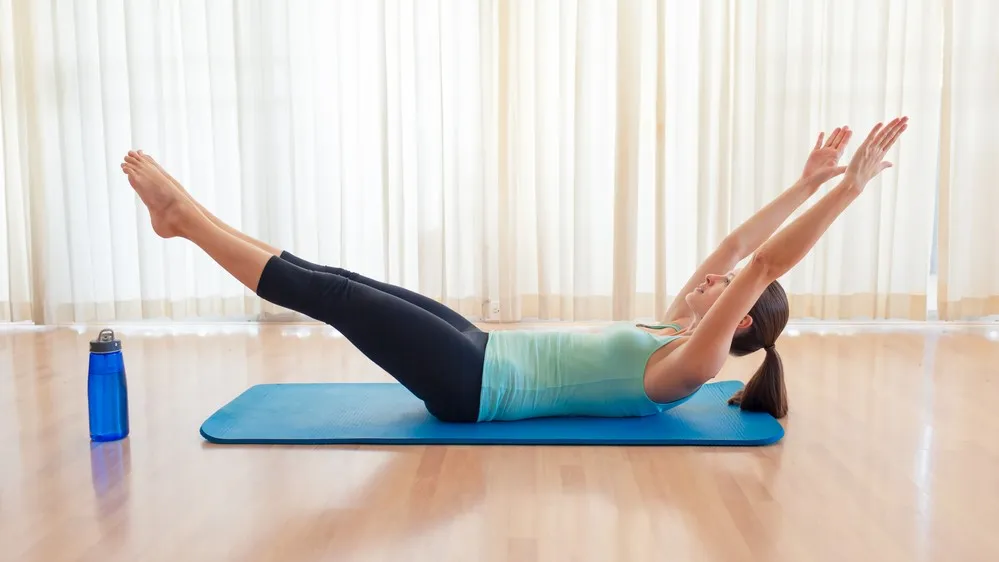
Based on physiotherapy and Pilates principles, Heinrich emphasizes that this core workout is suitable for most older adults and requires minimal equipment. It can be executed on the floor or a mat without the need for gym access.
1. Transversus Abdominis (TvA) Activation
- Begin lying on your back with your knees bent and feet flat. Place your hands on your hips.
- Gently tilt your pelvis towards your face to flatten your lower back against the floor, maintaining a neutral spine.
- As you exhale, engage your lower abdomen as if you’re zipping up tight pants. Keep your pelvis and ribcage stable—no tilting. Continue to breathe normally while holding the contraction.
- Hold for 10 seconds.
- Fully relax.
- Repeat 10 times for three rounds.
- Tip: Focus on support rather than tension—this should feel light (around 10% effort), unlike a full abdominal curl which requires 100% effort.
2. TvA Leg Extensions
- Lie on your back with your knees bent and feet flat on the floor, arms at your sides.
- Gently tilt your pelvis toward your face to flatten your lower back.
- Engage your transversus abdominis and lift your right knee into tabletop position. Extend your right leg straight out, away from your body.
- Bring your knee back to the tabletop position, relax your TvA, and then re-engage for the left knee.
- Alternate legs while keeping your pelvis steady.
- Aim for 10 repetitions, for three rounds.
3. Sit-to-Stand with Slow Lowering
- Sit in a chair with your feet hip-width apart. Exhale as you stand, drawing your TvA in.
- Press through your heels to stand, avoiding any use of momentum or upper body assistance.
- Lower yourself back to the chair by pushing your hips back, as if closing a door with your glutes.
- Do 10 repetitions, for three rounds.
4. Seated Marching with TvA
- Sit up straight in a chair, feet hip-width apart.
- Inhale to prepare, then exhale while engaging your TvA to lift one knee off the chair.
- Lower back your knee down and relax your TvA.
- Repeat with the other leg.
- Aim for 10 repetitions, for three rounds.
5. Standing Weight Shifts
- Stand upright with your feet hip-width apart.
- Gently draw your TvA in towards your spine.
- Shift your weight from side to side, imagining your spine lengthening with each movement.
- This will engage your multifidi muscles, promoting stability and control in your spine.
According to Heinrichs, “A common misconception is that core workouts need to be high-intensity to be effective. In actuality, a lower intensity can often yield better results.”
Instead of striving for exhaustion, Heinrichs recommends focusing on slower, controlled movements, steady breathing, and proper alignment. Quality is far more important than quantity; a few carefully performed repetitions will always trump hurried attempts with poor form. Progress should stem from gradually increasing the challenges you take on rather than pushing yourself to the limit.

Follow Tom’s Guide on Google News and add us as a preferred source to receive up-to-date news, analysis, and reviews.
Explore More from Tom’s Guide
### Introduction
Aging is a natural process that affects our bodies, including how we respond to exercise. While many people can feel discouraged by changes in their fitness, it’s crucial to understand that progress is still possible, especially when it comes to core strength. This article will provide you with effective strategies and exercises to help you maintain and build your core strength.
### Conclusion
With age, our fitness approach may need to evolve, but that doesn’t mean we can’t achieve our strength goals. By incorporating thoughtful, low-intensity exercises focused on core activation, you’ll experience improvements in strength, stability, and overall wellness. Remember, prioritizing quality over quantity will lead to better long-term results, so embrace these exercises and enjoy the journey to a stronger core.