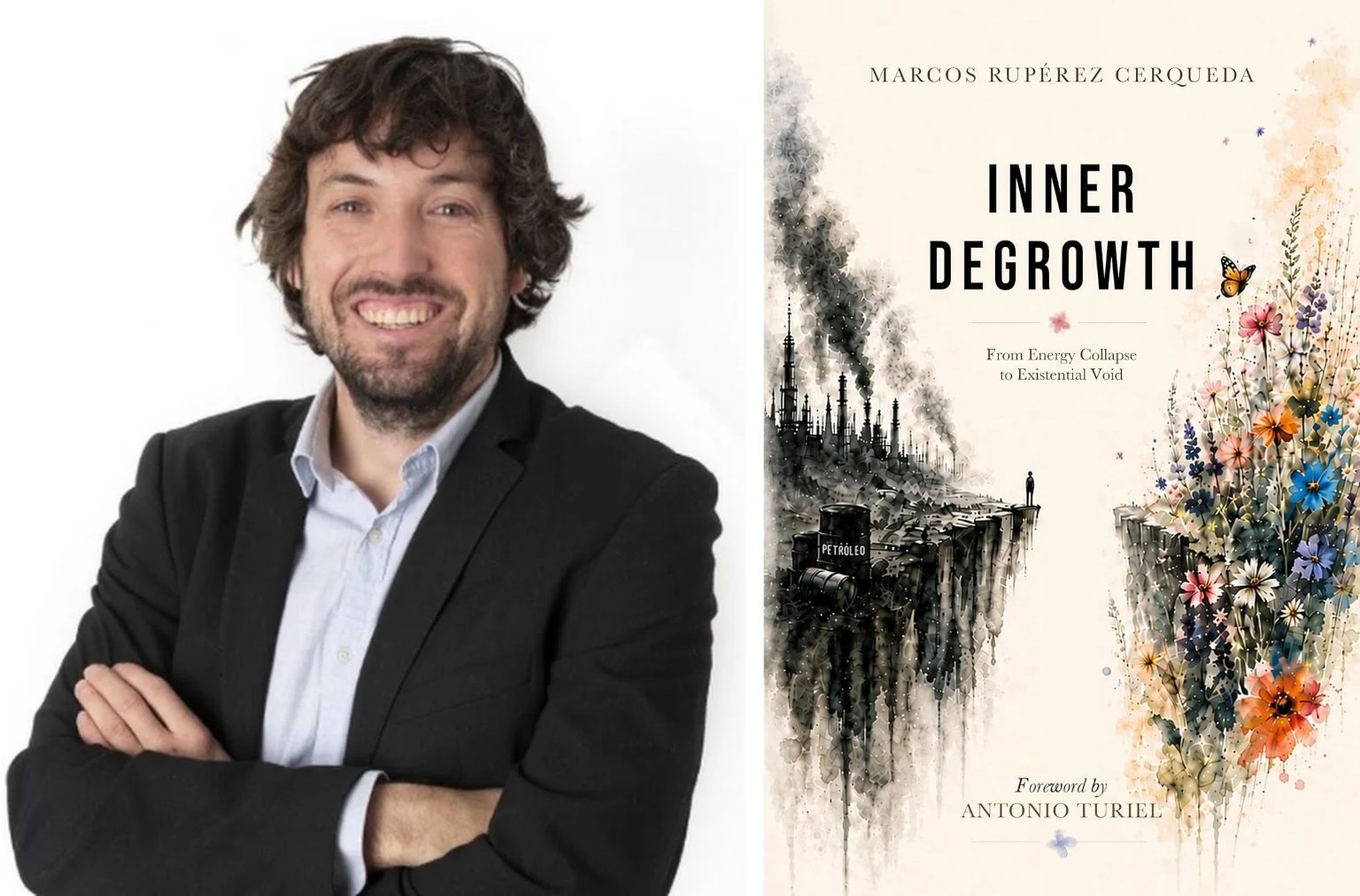
Marcos Rupérez Cerqueda’s journey from an advocate of green hydrogen to exploring the deeper implications of energy consumption is both fascinating and profound. In his new book, Inner Degrowth: From Energy Collapse to Existential Void, Rupérez examines the limitations of hydrogen as a universal energy carrier, revealing the harsh realities of energy loss in its production and use.
He emphasizes how his initial faith in technological solutions shifted as he understood the broader implications of energy efficiency and consumption patterns, particularly the Jevons paradox, which suggests that improvements in efficiency often lead to increased overall consumption.
His personal transformation began during a Vipassana retreat, which led him to confront the contradictions in his life and the societal drive for more—be it energy, time, or fulfillment. Rupérez argues that both personal and systemic change are intertwined, noting that true change requires a deeper understanding of our inner desires and motivations.
He addresses the concept of “inner degrowth,” cautioning against viewing it simply as a personal virtue or optimization. Instead, it advocates for letting go of the perpetual chase for more, acknowledging that without a change in inner priorities, systemic change is unlikely to occur.
Rupérez concludes that his work is for those who sense discrepancies in our current trajectory, be it through energy consumption, climate challenges, or personal crises, inviting them to explore both the quantitative and qualitative aspects of our existence.


