AVON — The excitement of the upcoming Winter Olympics was palpable a month before the games, particularly at the St. Agnes School gymnasium on January 8. Students engaged in various activities designed to emulate Olympic sports while fostering a love for fitness.
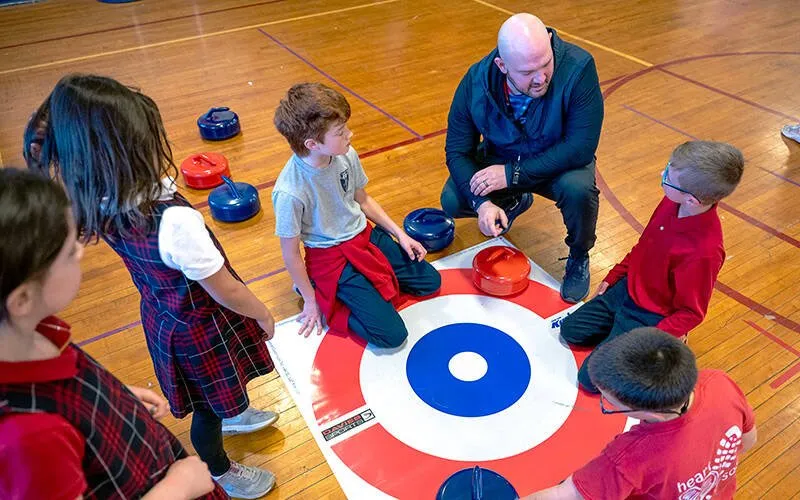
At one station, youngsters simulating speed skating pushed carpet pieces around a makeshift track. Nearby, students vaulted off a springboard, creating the thrill of ski jumping. In another corner of the gym, competitors slid discs toward a target, mimicking the precision required in curling. The atmosphere buzzed with enthusiastic cheers and laughter, accompanied by the iconic “Bugler’s Dream” fanfare that filled the gym with Olympic spirit.
Eric Stevenson, the school’s physical education instructor, creatively prepared his students for the actual Winter Olympics scheduled from February 6-22 in Italy. His innovative approach to gym class has included a wide variety of activities, such as floor hockey, Wiffle ball, cup stacking, zombie tag, pickleball, and Frisbee golf.
“You get to play multiple games and discover new sports. Mr. Stevenson makes everything so enjoyable,” shared Hannah Cox, a third-grader at St. Agnes.
Frank Arvizzigno, diocesan superintendent of schools, highlighted how these engaging activities represent a shift in physical education compared to past generations. “We focus on hands-on, creative experiences. The days of just handing students a basketball are gone,” he said. “There’s much more thought and planning involved now.”
Promoting a Holistic Approach to Physical Education
Arvizzigno noted that all diocesan Catholic schools adhere to New York state’s physical education requirements, which mandate at least 120 minutes of class time each week for elementary students. Instructors are dedicated to providing a well-rounded curriculum that integrates related videos, personalized instruction, and discussions on fitness, nutrition, and healthy life choices.
Stevenson emphasized that this comprehensive approach helps dispel the misconception that gym class is merely playtime. “Physical education is gaining respect,” he said, also teaching physical education and health at Rochester’s St. Ambrose Academy.
Cole Gerwig, a fifth-grader at St. Agnes, remarked, “I’ve learned how crucial it is to stay active, to build strength and health.”
In conjunction with gym classes, many diocesan schools offer extracurricular activities through the Catholic Youth Organization sports, as well as initiatives like running, golf, bowling, and ski clubs, jump-roping fundraisers, walk-a-thons, and road races to promote fitness.
“There’s definitely a push for more physical activities, both in gym class and beyond school hours,” Arvizzigno shared.
Fun and Fitness Go Hand in Hand
Even with the increased variety in physical education options, Arvizzigno noted that the Catholic values emphasized during these classes have remained steady. “Each lesson should incorporate a Catholic element,” he said, highlighting good sportsmanship as an opportunity for moral teaching: “It’s about how to win and lose graciously, being respectful, and adhering to rules and safety.”
Stevenson also believes that physical education should be enjoyable for all students, regardless of their athletic abilities. “My goal is to ensure every child has a positive experience. I want them to create memories while playing their favorite games with friends,” he explained.
This philosophy resonates with students like Hannah and Cole, who find their gym classes at St. Agnes to be a delightful blend of exercise and fun. “It feels like recess, but you’re still being active,” Hannah remarked. “It’s just a ton of fun!” Cole added.
Conclusion:
As schools like St. Agnes embrace creative and engaging physical education strategies, they foster a love for fitness among their students. By incorporating fun exercises and educational discussions on health, schools are helping to cultivate a generation of active and health-conscious individuals. Whether in a gym class or during extracurricular activities, physical fitness promotes not just physical well-being, but also social interaction and personal growth.