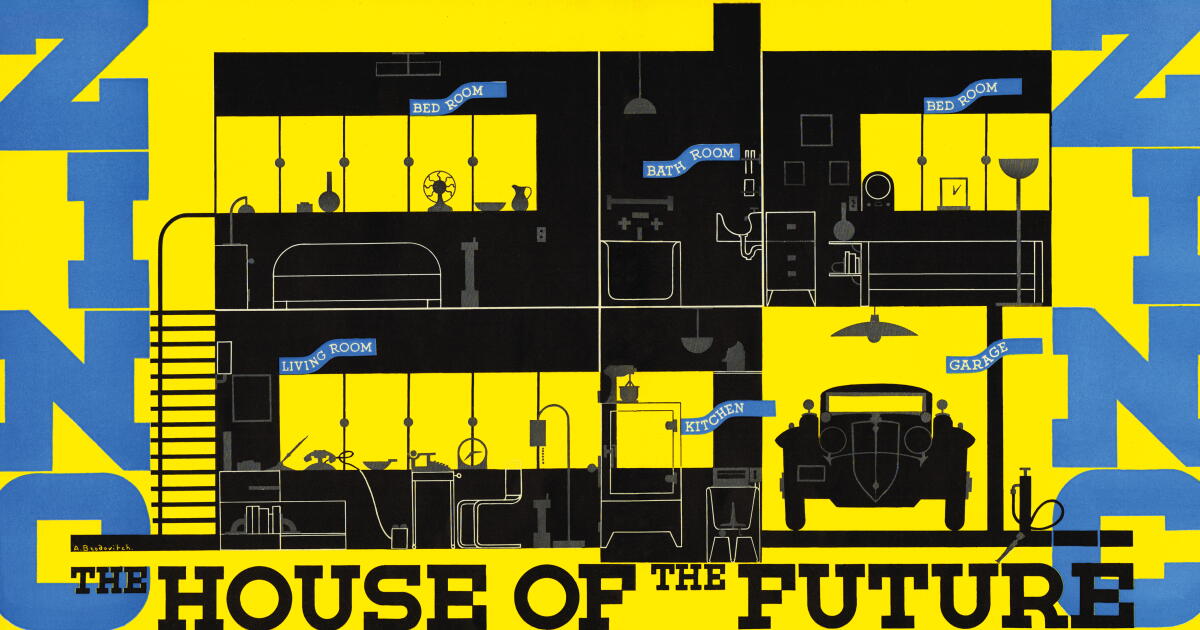
The new LACMA exhibition, “Home of the Future, 1925–1985: Designing Domestic Utopias,” reflects a nuanced history of American domestic design from the 1933 Chicago World’s Fair slogan: “Science Finds, Industry Applies, Man Conforms.” The exhibition explores the intricate relationship between innovative designs and their promises—while technological advances improved life, they also reinforced dependencies and societal exclusions.
Spanning pre- and post-Depression years, the post-WWII era, Cold War, and the counterculture movements of the ’60s and ’70s, the exhibition showcases stunning interactive designs, kitchen appliances, and furniture, revealing how manufacturers sold domestic utopia. Designs promised cleanliness, leisure, freedom, and security, but often delivered heightened expectations alongside environmental costs.
The exhibit’s depth is enhanced by world’s fair posters, advertisements, and around 200 physical objects. It highlights key figures such as architect Paul R. Williams and designer Isamu Noguchi, and their creations like the “Radio Nurse” and modular furniture exemplifying the optimism for a technologically advanced future. Yet, despite extravagant visions, disenfranchisement persisted for many Americans, particularly marginalized communities, revealing that the promises of these designs did not include everyone.
As the narrative evolved, so did the imagery of domestic life, marrying technological hopes with Cold War fears. This led to inventive spaces like the Monsanto House of the Future, which epitomized futuristic living, and the Dymaxion house designed by Buckminster Fuller.
In the latter decades, countercultural movements began questioning the very promises of consumerism and design, leading to an era marked by ecological awareness and minimalism, yet still engaging with consumer-driven ideologies.
Ultimately, the exhibition serves as a lens on America’s ongoing pursuit of utopian designs—a dream often overshadowed by socio-economic realities and environmental challenges, reminding viewers that while innovation offers convenience, it necessitates critical examination of its underlying promises and consequences.