For many years, creating professional motion graphics felt like a realm reserved exclusively for developers and specialized designers. If you wanted an animated explainer video, an engaging data visualization suitable for major publications, or a logo that animated beautifully across your website, it often required the deep pockets of agency contracts, extensive delays, and budgets that could easily reach tens of thousands of dollars.
For solo founders or lean startups, achieving that level of refinement often meant sacrificing quality due to budget constraints. You could either move quickly or obtain high quality, but rarely both. However, a transformative shift has occurred.
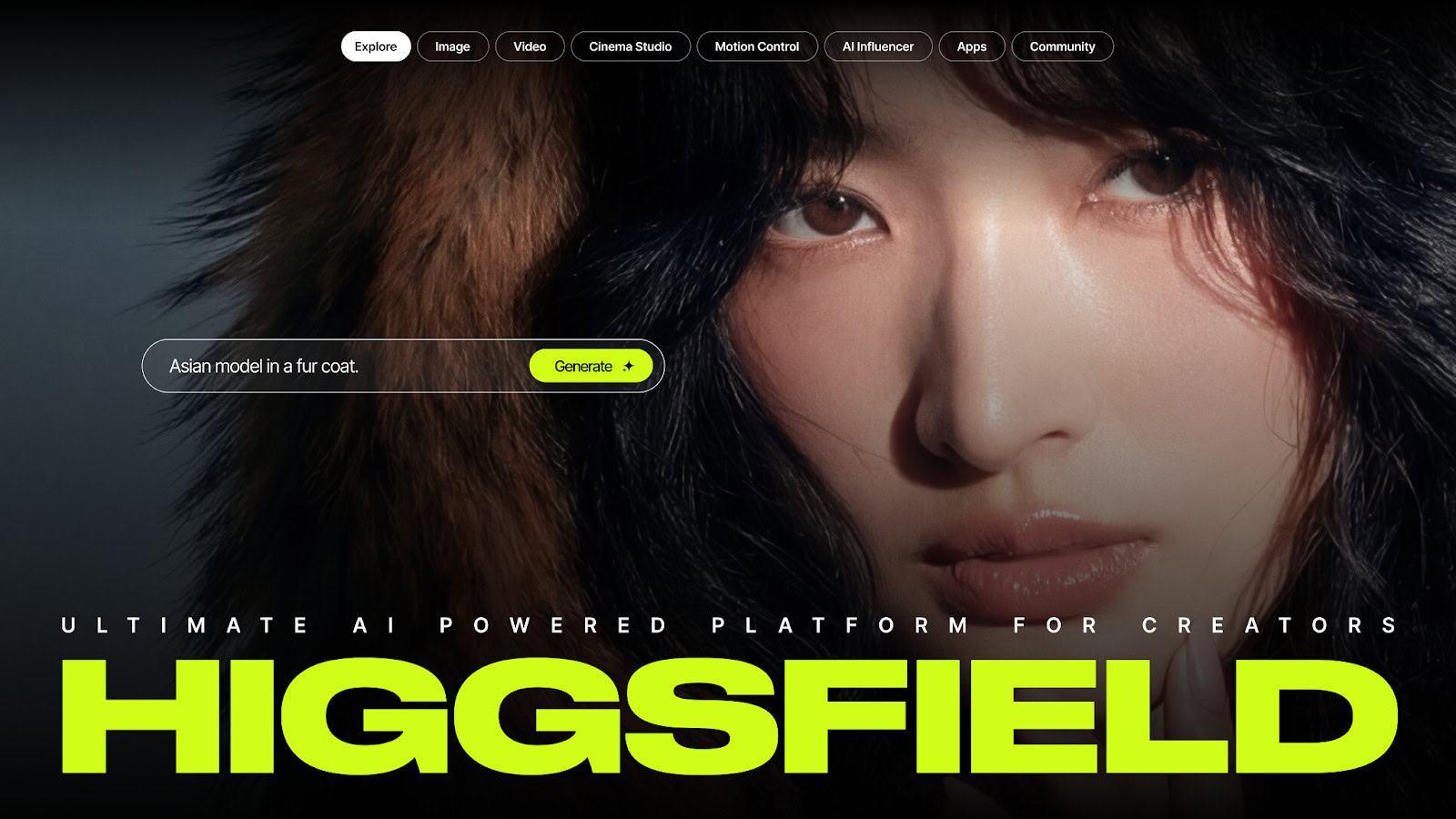
Today, a significant breakthrough has emerged in the world of motion graphics. Higgsfield, a rapidly growing video AI company, has unveiled Vibe Motion—a platform designed to democratize premium motion design by eliminating the need for any coding expertise. This isn’t just another AI video generator; it specifically addresses one of the remaining challenges in modern marketing and product workflows.
The “No-Code” Revolution Finally Comes for Motion Graphics
The emergence of “no-code” and “low-code” platforms has empowered a new generation of creators to build apps, websites, and software without needing to write code. Tools such as Webflow and deployment solutions like Vercel have reshaped the landscape. Yet, motion design has continued to be a highly specialized field, often requiring someone fluent in developer jargon to translate a creative vision into animated, brand-consistent graphics.
With Higgsfield’s Vibe Motion, powered by Anthropic’s Claude, that gap is finally bridged. Here’s the groundbreaking approach: you articulate your vision in simple English. For instance, you can say, “an animated infographic illustrating our user growth soaring,” or “a dynamic logo that energizes our homepage.” From this point, the AI goes beyond merely producing a video. It generates not only the motion graphic itself but also the essential underlying code necessary for its implementation. The result is a production-ready asset that can be deployed in mere seconds, rather than the months typically required.
Beyond Pixel Guessing: How Vibe Motion Actually Works
This innovation effectively overcomes a significant flaw often found in early AI video tools. Many of these tools operate on pixel-level predictions, which can produce visually appealing but imprecise results, often leading to distorted text, unreadable logos, and a lack of flexibility for editing. Need to update a number in your data visualization? You’re forced to re-render the entire graphic from scratch.


Vibe Motion takes a fundamentally different stance. Utilizing Claude’s reasoning capabilities, it accurately configures the specific animation logic. It comprehends the structure of your request, from the text and brand elements to the desired movement. Vibe Motion constructs a controllable, editable asset where individual elements can be adjusted without the need to start from scratch.
“AI video has often presented a dilemma: you could have speed or control, but never both,” explained Yerzat Dulat, Co-Founder and CTO of Higgsfield. “Motion design is just the start; individual creators will soon have this level of real-time control.”
Enabling the “One-Person Unicorn”
The implications of this technology are enormous. We are witnessing the emergence of a comprehensive AI-native business toolkit. AI coding assistants like Claude Code and Cursor enable a solo founder to bring a product to life, while AI deployment platforms make it operational. With Higgsfield, that same individual can now create a professional-grade, dynamic visual identity along with marketing motion graphics.
As Alex Mashrabov, CEO of Higgsfield, points out: “Teams can now build with Claude, launch with Vercel, and market with Higgsfield. The AI-native business workflow is now complete.”
The timing of this launch could not be better. According to Gartner, by the end of 2026, 40% of enterprise applications will incorporate AI agents, a dramatic increase from less than 5% in 2025. The market is moving from utilizing AI for isolated tasks to deploying integrated systems that manage complete workflows. Motion design is one of the last creative domains to succumb to this wave of automation.
What This Means for the Future
Higgsfield plans to go even further. The company perceives motion design as merely “the first chapter” in a wider vision known as “Vibe Editing,” which aims to apply this intent-driven, parameter-level control to every aspect of video production.
For marketers, founders, and content creators, the message is unmistakable: the barrier to professional visual storytelling has been significantly lowered. The age of waiting for a developer to breathe life into your vision is coming to an end. Now, the ability to conceive, create, and deploy captivating motion graphics is available right on your desktop, limited only by your creativity, not your technical skills or budget.
Vibe Motion is now accessible to users. True to its ethos of democratization, it launches with a free tier for exploration, while professional plans begin with a monthly subscription. While the motion design agency model may not vanish overnight, Higgsfield has undoubtedly altered the landscape for a vast array of projects that were once considered unfeasible.