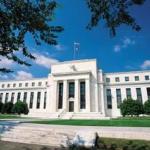
 Last Thursday, the powerful alliance of Goldman Sachs, Larry Summers, and influential figures in global finance succeeded in bending Federal Reserve Chair Janet Yellen to their will. In a display of compliance, she continued the trend of near-zero interest rate policies, much to the dismay of savers, seniors, and advocates for economic freedom.
At Economic Prism, we believe in turning challenges into opportunities. When life gives us lemons, we make lemonade, and when we find our cup half empty, we simply reach for a smaller one—after all, even a Dixie cup can overflow.
This latest continuation of reckless credit expansion may, in fact, be a blessing in disguise, hastening the inevitable collapse of the Federal Reserve. In our view, the sooner this reality sets in, the better it will be for everyone involved.
Should the Fed show any restraint now, it would only prolong a doomed system, potentially dragging it out for another 20 or 30 years. Why delay the inevitable?
If that timeline is indeed 20 or 30 years, how soon can we expect this to unfold? While no one has the definitive answer, we suspect that the reality is likely closer than the establishment anticipates.
Blinded
Consider the fall of the Soviet Union. Few predicted its demise, with even leading economists caught off guard during its final months. In fact, the very year the Berlin Wall came down, some experts still praised the achievements of Soviet communism.
In 1989, Paul Samuelson, a preeminent economist, asserted that “the Soviet economy is proof that, contrary to earlier skepticism, a socialist command economy can function and even thrive.” In retrospect, it’s clear that the Soviet economy barely functioned and never truly thrived, as evidenced by its significantly lower per capita GDP compared to Western nations.
For context, Samuelson was a highly influential figure, the first American to receive the Nobel Prize in Economics, and an advisor to Presidents Kennedy and Johnson. Shouldn’t he have foreseen the collapse of the Soviet regime?
Yet, he didn’t. Was it a matter of myopia or perhaps an overindulgence in the comforts of academic success? Did he simply cling to beliefs that aligned with his narrative?
Perhaps it boils down to a fundamental truth: economists who reach prominence often justify their influence by adopting the belief that government intervention can enhance economic performance over what natural market forces would deliver. Samuelson’s unwavering faith in Soviet success clouded his judgment regarding its impending fall.
Command and Control Economics
While economic oversight in the U.S. is less stringent compared to that of the Soviet Union, it certainly shares a common theme: at its core lies price manipulation. Yet, this manipulation remains largely obscured from the average citizen.
In the Soviet model, directives such as Five-Year Plans dictated agricultural output and pricing. In contrast, the U.S. government employs central banking mechanisms that alleviate the necessity for direct price control, though it does engage in subsidies and fiscal allocations.
Furthermore, the Federal Reserve, an appointed body rather than an elected one, analyzes economic data monthly to determine the optimal price for the nation’s most crucial commodity: money. This manipulation ripples throughout the economy, distorting prices and leading to erratic asset valuations.
By artificially maintaining low interest rates, the Fed aims to stimulate borrowing and spending, believing it will trigger robust economic growth. However, after nearly seven years of this approach, the results have been dismal, yet they persist.
The Fed’s latest inaction continues to favor reckless spending and penalizes those who save, rendering the situation increasingly absurd with every passing month.
Following the announcement of extended zero interest rate policies, Janet Yellen faced queries about the possibility of maintaining rates at zero indefinitely. Her response was cautiously noncommittal, stating she could not entirely rule it out but viewed it as an extreme outcome not at the forefront of her projections.
In a contrasting statement, John Williams, president of the Federal Reserve Bank of San Francisco, indicated his belief that a gradual increase in interest rates would be appropriate soon, likely starting later this year.
Clearly, the Federal Reserve’s time is limited. Much like the Soviet Union’s fate, it is likely closer than even Yellen or Williams can conceive.
Sincerely,
MN Gordon
for Economic Prism

