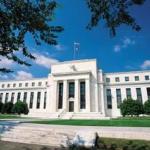
 This week, Federal Reserve Chair Jerome Powell, along with the Federal Open Market Committee (FOMC), decided to maintain the federal funds rate within a target range of 4.25 percent to 4.50 percent. Powell explained that his choice stemmed from the need to balance the risks of rising inflation against potentially higher unemployment, amid the uncertainty of “which way this will shake out.” This rationale was outlined in his commentary surrounding the decision, which can be found in more detail here.
This decision didn’t sit well with President Donald Trump, who has been vocal about wanting lower interest rates. He believes that reduced borrowing costs could help mitigate the negative effects of his trade tariff policies. Ahead of the FOMC meeting, Trump expressed his frustration on Truth Social, stating:
“There can be a SLOWING of the economy unless Mr. Too Late [Powell], a major loser, lowers interest rates, NOW.”
Lowering interest rates would not only assist Treasury Secretary Scott Bessent in managing the $1.07 trillion in government debt expected to be borrowed from April to September, but it would also promote a weaker dollar, thereby making American goods more competitive in international markets. This aligns with Trump’s aim to strengthen American manufacturing.
So what options did Powell truly have?
Given Trump’s constant public critiques and calls for rate cuts, a decision to lower the short-term interest rate could have portrayed Powell as catering to Trump’s demands. Maintaining the current rate could be seen as a move to uphold the Fed’s autonomy from political pressure.
Regardless of the reasoning, Trump did not receive the rate cut he sought. However, he now has the perfect target to deflect blame from his tariff policies if the economy slows in the coming months.
This clash between Trump and Powell is not a unique occurrence in U.S. history.
Influence and Intimidation
The confrontation between President Lyndon B. Johnson and Federal Reserve Chairman William McChesney Martin Jr. in the mid-1960s serves as a historical example of the discord between political and monetary priorities.
Johnson’s ambitious Great Society and escalating Vietnam War expenditures led to increased government spending, which correlated with rising consumer inflation. In response, Martin tightened monetary policy by elevating interest rates. Conversely, Johnson wanted lower rates to stimulate the economy and fund his spending initiatives.
As a controlling figure, Johnson was dissatisfied with Martin’s cautious approach. He even invited Martin to his Texas ranch, where he exerted pressure on him, stating, “Martin, my boys are dying in Vietnam, and you won’t print the money I need,” as noted in sources here.
Initially, Martin resisted Johnson’s demands but eventually succumbed to the pressure.
Years later, a similar scenario unfolded between President Richard Nixon and Federal Reserve Chairman Arthur Burns. Nixon, keen on winning reelection in 1972, pressured Burns for lower interest rates despite rising inflation concerns. Although Burns was a close friend of Nixon’s, the pressure was too much, and he acquiesced.
Post-election, however, Burns moved to tighten monetary policy—but by then, it was already too late, and inflation surged throughout the decade.
Malady of the Ignorant
Today, we witness a similar standoff between Trump and Powell. While their exchanges may be entertaining, one must wonder: do they truly grasp the complexities they’re dealing with?
“To be ignorant of one’s ignorance is the malady of the ignorant,” remarked Amos Bronson Alcott in the 19th century. Though his statement predated the Federal Reserve, it raises a pertinent question: do our leaders understand the implications of their actions regarding interest rates?
Both Trump and Powell likely lack a clear vision of what the “correct” interest rates should be. Yet, it is Powell’s role to determine these rates and influence what lenders charge borrowers, with hopes of optimizing the economy.
The Federal Reserve attempts to manage the economic cycle by manipulating the money supply and credit, operating under the assumption that the economy can be effectively managed through central planning. This notion has been refuted by Friedrich Hayek’s concept of The Fatal Conceit, which argues that the economy operates best when guided by market-driven price signals.
These price indicators are crucial for producers to adjust supply and for consumers to shape demand. Government intervention mutes these signals, resulting in economic distortions.
Suffering the Fed’s Mistakes
Central planning, especially by central bankers, often fails to acknowledge its limitations. Time and again, these planners try to manage factors beyond their control, producing consistent chaos.
For instance, Soviet planners struggled to set appropriate prices for basic goods like toothpaste and toilet seats under their five-year plans, leading to persistent shortages on store shelves.
Additionally, government mandates cannot dictate the prices of specific products, whether it be Peruvian bananas or apartments in New York City. In contrast, when consumers and producers are left to operate freely, supply and demand align at market-determined prices.
If Soviet planners failed to price everyday items correctly, it raises the question: why should we trust the Federal Reserve to determine interest rates?
The price of credit is the cornerstone of the economy, and relinquishing that decision to a committee of unelected officials is a recipe for disaster.
Furthermore, it’s essential to recognize that the Fed, through its twelve regional banks, primarily serves the interests of privately-owned commercial banks, with the welfare of the American public taking a back seat.
The evidence lies in the Fed’s history; it has consistently struggled to implement effective interest rate policies. Over the past three decades, the Fed’s actions have led to three significant boom and bust cycles.
Instead of allowing market forces, guided by the latest price signals, to dictate interest rates on a case-by-case basis, the Fed intervenes, wielding its influence from afar.
Meanwhile, the general public continues to grapple with the consequences of its missteps.
[Editor’s note: Have you ever come across Henry Ford’s dream city of the South? If not, you may want to check out my latest special report titled “Utility Payment Wealth – Profit from Henry Ford’s Dream City Business Model.” Discovering this lesser-known chapter of American history could lead to profitable opportunities. I encourage you to get your copy. It’s available for under a penny.]
Sincerely,
MN Gordon
for Economic Prism

