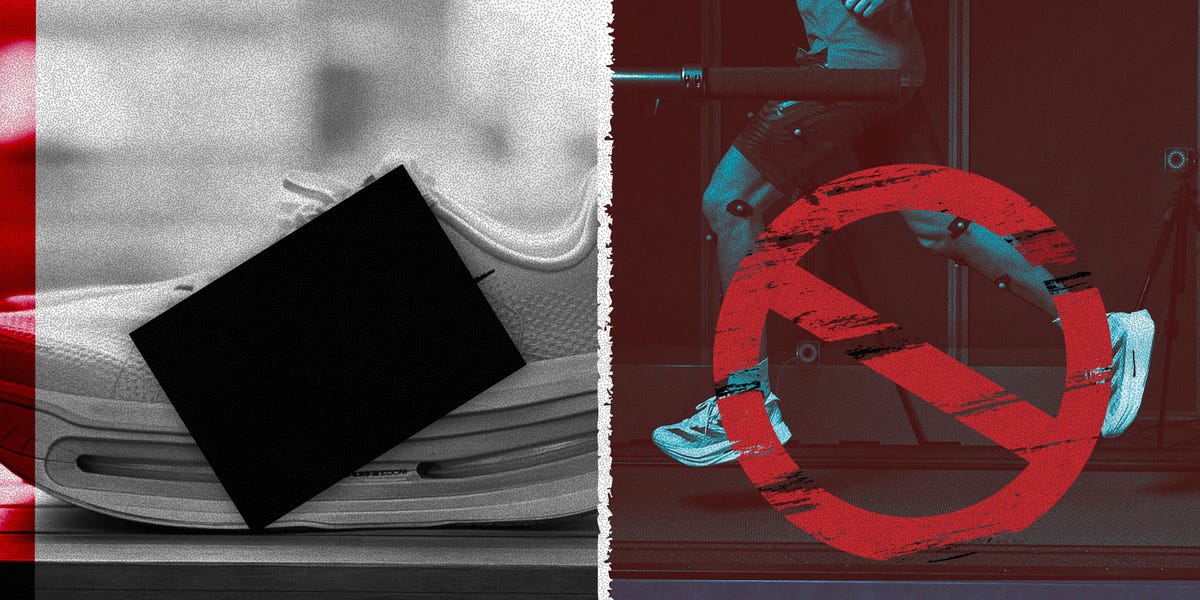
THE CONTROVERSY AROUND RUNNING SHOES has stirred up plenty of discussions lately, particularly surrounding the term “illegal” shoes. While most runners probably don’t think twice about their footwear, many are seeing this term pop up on social media, especially from influencers who evaluate various shoe models. Is there really such a thing as an “illegal” shoe, or is it just a fad?
Let’s dive deeper into what’s happening in the running shoe market and what you need to consider when selecting your shoes.
In the past few years, the running shoe industry has undergone a significant transformation, not just regarding popularity but also concerning design. Thanks to the running boom, sneakers have skyrocketed in demand. On top of that, new models are featuring taller midsoles that are claimed to enhance performance.
This rise in performance-centric shoes brings us to the concept of “illegal” shoes, which essentially arise from guidelines established by World Athletics, the governing body for track and field. For road races—ranging from a mile to ultramarathons—footwear must comply with specifications such as a sole height not exceeding 40 millimeters and possessing only one rigid structure, like carbon plates.
While many high-performance brands adhere to these rules for elite racing shoes, they often overlook them for more casual models. As a result, daily trainers have also seen an increase in thick soles, which many runners are now using.
According to the Strava Year in Sport Report for 2025, the three most logged shoe models by users are:
These all fall under the category of daily trainers. Interestingly, only one of them adheres to the so-called “legal” competitive limits. The “illegal” shoes are simply the favorites of everyday runners, and that’s perfectly acceptable.
Even if you’re gearing up for a local 5K or a major marathon, the chances of being disqualified for wearing “illegal” shoes are quite low. Many casual runners, like myself, have run prominent events without any issues while wearing shoes that exceed the typical limits. Most of these regulations are intended for elite athletes, who compete in separate heats and undergo strict testing.
I even verified with the New York Road Runners (NYRR), the organization that oversees big events like the New York City Marathon. Their representatives noted that while they observe World Athletics rules, they address violations on a case-by-case basis. As of last year, no participants were disqualified for these reasons.
It’s worth mentioning that elite athletes have faced disqualifications due to shoe-related violations. Certain events, like triathlons and Ironman races, can be more stringent, listing specific models that are not permitted.
Despite the buzz around “illegal” terminology being largely sensationalized online, it’s crucial to be mindful of your footwear choice. High-stack shoes may pose stability challenges and can affect your running form, thus requiring an adaptation period.
“Getting used to high-stack shoes is similar to wearing braces,” explains Dr. Mark Mendeszoon, a board-certified podiatrist. “You need to learn at a gradual pace.”
Dr. Mendeszoon advises easing into new shoes by first wearing them around the house, then incorporating cross-training, followed by focused stretching to enhance Achilles flexibility post-run.
Essentially, if “illegal” shoes are a concern for you, you probably already know. And if you do, you might not be a casual runner.
Recommended Running Shoes You’ll Love
You won’t find yourself in trouble for wearing these reliable shoes! Below are some high-quality picks that exceed the 40 mm threshold. Just remember to heed Dr. Mendeszoon’s advice as you break them in.


adidas Adizero Prime X3 Strung

Brett Williams, NASM-CPT, PES, a senior editor at Men’s Health, is a certified trainer and former pro football player and tech reporter. You can find his work elsewhere at Mashable, Thrillist, and other outlets.