
Are you eager to build muscle and improve your strength but lack the time for extensive gym sessions? The 5/3/1 training split might be the perfect solution for you. This efficient workout plan is designed to deliver results without compromising on effectiveness.
The 5/3/1 method is structured around performing sets of five, three, and one repetition, focusing on the foundational big lifts: the squat, deadlift, bench press, and overhead press. This program emphasizes lifting heavier weights for fewer repetitions, enabling lifters to efficiently enhance their strength over time.
According to Shawn Arent, Ph.D., C.S.C.S., chair of the Department of Exercise Science at the University of South Carolina, the program’s key advantage lies not only in using heavy weights but also in systematically increasing the load to foster consistent progress.
Looking to enhance your strength within a defined timeframe? Here’s a detailed guide on how to implement the 5/3/1 training split effectively.
Understanding the 5/3/1 Program
The 5/3/1 program aims to build strength through four essential lifts:
You will incorporate one or two of these lifts in each workout, depending on your training frequency. The rep schemes are unique to each week. During Week 1, you’ll perform sets of five reps. In Week 2, the rep count drops to three, and in Week 3, you will do sets of five, three, and one. Following these weeks, you take a deload week, where you lift lighter weights to allow recovery, and then restart the cycle—ideally with increased weights.
Jim Wendler, a former football player at the University of Arizona and an accomplished powerlifter, developed the 5/3/1 program in the early 2000s to revive essential strength-building principles. His impressive lifting numbers include a 1,000-pound squat, a 675-pound bench press, and a 700-pound deadlift.
According to Wendler, his goal was to instill a sense of strength training that had been overlooked in modern fitness discussions.
Implementing the 5/3/1 Program
Step 1: Determine 90 Percent of Your One-Rep Max
Start by identifying your one-rep maximum (1RM) for the four key exercises mentioned earlier. This is the heaviest weight you can lift for just one repetition.
If you’re unsure of your one-rep max, you can estimate it by using the weight you can lift for five reps. Note down these weights and perform the calculations based on a study published in the Journal of Strength and Conditioning Research:
- For lower body exercises: Multiply your 5-rep weight (in kg) by 1.0970, then add 14.2546.
- For upper body exercises: Multiply your 5-rep weight (in kg) by 1.1307, then add 0.6999.
Convert these figures from kilograms to pounds by multiplying each result by 2.2, and then take 90 percent of that final number. This will be your working weight for each lift.
Step 2: Execute Four Weekly Workouts in a Four-Week Cycle
Each of your four workouts will highlight one of the four primary barbell exercises: Bench press, squat, overhead press, and deadlift. After warming up, perform three sets of each lift, allowing for three to five minutes of rest between sets.
Throughout the four-week cycle, you will focus on four bench press workouts, four squat sessions, four deadlift sessions, and four overhead press workouts. The percentage lifted (90 percent of your 1RM) will change according to the following weekly breakdown:
- Week 1: 5 reps at 65%, 5 reps at 75%, and 5 reps at 85%
- Week 2: 3 reps at 70%, 3 reps at 80%, and 3 reps at 90%
- Week 3: 5 reps at 75%, 3 reps at 85%, and 1 rep at 95%
- Week 4: 5 reps at 40%, 5 reps at 50%, and 5 reps at 60% (deload week)
The deload week is essential for recovery, allowing your body to recuperate from the intensity of the previous weeks before starting the cycle anew with increased weights.
Step 3: Increase Weights Every Four Weeks—If You’ve Achieved Your Current Loads
After completing each four-week cycle, plan to increase your one-rep max by five pounds for upper body lifts and ten pounds for lower body exercises. However, if you’re struggling with a lift, reroute your focus and hold off on increasing your weights until you feel ready.
Step 4: Incorporate Assistance Work into Each Workout
Following the primary lifts, consider including assistance exercises tailored to your goals. This is essential for building muscle size and variety in your routine, which can keep motivation high. Incorporating three or four additional exercises with slightly higher repetitions (8 to 12) will add volume to your training while advancing your strength goals.
For those just starting, Wendler recommends choosing one push movement, one pull movement, and one single-leg or core exercise, aiming for 50 to 100 total reps spread across multiple sets.
Why Choose the 5/3/1 Program?
The 5/3/1 program has gained a loyal following because it effectively helps lifters adjust to lifting heavy weights regularly. Here are three compelling reasons to consider this program for your strength training:
1. Time-Efficient Workouts
One of the main attractions of the 5/3/1 program is its brevity. It allows individuals to build strength through short sessions focused on the essentials.
“The focus on the main lifts results in a relatively short workout duration,” notes Arent. “Even on days when two major lifts are performed, that typically requires just six sets, along with an optional few assistance exercises. This makes it an appealing option for people with limited time.”
Additionally, due to the infrequent workout schedule, you can balance your training with cardio and conditioning sessions on off days.
2. Heavy Lifting Without Going to Failure
Pushing your limits can yield results, but it often leads to soreness and increased injury risk. The 5/3/1 program avoids this by keeping the weights just below your one-rep max, allowing you to lift without overextending.
“It’s an important reminder that not every set needs to be taken to failure,” Arent emphasizes. “This can be a valuable lesson for any strength training program.”
3. Structured Progression
The 5/3/1 method provides a clear progression plan, specifying how much to increase your weights after each cycle, removing ambiguity from your training.
“This structure helps you remain focused and adhere to a set roadmap,” says Guadarrama. “You can make steady strength gains without overthinking your approach.”
It also serves as a reminder to all lifters, regardless of their training program: Have a systematic plan for progression in place to enhance your strength reliably.
4. Minimal Equipment Required
The beauty of the 5/3/1 program lies in its simplicity. You primarily need just a barbell, a rack, and a bench. Since you can choose your assistance exercises, there’s no need for extensive equipment. This makes it a practical option for lifters at crowded gyms or those with minimalist home setups.
Mastering the Core Lifts of the 5/3/1 Program
Before starting the 5/3/1 program, it’s crucial to master its four essential movements: the deadlift, squat, overhead press, and bench press. While these can be executed with various equipment, utilizing a barbell will yield maximal strength results.
Deadlift
Instructions:
- Start with your feet approximately hip-width apart. Push your rear back and hinge at the waist to grasp the bar or weights.
- Ensure your hips are lower than your shoulders. Squeeze your shoulder blades together to set your lats and engage your core. Maintain a neutral neck position by avoiding looking up.
- Push through your feet to lift the weight, keeping it close to your body. Squeeze your glutes at the top of the movement without leaning back.
Back Squat
Instructions:
- Begin by setting up your equipment, whether using dumbbells, kettlebells, or a barbell in a back or front squat position.
- Place your feet wider than shoulder-width apart with your toes angled slightly outward.
- Focus on pushing your rear back and leaning forward slightly while initiating the squat. Inhale deeply before lowering.
- Open your knees outward as you descend, making sure to maintain a straight lower back.
- As you rise, push your hips and torso up simultaneously while keeping your knees aligned.
Bench Press
Instructions:
- Lie back on a bench, engaging your core and glutes while driving your feet into the ground. Maintain a slight arch in your back.
- Position the barbell directly over your chest.
- Lower the weight to the starting position carefully until your elbows are positioned below your shoulders.
- Drive your shoulders against the back pad and press the weight straight upward, ensuring your arms remain at the correct angle.
Overhead Press
Instructions:
- Stand with feet shoulder-width apart while holding a pair of dumbbells. Squeeze your glutes and engage your shoulder blades to maintain tension.
- Lift the weights to shoulder height, angling your elbows slightly forward.
- Press the weights overhead, focusing on maintaining core tension throughout the movement.
- Lower the weights back to shoulder height smoothly.
Welcome to the MVP Training Lab
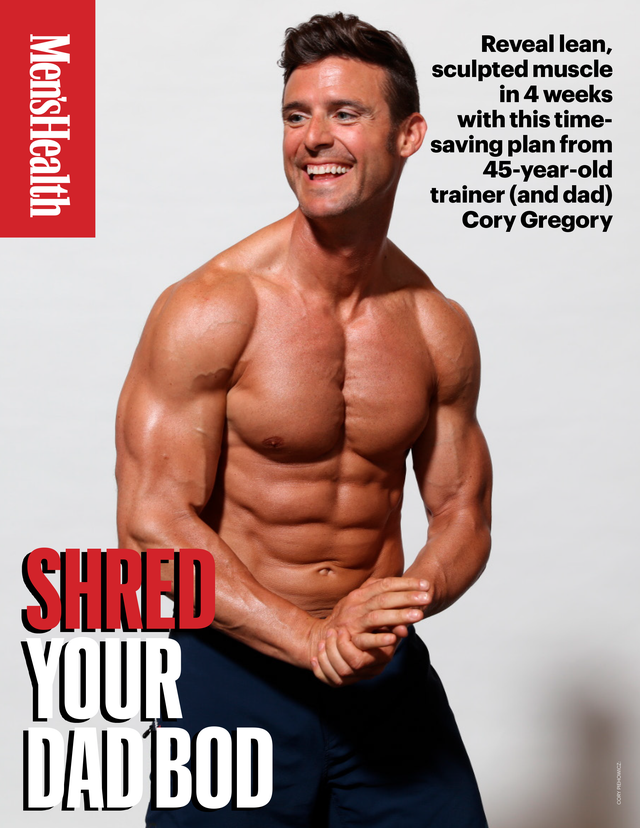
Shred Your Dad Bod
Trainer Cory Gregory, a 45-year-old father of three, designed this plan to transform your physique.
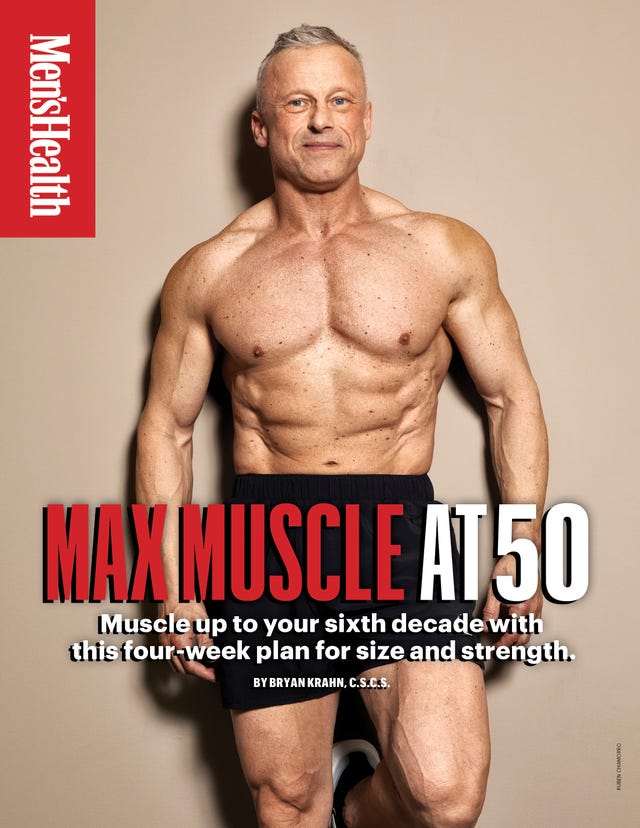
Max Muscle at 50
This MVP-exclusive plan is designed to help you get in the best shape of your life.
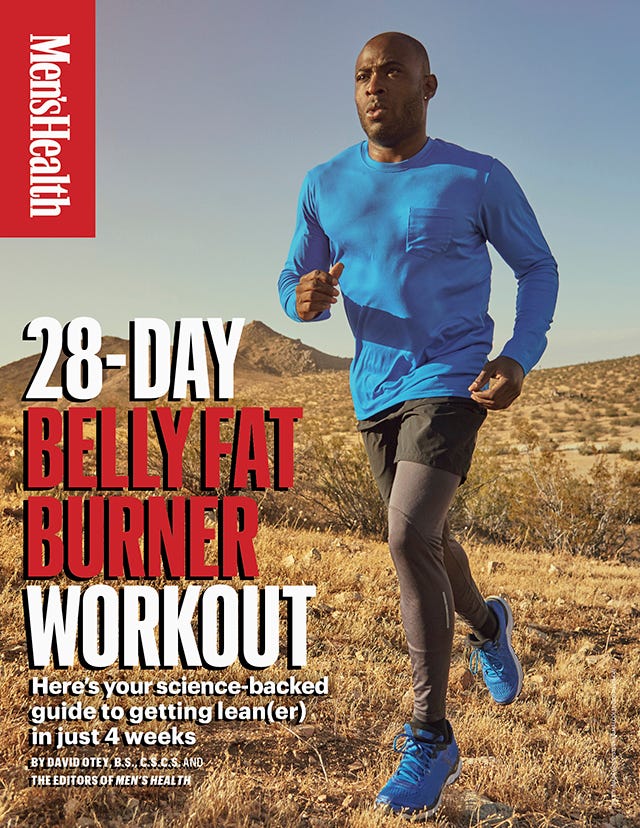
28-Day Belly Fat Burner
Lose weight and build abs at the same time with this back-friendly program.
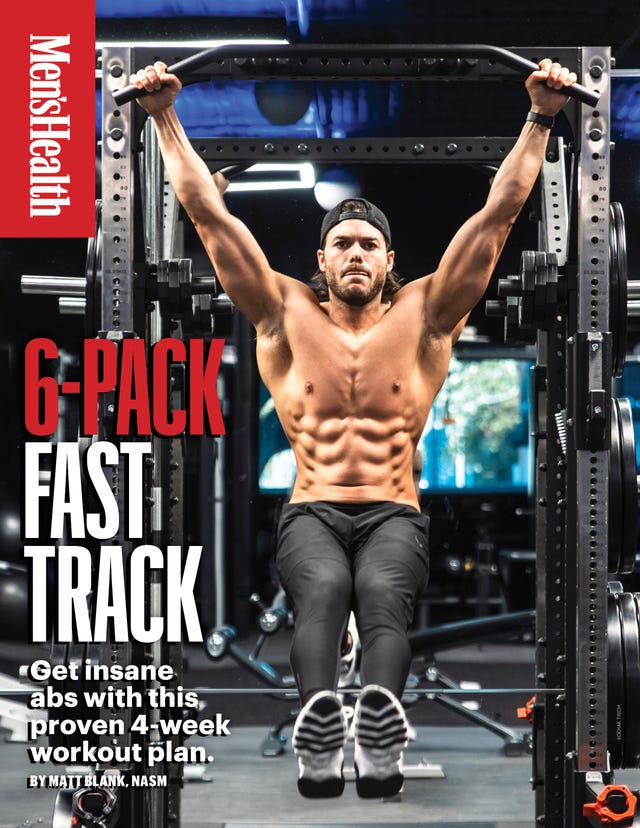
6-Pack Fast Track
This MVP-exclusive plan is designed to help you achieve your core goals.

Greg Presto is a fitness and sports reporter and videographer in Washington, DC.
Cori Ritchey, C.S.C.S., is the fitness editor at Women’s Health, as well as a certified strength and condition coach. She’s reported on topics regarding health, nutrition, mental health, fitness, sex, and relationships for several years. You can find more of her work in Men’s Health, HealthCentral, Livestrong, Self, and others.