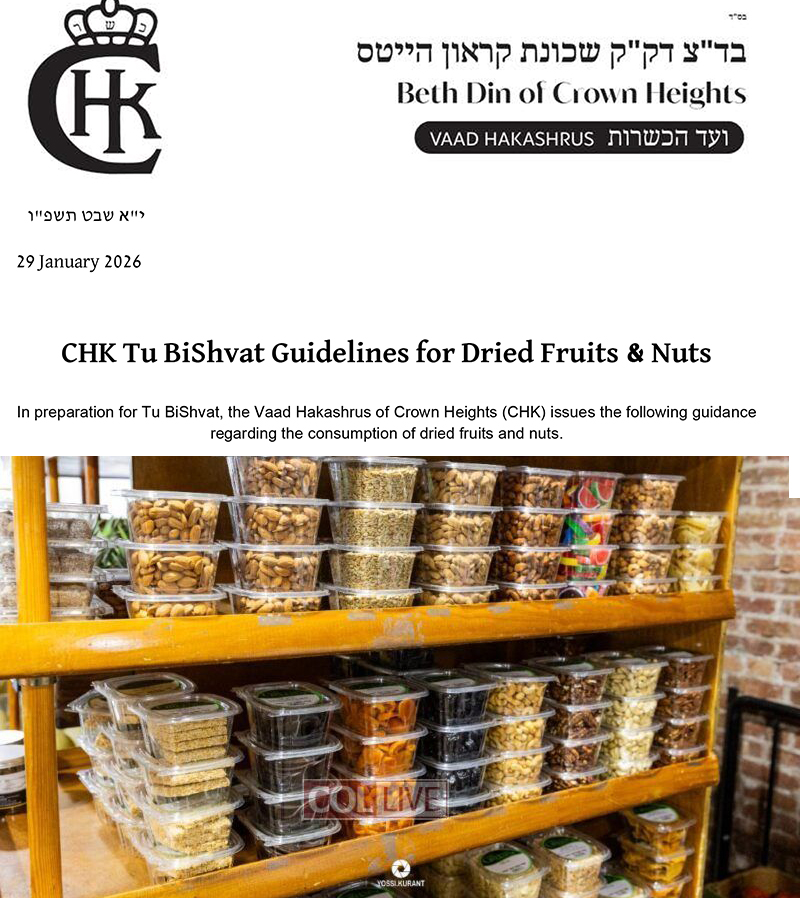
As Tu BiShvat approaches, members of the community are encouraged to observe kashrus guidelines while enjoying dried fruits and nuts. To assist with this, the Vaad Hakashrus of Crown Heights (CHK) has published a comprehensive advisory detailing which products can be consumed with or without proper supervision, as well as those that should be avoided entirely.
The CHK’s advisory aims to support community members in their preparations for the Yom Tov, ensuring that kashrus standards are upheld throughout the celebration.
It’s important to note that this advisory does not pertain to products sourced from Israel or China, freeze-dried fruits, or items intended for use during Pesach. All these categories require trustworthy hashgacha, irrespective of their ingredients or processing methods.
General Kashrus Guidelines
CHK notes that common preservatives like potassium sorbate and sulfur dioxide do not raise kashrus concerns. However, some dried fruits necessitate supervision due to processing aids which could be non-kosher and often aren’t mentioned on ingredient labels. Additionally, certain fruits pose infestation risks and are thus unacceptable.
Dried Fruits That Require Reliable Hashgacha
The following dried fruits should only be purchased with dependable kosher supervision:
Apples, bananas, blueberries, cherries, cranberries, currants, ginger, papaya, strawberries, watermelon, and imported raisins.
Acceptable Without Hashgacha (Inspection Required)
The following items may be consumed without hashgacha, provided they are free of additives and undergo thorough inspection:
Apricots, dates, figs, lemon peel, mandarins, mango, nectarines, peaches, pears, pineapple, prunes, and tamarinds (not from Israel) as well as domestic raisins without oil.
Not Acceptable Even With Hashgacha
Due to infestation concerns, the following fruits are not permitted, even if they carry a kosher label:
Barberries, blackberries, goji berries, mulberries, and raspberries.
Nuts
According to CHK, raw, unflavored, and unsalted nuts are acceptable without hashgacha. However, roasted, flavored, cooked, canned, or oil-processed nuts require reliable kosher supervision.
Community members who have questions or need further clarification are encouraged to reach out to the CHK office directly by calling 718-774-7000 or emailing [email protected]

In summary, it is essential to follow these guidelines for a safe and compliant Tu BiShvat celebration. By being mindful of the kashrus standards outlined by the CHK, community members can fully enjoy the holiday while observing proper dietary practices.


