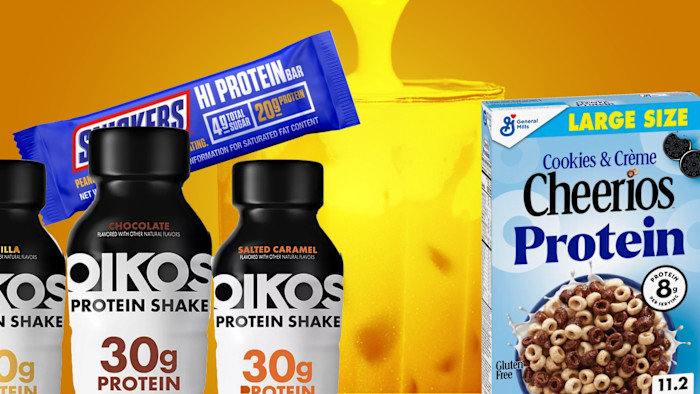
As the demand for healthier eating and weight-loss solutions continues to rise, food companies are increasingly populating grocery store shelves and restaurant menus with high-protein products. This shift is not just limited to fitness enthusiasts but has become a mainstream trend that appeals to a broader audience.
From protein-packed bagels and Snickers bars to Pop-Tarts and even bottled water, these high-protein items are readily available both in stores and online. Dairy sections are also evolving, with shakes and yogurts enriched with additional protein making their mark.
Major coffee chains like Starbucks and Dunkin’ are now adding protein boosts to their beverages. Chipotle Mexican Grill, already known for its protein-rich burritos, recently introduced a “high-protein menu” that offers cups of meat containing between 15 and 81 grams of protein.
Protein plays a critical role in maintaining a balanced diet, being essential for muscle growth, repair, and strengthening. Previously, U.S. dietary guidelines recommended daily protein intake at 46 grams for women and 56 grams for men. However, the popularity of high-protein diets, the influence of social media, and the introduction of GLP-1 weight-loss medications, which can result in muscle loss due to reduced food intake, have fueled a surge in protein consumption.
Recent dietary guidelines released by the Trump administration suggested that the daily recommended protein intake could be nearly doubled, arguing that prior guidelines unfairly prioritized carbohydrates over protein.
Sensing a significant change in consumer preferences, food companies are positioning themselves to capitalize on the growing demand for protein as they seek to overcome stagnant sales. According to NielsenIQ, grocery products that make protein-related claims saw a 4.6 percent increase in sales in the U.S. last year.
“You’re observing protein’s emergence in diverse products, growing at a rate three to four times faster than the overall market,” noted Randy Burt, the Americas leader in consumer products at the consulting firm AlixPartners.
Keychain, an online platform connecting food brands and retailers with third-party manufacturers, reported that searches for protein-related manufacturers surged by 64 percent in the last three months of 2025, far outpacing general search growth, according to CEO Oisin Hanrahan.

Categories such as cereal, snacks, and pantry staples are experiencing heightened interest. “What’s changed is that protein isn’t limited to just obvious products anymore. Brands are incorporating it into everyday foods, making them appealing beyond just fitness enthusiasts,” Hanrahan explained.
According to Barclays, global protein demand could increase by 37 percent over the next five years as more consumers start using weight-loss drugs and as healthy eating trends spread to developing nations.
Research from Ingredion, a company that supplies ingredients to food and beverage manufacturers, indicates that over two-thirds of consumers are willing to pay between 5 and 30 percent more for high-protein products.
Last year, Starbucks introduced protein cold foam and protein lattes, and even launched what it refers to as a “secret menu” protein drink promoted by celebrity Khloé Kardashian. According to Danilo Gargiulo of Bernstein Research, protein-infused beverages typically command a price premium of 15 to 25 percent.
Starbucks’ CEO, Brian Niccol, anticipates more protein options in the chain’s food menu. “We have the Jalapeño Chicken Pocket. That will likely be transformed into a protein pocket,” he remarked at an investor conference this week.
This year, PepsiCo plans to introduce Doritos Protein, a new version of its popular tortilla chips, along with Propel Clear Protein bottled water that offers protein, electrolytes, and fiber.
Despite a 3 percent drop in breakfast cereal sales during its latest quarter, General Mills is adapting to protein preferences. “We’re noticing consumers shifting towards more high-protein alternatives,” stated Dana McNabb, the group president of North America retail for General Mills, in December.
On a positive note, General Mills’ new Cheerios Protein cereal is performing well, expected to generate $100 million in sales by the end of the fiscal year and playing a key role in reviving the Cheerios brand, according to McNabb.
Protein is derived from both animal and plant sources. The Trump administration’s dietary guidelines, led by health secretary Robert F. Kennedy Jr, encouraged Americans to prioritize protein at each meal from both categories, though some nutrition experts criticized the focus on red meat.
Experts also warn that many Americans are already consuming more protein than necessary, raising concerns about potential weight gain.

“Protein continues to enjoy an almost mythical health halo, a perception that remains despite widespread overconsumption,” said Karine Dussimon, global insight manager for health and wellness at Euromonitor International.
The surge in protein products has also significantly impacted the dairy industry. The wholesale price of protein-rich whey has skyrocketed by more than 60 percent in the past year, as food companies reduce stockpiles, according to Expana, a commodity market information service.
“Whey protein was previously merely a byproduct of cheese production, but it has now become highly sought after. Everyone is clamoring for it,” remarked Brittany Feyh, a dairy analyst at Expana.
Coca-Cola plans to invest $650 million in a new facility in New York to enhance processing capabilities for Fairlife, its subsidiary that produces filtered milk rich in protein.
“There’s immense potential in the protein sector, and we have future investments lined up to expand our production capacity to meet long-term demand,” stated Coca-Cola’s CEO, James Quincey, in December.
Fairlife, along with Danone’s Oikos dairy line and U.S.-based yogurt producer Chobani, ranks among the top five fastest-growing major brands of 2025, as per Numerator, a market research firm. Notably, two protein bars were identified as the fastest-growing brands across all categories.
In contrast, plant-based meat alternatives have not gained the same traction with consumers. Sales for Beyond Meat, a publicly traded company known for its plant-based burgers, are anticipated to drop below $300 million in 2025, down from a peak of $464.7 million in 2021, based on estimates from Visible Alpha.
This month, Beyond Meat introduced a protein drink as part of its strategy to diversify beyond traditional meat substitutes.


