A Breakthrough in Genetic Research: Google’s AlphaGenome Model
Google has introduced an innovative artificial intelligence tool that promises to illuminate the complexities of the human genome and potentially lead to groundbreaking treatments for various diseases.
The deep learning model, named AlphaGenome, has been recognized by outside experts as a significant advancement that will enable researchers to explore and even simulate the underlying causes of challenging genetic disorders.
According to Pushmeet Kohli, Vice President of Research at Google DeepMind, the first comprehensive mapping of the human genome in 2003 was akin to providing humanity with the “book of life.” However, understanding it has remained elusive. “We possess the text,” he pointed out, referring to the lengthy sequence of three billion nucleotide pairs—represented by the letters A, T, C, and G—that make up our DNA.
Photo courtesy of Wikimedia Commons
Yet, “understanding the grammar of this genome—what is encoded in our DNA and how it governs life—is the next crucial frontier for research,” said Kohli, co-author of a recent study published in the journal Nature.
Only about two percent of our DNA carries instructions for synthesizing proteins, the building blocks that maintain bodily functions.
The remaining 98 percent had long been considered as “junk DNA,” as scientists struggled to discern its purpose.

Photo: Reuters
Recent insights suggest that this “non-coding DNA” functions more like a conductor, guiding how genetic information operates within individual cells. This section of the genome is implicated in numerous variants associated with diseases, and AlphaGenome aims to decode its complexities.
A Million Letters of Insight
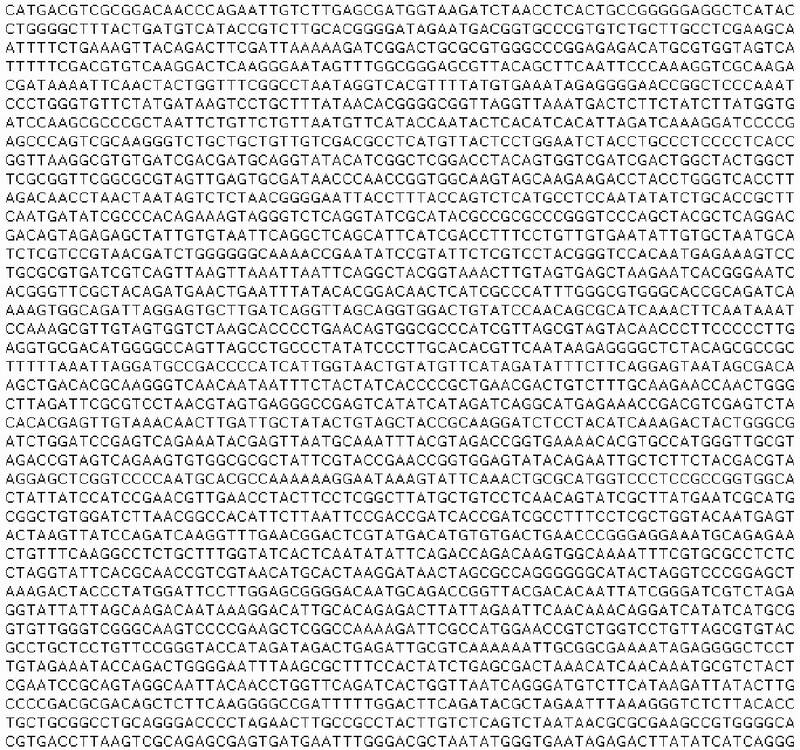
Photo courtesy of Wikimedia Commons
This initiative is part of Google’s broader AI-driven scientific efforts, which also feature AlphaFold, the 2024 Nobel Prize winner in Chemistry.
AlphaGenome was trained on extensive data from public projects that mapped non-coding DNA across various cell and tissue types in both humans and mice. The model can analyze lengthy DNA sequences, predicting how each nucleotide pair influences biological processes within the cell.
This includes determining gene activation and suppression, as well as the quantity of RNA—molecules that convey genetic instructions inside cells—that is produced.
While other existing models attempt similar analyses, they often face trade-offs, either limiting the length of DNA sequences they analyze or sacrificing resolution in their predictions. Lead study author Ziga Avsec highlighted that the ability to work with lengthy sequences, up to a million DNA letters, is essential for fully understanding the regulatory landscape of any single gene.
The high-resolution capabilities of AlphaGenome also enable scientists to explore the effects of genetic variations by comparing mutated and non-mutated sequences.
“AlphaGenome can significantly speed up our understanding of the genome by helping to pinpoint functional elements and determining their molecular roles,” noted study co-author Natasha Latysheva.
The model has been tested by around 3,000 scientists across 160 countries and is available for non-commercial use, according to Google.
“We encourage researchers to augment it with additional data,” Kohli added.
A Step Forward, But Not a Solution
Ben Lehner, a researcher at Cambridge University who tested AlphaGenome, affirmed that the model “performs exceptionally well.” He mentioned that “identifying the specific genomic differences that increase or decrease our susceptibility to numerous diseases is vital for creating better therapeutic options.”
However, he cautioned that AlphaGenome “is not without its flaws; there remains significant work ahead.” He emphasized that “AI models depend heavily on the quality of the training data,” and acknowledged that current datasets may not be fully adequate.
Robert Goldstone, head of genomics at the UK’s Francis Crick Institute, warned that AlphaGenome should not be viewed as a panacea for all biological inquiries. This is partly due to the influence of complex environmental factors on gene expression, which remain beyond the model’s scope.
Nonetheless, Goldstone concluded that the tool represents a notable “breakthrough,” allowing researchers to study and simulate the genetic foundations of intricate diseases.
The column “Taiwan in Time” will return to this page next Sunday.