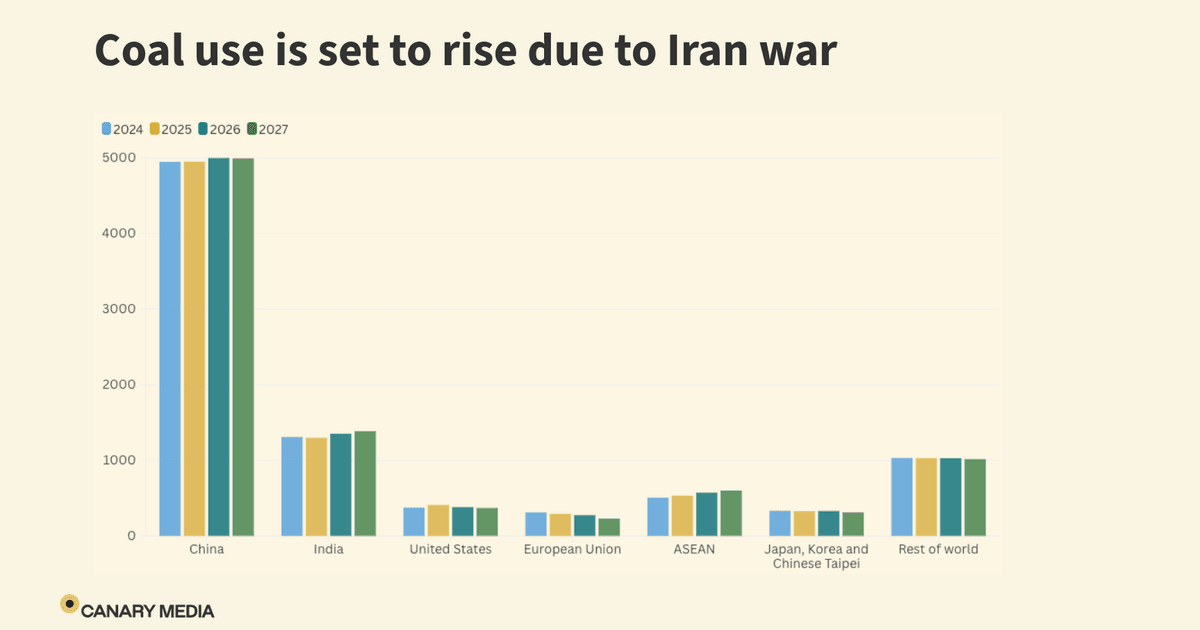
The International Energy Agency (IEA) has updated its projections, now anticipating a 1.2% increase in global coal demand for the year, contrary to previous expectations of a decline. This rise sets coal consumption at a new record high, largely influenced by geopolitical tensions in the Middle East that disrupted oil and natural gas trade, resulting in heightened fuel prices, especially in Europe and Asia.
In response, there has been a noticeable shift towards electric vehicles (EVs) and clean energy sources, alongside a renewed interest in nuclear energy by various governments. However, some countries have also increased their coal consumption, which poses challenges for climate change efforts due to coal being the leading contributor to greenhouse gas emissions.
Despite the uptick in coal usage, the global emissions from fossil fuels are anticipated to experience a slight decline this year, primarily due to decreased oil consumption attributed to soaring prices.
China exemplifies this scenario where, although coal use has increased, overall emissions have decreased by 1% in the second quarter compared to the previous year. This decline corresponds with a 16% reduction in oil use for transportation and a surge in EV adoption. Numerous other countries are also witnessing record levels of EV adoption.
While the IEA predicts that oil demand will stabilize next year after initially forecasting a substantial increase, it raises questions about the sustainability of the simultaneous coal resurgence and clean technology adoption. The reliance on existing coal infrastructure during an energy crisis contrasts with the long-term investment in renewable technologies, suggesting that while coal may temporarily rise in usage, the momentum towards clean energy solutions is likely to persist beyond the immediate crisis.


