
Many individuals turn to quick-fix products that are marketed as healthy options when time is tight. The surge of health and fitness influencers has added to the overwhelming amount of conflicting information about what truly counts as healthy. Consequently, it’s easy for people to make poor dietary choices, thinking they are making the right choices for their health.
A few individuals have undertaken the task of separating marketing gimmicks from legitimate advice within the billion-dollar health and fitness industry. Their findings may be enlightening. If you have ever been lured by a trendy product that ultimately fell short of its promises, don’t blame yourself. Many items are aggressively promoted as healthy, and some beliefs have deep-rooted origins in our upbringing. In a landscape that often feels oversaturated with information, it can be challenging to find the time to verify the facts.
Suddenly, everyone seems to be drinking green juice or endorsing a new protein bar. With claims of deliciousness that rival cookie dough—minus the salmonella—you might find yourself stocking up at the grocery store. After all, these products promise to deliver your daily vitamin needs, saving you time in the kitchen.

Homemade granola bars with chocolate chips – a tasty snack!
Photo credit: Canva
Here’s a look at some common items that many mistakenly believe are healthy, along with better alternatives:
1. Cereal, Granola, and Protein Bars
Cereal and granola bars are often perceived as convenient options, especially when you’re in a hurry. Some people even consider them as meal replacements, but they’re not as nutritious as they might appear. A quick glance at the nutrition label often reveals a high sugar content alongside minimal protein. As noted in an Ask Reddit thread, many are shocked by the amounts of sugar and sodium found in packaged foods when they learn to read nutrition labels properly.
Consider this instead:
If you’re looking for healthier breakfast options that still offer a protein boost, try pairing whole fruits with peanut butter. Other grab-and-go options include whole vegetables, cheese cubes, or mixed nuts, all of which are packed with essential vitamins and healthy fats—without the excessive sugar. According to Good RX, “Eggs aren’t just a morning treat. Prepare a batch of hard-boiled eggs for a high-protein snack. One hard-boiled egg contains over 6 g of protein.”
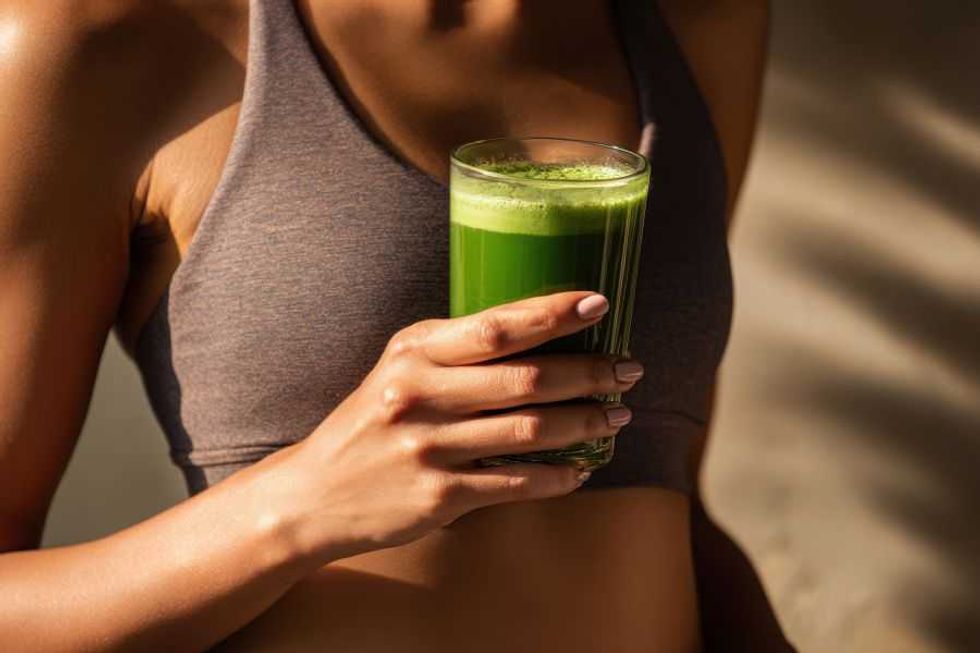
Refresh yourself with a nutritious green juice.
Photo credit: Canva
2. Detoxes
Detoxes seem to be a trending solution for various health concerns. However, as someone pointed out in a Reddit discussion, detoxes often end up being more financial drains than actual health solutions. The National Institutes of Health (NIH) warns that some detoxes may contain laxatives, causing dehydration and malabsorption. Additionally, certain unpasteurized juices can introduce harmful bacteria into the system. High oxalate content in leafy greens used for detox juices can even lead to kidney stones in susceptible individuals.
Try this instead:
Rather than risking a detox cleanse, Alix Leestma, RDN, CSOWM, a senior dietitian at MultiCare Center for Weight Loss & Wellness, suggests that staying well-hydrated and consuming a balanced diet allows your body to detox naturally. Our liver and kidneys are designed to eliminate toxins effectively. “When we’re dehydrated, our blood becomes more concentrated,” explains Leestma, “but when adequately hydrated, the concentration of toxins in the blood is lower, making it easier for the kidneys to filter.”

Squeezing fresh orange juice in your kitchen. 🍊
Photo credit: Canva
3. Juicing/Fasting
Many people turn to juicing as a form of fasting, believing it provides essential nutrients. However, a participant in a recent study voiced concerns that juicing may not preserve the full nutrient profile of the fruit, making it more beneficial to consume the whole fruit instead. Northwestern University conducted a study on the effects of juicing, which yielded surprising results.
“The juice-only group exhibited a notable rise in bacteria linked to inflammation and gut issues, while the whole food plant-based group showed beneficial microbial changes. The group consuming juice alongside whole foods experienced moderate bacterial shifts but still fared better than the juice-only group,” stated Northwestern University. Dr. Melinda Ring, a senior author and director of the Osher Center for Integrative Health at Northwestern, remarked, “Many people view juicing as a healthy cleanse, but this study reveals a different reality.”
Consider this instead:
“If you enjoy juicing, think about blending to retain fiber, or pairing juices with whole foods to maintain a balanced impact on your gut health,” advises Ring. If blending doesn’t appeal, consuming the fruit whole ensures you get the necessary fiber.

Exercise caution with supplements.
Photo credit: Canva
4. High Doses of Supplements
Supplements are available for nearly every health concern, and many people take multiple types in hopes of compensating for dietary shortcomings. However, overconsumption can lead to negative health implications, as highlighted by one user: “I developed a kidney stone due to my supplement regimen. It was quite painful.” Healthline states that while water-soluble vitamins are typically harmless in higher doses due to their excretion, fat-soluble vitamins can pose serious toxic risks.
In a noteworthy case, Katie Mohan faced a potential liver transplant following high doses of a turmeric supplement. Medical reports caution about the risks of high-dose supplements after she was hospitalized for six days. Dr. Dina Halegoua-De Marzio, a hepatologist at Jefferson Health, explains, “Natural doesn’t equate to safe. Cooking with turmeric is generally safe, but some supplements exceed 2,000 mg, which is excessive. According to the World Health Organization, individuals should limit daily doses to a maximum of 0-3mg per kilogram of body weight. Hence, a 200-pound person should not exceed a daily intake of 300mg of turmeric.”
Seek nutrients through a well-rounded diet and limit yourself to one multivitamin daily instead of various supplements. Incorporating more nutrient-dense foods can also help boost your vitamin intake. As noted by the Navy and Marine Corps Public Health Center.


