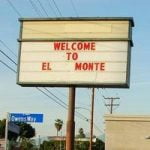
 In Southern California, despite the perpetual sunshine, some areas have lingered in darkness for over fifty years. One such place is El Monte, tucked away along the urban sprawl of Interstate 10, from East Los Angeles through the San Gabriel Valley. Here, cities blend into each other like disordered cargo at a shipping terminal, and El Monte stands out as a symbol of forgotten potential.
The story of El Monte’s evolution reflects that of many neighboring cities in the San Gabriel Valley. Transitioning from a fertile agricultural region to a working-class hub of a vast metropolis, it has faced its share of challenges and missteps—many of which remain unresolved.
When El Monte became a municipality in 1912, it looked poised for greatness. Situated in a lush valley between the San Gabriel and Rio Hondo Rivers and just a few miles from the emerging City of Los Angeles, it promised bountiful opportunities.
Early residents believed that with hard work, they could cultivate the land’s riches to satisfy Los Angeles’s growing needs. It seemed that fortune favored this small, vibrant community.
Initially, this dream appeared to materialize. The residents thrived in a bustling civic and agricultural environment, but such prosperity was short-lived.
The Decline and Fall of El Monte
The Great Depression marked the beginning of El Monte’s decline, exacerbated by an influx of Dust Bowl migrants willing to work for minimal pay. This turbulent era culminated in the El Monte Berry Strike of 1933, which firmly established the city’s downward trajectory—a trajectory from which it has yet to recover.
By the mid-20th century, El Monte’s rural charm was effectively buried under a blanket of concrete, as the urban sprawl of the LA Basin obliterated its past. Once the outskirts of a blossoming city, El Monte quickly became a neglected and decaying area.
In the late 1950s, there was a flicker of hope as El Monte became a hub for teenage rock ‘n’ roll concerts, thanks to Art Laboe at El Monte Legion Stadium. This golden moment resonated in the song Memories of El Monte, penned by young Frank Zappa and sung by the Penguins.
Regrettably, as the rock ‘n’ roll boom faded, so did El Monte’s brief resurgence. The demolition of El Monte Legion Stadium on August 13, 1974, marked a turning point, and since then, little good has emerged in the area.
By the dawn of the 21st century, the city’s average income plummeted to a mere $10,316, with over a quarter of its population living below the poverty line. The demographic landscape shifted, with about 70% of residents identifying as Hispanic and 25% as Asian, many facing challenges related to documentation.
Currently, El Monte mainly serves as a corridor for a five-mile stretch of Interstate 10. It’s also famous for its weekend swap meet, where visitors can snag unbelievable bargains. Here, amid delicious bites of elote—grilled corn doused in chili powder—you might even find your stolen tools being resold at half their original price.
Residents of cities plagued by high poverty rates and uncertain citizenship status often become preoccupied with survival. In El Monte, frequently disparagingly referred to as “Hell Monte,” this situation has allowed local officials to exploit the community without scrutiny.
The Great El Monte Public Pension Swindle
On May 9, 2000, luck was on the side of El Monte’s City Manager Harold O. Johanson when the El Monte City Council unanimously approved his supplemental pension plan proposal, bypassing public discussion. This resulted in a staggering 50% increase in civilian retirement benefits. According to the Los Angeles Times:
“Johanson retired three years later, at 58. Today, he benefits the most from the program he promoted, collecting over $250,000 annually in combined pensions, placing him in the top one-hundredth of one percent of public pension recipients in California.”
Johanson is not alone, as at least eight other El Monte pensioners enjoy annual incomes exceeding $200,000. Take James Mussenden, for example:
“The retired city manager of El Monte receives more than $216,000 a year, in addition to cost-of-living adjustments and fully covered health insurance.”
“This pension allows me to explore opportunities I missed when I was younger, like traveling to Europe and checking off bucket list items,” Mussenden, 66, shared recently. He even traveled to Scotland to tee off at the prestigious Old Course at St. Andrews, a haven for golf lovers.
While Mussenden acknowledges that few Americans have similar retirement benefits—especially the taxpayers of El Monte funding his lifestyle—he maintains a low profile regarding his fortune.
“My golfing friends often express frustration over my pension, as they lack any comparable retirement income,” he confided.
El Monte’s pension system has undoubtedly reached levels that can be deemed egregiously excessive. To illustrate, the Los Angeles Times notes:
“El Monte has a legacy of generous employee benefits, including a four-day work week for civil servants putting in ten-hour days, leaving Fridays free. These liberal pension plans are part of a long-standing tradition.”
“State law requires police officers to contribute 9% of their salaries for retirement and civilian workers 7%. However, El Monte covers both the employee and employer contributions, a remnant of collective bargaining agreements from the early 1980s.”
“Additionally, retired El Monte employees bask in annual cost-of-living increases at the high end of what CalPERS allows—up to 4% for police retirees and 5% for civilians, depending on inflation—whereas most CalPERS pensioners receive a modest 2% rise each year.”
The current situation begs the question: what do we make of such pension schemes? It seems apparent that those reaping these benefits are exploiting the system. Until there is a repudiation of these corrupt promises, El Monte will likely remain trapped in its enduring economic challenges.
Ultimately, the retired beneficiaries of excessive pensions risk jeopardizing the city’s financial health, leading taxpayers through a slow, agonizing decline—one they should not have to endure.
From a moral standpoint, it is unjust that taxpayers are forced to uphold such questionable agreements made among government employees. The reality of this situation exemplifies the pervasive problems that afflict many cities today.
Sincerely,
MN Gordon
for Economic Prism
Return from The Great El Monte Public Pension Swindle to Economic Prism