 The U.S. dollar has exhibited overall growth since mid-2014, as indicated by the dollar index. This index rises when the U.S. dollar appreciates against a collection of currencies, such as the euro, yen, and pound. Conversely, it declines when the dollar weakens.
From July 30, 2014, to December 28, 2016, the dollar index climbed from 79.78 to 103.30, marking a significant increase of 29 percent. Since that peak, the index has settled around 100. Furthermore, President Trump has expressed concerns about the dollar being “too strong,” while Treasury Secretary Steven Mnuchin referred to it as “excessively strong.”
President Trump advocates for a weaker dollar to support his initiative of revitalizing manufacturing jobs in the U.S. The reasoning is straightforward: a weaker dollar should enhance the competitiveness of U.S. exports on global markets, while also making foreign imports costlier for American consumers, encouraging them to opt for domestically made products.
However, the unintended repercussions of currency debasement—such as inflation, currency wars, and moral decline—can be far more damaging to a nation’s wealth than any trade benefits it might bring. Numerous articles have recently highlighted why devaluing currency is a detrimental strategy for national wealth. One particularly insightful piece we encountered was titled Donald and the Dollar.
In light of this, we won’t revisit those discussions. Instead, let us head south of the border for a broader perspective, hoping to glean lessons from real-life experiences.
Demise of the Mexican Miracle
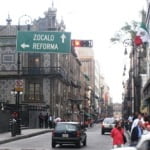
If you’ve never visited Mexico City, you’re in for a surprise. Its population exceeds that of Los Angeles by more than double, and the lively pace of life makes LA feel almost tranquil. The chaotic highways often give Southern California’s roads a sense of calm and order.
The striking contrast of ancient ruins, Medieval Spanish architecture, and modern skyscrapers all within a single city block is captivating. But perhaps the most thought-provoking aspect is Mexico’s history of governmental overspending and subsequent currency inflation as a means to cover debts—an unsettling omen for the United States given its own fiscal mismanagement.
Much like the U.S., Mexico’s economy saw substantial growth during the mid-20th century. This era, termed the “Mexican Miracle” by economists, spanned from 1930 to 1970, showcasing an average GDP growth rate of 4.2 percent from 1929 to 1945, which then surged to 6.5 percent annually between 1945 and 1972. Even during the turbulent 1970s, Mexico’s wealth in oil and various resources helped maintain an average GDP growth of 5.5 percent from 1972 to 1981.
Yet, the pinnacle of Mexico’s economic prosperity coincided with the 1968 Olympics, after which the decline began. By the late 1970s, the standard of living for the general population had deteriorated significantly.
So, what went awry?
The administrations of Luis Echeverría Álvarez and José López Portillo in the 1970s greatly increased public spending, financing these expansions through debt—similar to the actions taken by former U.S. Presidents George W. Bush and Barack Obama.
During this period, Mexico’s national debt skyrocketed by over 300 percent, jumping from $6 billion in 1970 to $20 billion in 1976. In comparison, the U.S. national debt has surged approximately 350 percent from $5.7 trillion in 2001 to over $20 trillion today.
The fallout from Mexico’s financial mismanagement led to numerous violent devaluations of the peso, which fell from 12.50 pesos per dollar in 1954 to 20 pesos per dollar by late 1976, effectively decimating the middle class.
Then, from 1981 to 1982, the global oil market plummeted while interest rates rose, compounding the governmental chaos. In 1982, outgoing President López Portillo suspended foreign debt payments, devalued the peso, and nationalized various banks and industries severely affected by the crisis.
Any hope for a swift return to economic stability evaporated. Between 1983 and 1988, Mexico’s GDP grew at a mere 0.1 percent annually, while inflation spiked at an average of 100 percent each year.
By the early 1990s, it appeared Mexico was set for a turnaround. After twelve years of economic stagnation, the nation was poised for a boom thanks to NAFTA. The world began to take notice, and foreign investments surged, inflating the peso’s value.
The administration under President Carlos Salinas de Gortari couldn’t believe their luck and began to spend lavishly. However, things quickly spiraled beyond control. The assassination of presidential candidate Luis Donaldo Colosio-Murrieta on March 23, 1994, at a Tijuana campaign rally further destabilized the situation.
By late 1994, Mexico faced a deficit amounting to 7 percent of its GDP. The central bank intervened in foreign exchange markets to maintain the peso’s peg to the dollar, but investors soon lost faith and withdrew their capital, leading to a dramatic collapse of the peso, which fell 44 percent against the dollar within a week. Consequently, Mexico’s economy plummeted.
Adventures in Currency Debasement
The state of currencies, both north and south of the Rio Grande, has dramatically changed. Generations ago, they were as trustworthy as a rooster’s crow at dawn; now they are as unreliable as a politician’s promises. This isn’t merely textbook knowledge or hearsay; it’s evident in the tangible silver dollar and silver peso we hold in our hands.
For instance, the Peace Dollar, a U.S. silver dollar minted in the 1920s, contained 0.77344 troy ounces of silver, and one dollar was worth one coin. Similarly, the 1922 Un Peso, a Mexican silver peso, equated to one peso at minting with 0.3856 troy ounces of silver.
The exchange rate was straightforward back then, with two pesos equaling one dollar. Today, both pesos and dollars have devolved into mere paper notes issued by their respective central banks. Their value hinges on fiscal stewardship, military strength, and international confidence in a government’s debt repayment capabilities.
Currently, approximately 21.32 pesos are required to purchase a single dollar. This clearly demonstrates that the Mexican government has been less competent in managing its currency compared to its U.S. counterpart over the past 90 years. However, using silver as a benchmark tells a different story…
In the 1920s, it cost about $1.29 to buy an ounce of silver; today, that price has skyrocketed to $16.75. Thus, silver now costs 1,198 percent more in dollar terms. In peso terms, the situation is even more shocking: where it required only 2.58 pesos to buy an ounce of silver in 1922, it now demands 357.11 pesos. Incredibly, silver costs 13,741 percent more in pesos today than it did back in the 1920s.
Venturing through Mexico City unveils a grim reality: beyond the vibrant activity, the government has not only devalued its currency but effectively eradicated its middle class. The absence of a thriving middle class is apparent everywhere, reminiscent of a ghostly existence lingering amidst the city’s crumbling infrastructure.
Here’s the crux of the matter…
President Trump proposes constructing a wall along the southern border to prevent illegal immigration from Mexico and Central America. While we don’t question his intentions or his commitment to ‘Make America Great Again,’ it’s essential to point out that he is also considering economic strategies similar to those that prompted many to seek a better life in the U.S. in the first place.
Undoubtedly, Mexico’s experience serves as a cautionary tale on how governmental decisions can devastate citizens’ lives. In the future, we may witness similar ramifications of fiscal mismanagement manifest in the U.S. For many struggling urban and industrial regions—as well as small towns—these repercussions have already been evident for decades. Efforts to debase the dollar aimed at restoring prosperity may only hasten the decline.
Sincerely,
MN Gordon
for Economic Prism
Return from Adventures in Currency Debasement to Economic Prism

