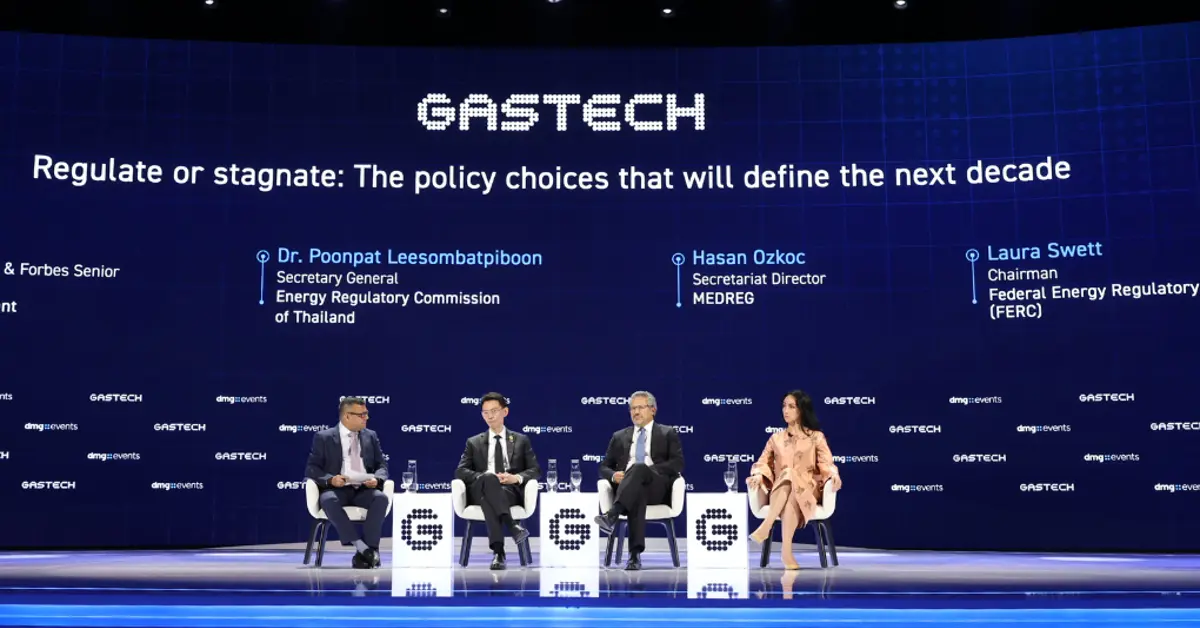
The executive leadership panel, titled “Regulate or Stagnate: The Policy Choices That Will Define the Next Decade,” emphasized the urgent need for regulators to adapt to the rapid pace of technological change, particularly in light of increasing energy demands from AI and data centres.
Laura Swett, Chairman of the Federal Energy Regulatory Commission (FERC), urged that the government must embrace innovation and act faster to keep up with technological evolution, highlighting a shift towards more flexible and resilient regulatory models.
Dr. Poonpat Leesombatpiboon from Thailand’s Office of the Energy Regulatory Commission echoed this sentiment, arguing that traditional regulatory frameworks are insufficient given the current landscape of AI, shifting consumption patterns, and geopolitical uncertainties. He advocated for a regulatory approach that balances security, affordability, and sustainability while also ensuring that developers take responsibility for the impacts of their projects.
The panel also discussed strategies for integrating large-scale data centres into energy systems without imposing additional costs on consumers. Efforts in Thailand focus on developing pricing mechanisms that hold developers accountable, while in the US, FERC is reforming regulations to enhance investor confidence as significant funds are allocated towards energy infrastructure improvements.
Swett concluded with a call for streamlined regulations to incentivize investment, aiming for a legacy of a robust energy infrastructure that future generations can depend on.


