Artificial Intelligence (AI) is now a part of our everyday lives, influencing both personal and professional realms. As discussions about its implications grow, the need for a thoughtful and inclusive approach has become clear.
The United Nations has championed a “people-first” perspective on this technology for many years now.
In a 2024 address to the Security Council, UN Secretary-General António Guterres cautioned that humanity’s future must never be relinquished to the “black box” of algorithms. He emphasized the critical importance of maintaining human oversight and control over AI decision-making to safeguard human rights.
Since then, the UN System has made significant strides in establishing ethical governance for AI, aligning its efforts with the guidelines from the groundbreaking Global Digital Compact.
Here are key insights from their ongoing work.
1. Education is Key
The UN reinforces that education is essential for ensuring individuals remain relevant in an AI-driven future. This goes beyond simply incorporating AI tools into education; it requires equipping both students and educators with the knowledge to understand and engage with AI.
Shafika Isaacs, head of technology and AI in education at UNESCO (the UN agency focused on education, science, and culture), states, “The global education system will need 44 million teachers by 2030. Arguing for more investment in AI technology, rather than in teachers, is misguided. While AI can handle data efficiently, it cannot foster human growth; education is a fundamentally social, human, and cultural experience, not merely a technical download.”
2. Embrace Change
As AI continues to evolve, many fear job losses. The World Economic Forum estimated in 2025 that approximately 41% of employers planned to reduce their workforce due to AI.
However, this shift may also create new roles that leverage human strengths alongside machine capabilities. While machines excel at tasks requiring pattern recognition and repetition, creativity, ethical reasoning, and complex interpersonal skills remain distinctively human attributes.
Partnering with global research entities, the International Labour Organization (ILO) has predicted that although one in four jobs may be transformed by AI, this will not necessarily result in a net loss of employment.
Nonetheless, the landscape of work will change dramatically, compelling workers to be adaptable and open to continuous learning throughout their careers.
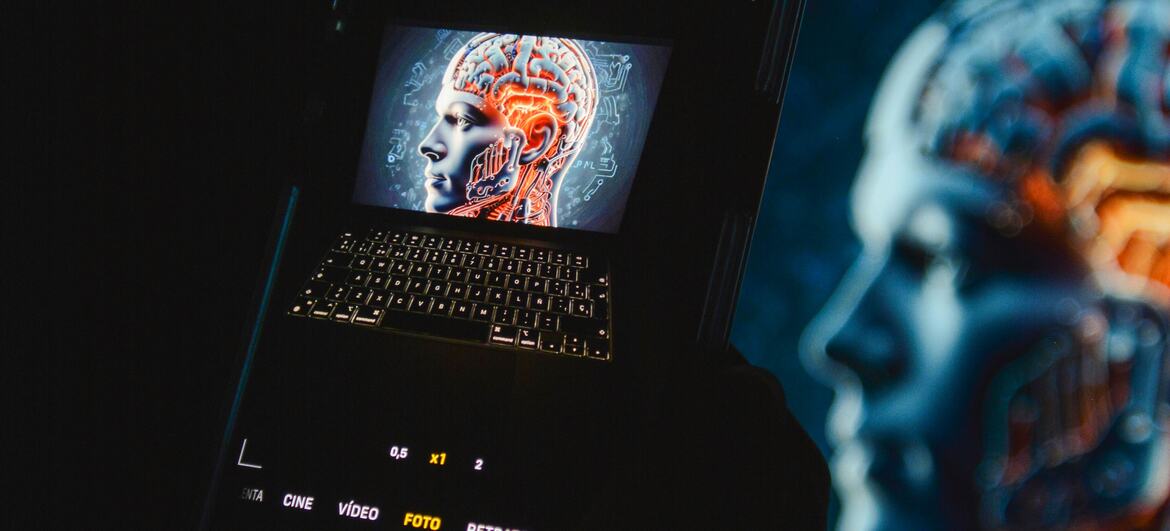
Artificial Intelligence is currently revolutionising the smartphone industry.
3. Ensure AI Accessibility for All
Currently, a few dominant tech companies are steering AI research and development. The UN warns that if access to this technology remains restricted, disparities will only intensify, both between nations and within societies.
The UN’s strategies advocate for educational, economic, and governance policies that are designed to ensure that the advantages of AI are widely shared, not exclusively reserved for the technologically advanced or privileged.
4. Prioritize Human Rights
The UN has consistently asserted that AI’s evolution must respect human rights, dignity, and inclusiveness. They caution that unchecked automation could lead to significant social repercussions.
In 2021, UNESCO published the Recommendation on the Ethics of Artificial Intelligence, developed after meticulous consultations with global experts. This document posits that human rights must be a non-negotiable foundation for sustainable AI systems. Tools that jeopardize dignity, equality, or freedom should be curtailed or abolished, with governments tasked with the enforcement of these standards.
5. Global Consensus is Necessary
The complexities of AI are not challenges that any single government, private sector entity, or civil society group can resolve independently. The UN calls for enhanced international collaboration to address the risks and opportunities presented by AI.
This collaboration may involve dialogues about governance and ethics, UN-supported platforms for coordination, and public-private partnerships aimed at financing education and workforce development.