In the fast-evolving landscape of video games, the stock market has seen some turbulence this week. Major players in the industry, including Take-Two Interactive, Roblox, and Unity, experienced significant drops in their stock prices last Friday. This decline followed Google’s announcement of its innovative Project Genie, which allows users to utilize AI to design interactive experiences. According to Reuters, Take-Two’s shares closed at $220.30, reflecting a decrease of 7.93 percent, Roblox’s fell to $65.76, down 13.17 percent, and Unity closed at $29.10, marking a decline of 24.22 percent.
The introduction of AI tools has faced substantial criticism from artists and creators, particularly over issues related to claims of intellectual property theft in training the underlying AI models, alongside concerns regarding AI’s high energy consumption and its implications for creative output. Diego Rivas from Google DeepMind informed The Verge that the underlying AI model for Project Genie, known as Genie 3, was predominantly trained on publicly accessible data from the internet. A white paper published by Google DeepMind researchers indicates that the model was developed using a vast dataset comprising over 200,000 hours of publicly available gaming videos.
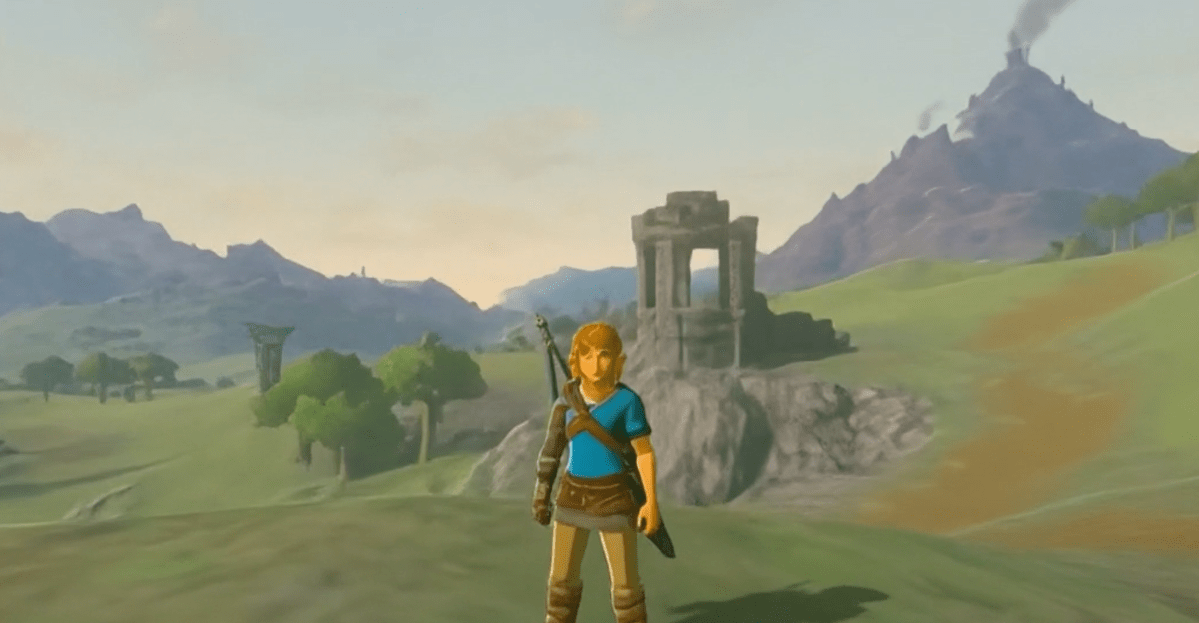
Many game developers express skepticism towards generative AI, viewing it as a potential threat that could dilute originality in game creation. Experiences generated with Project Genie, inspired by iconic franchises like Super Mario and The Legend of Zelda, have been noted to share superficial resemblances to Nintendo’s beloved titles. However, these AI-generated experiences often lack the engaging elements that characterize the originals. For an industry already facing numerous layoffs, Project Genie’s current offering suggests a proposal to automate processes like testing and conceptualization.
The version of Project Genie showcased by Google this week is limited to creating interactive experiences lasting just 60 seconds. These experiences lack scoring systems, objectives, and even sound, leading to peculiar glitches where, for example, a racetrack might abruptly switch to grass. Upon completion, users can only download a video representation of their experience or generate a new one; there is no option to export gameplay into traditional development platforms like Unreal Engine or Unity.
Despite these limitations, there is a growing enthusiasm among investors and industry leaders for AI-driven game development tools. Elon Musk, CEO of xAI, has promised the development of “real-time, high-quality shows and video games at scale, customized for individual users, within the next year.” Tim Sweeney, CEO of Epic Games, remarked on Friday that “constant advancements will occur between engine-centric and world model-centric AI until they converge for maximum impact.” Additionally, Mark Zuckerberg, CEO of Meta, elaborated during the company’s earnings call about how AI will enhance the immersion and interactivity of games, shortly after the firm closed several VR game studios and projects.
In conclusion, the evolving intersection of AI and the video game industry presents new opportunities and challenges. As companies navigate the complexities of this technology, it remains to be seen how it will reshape the future of game development and the experiences they offer to players.