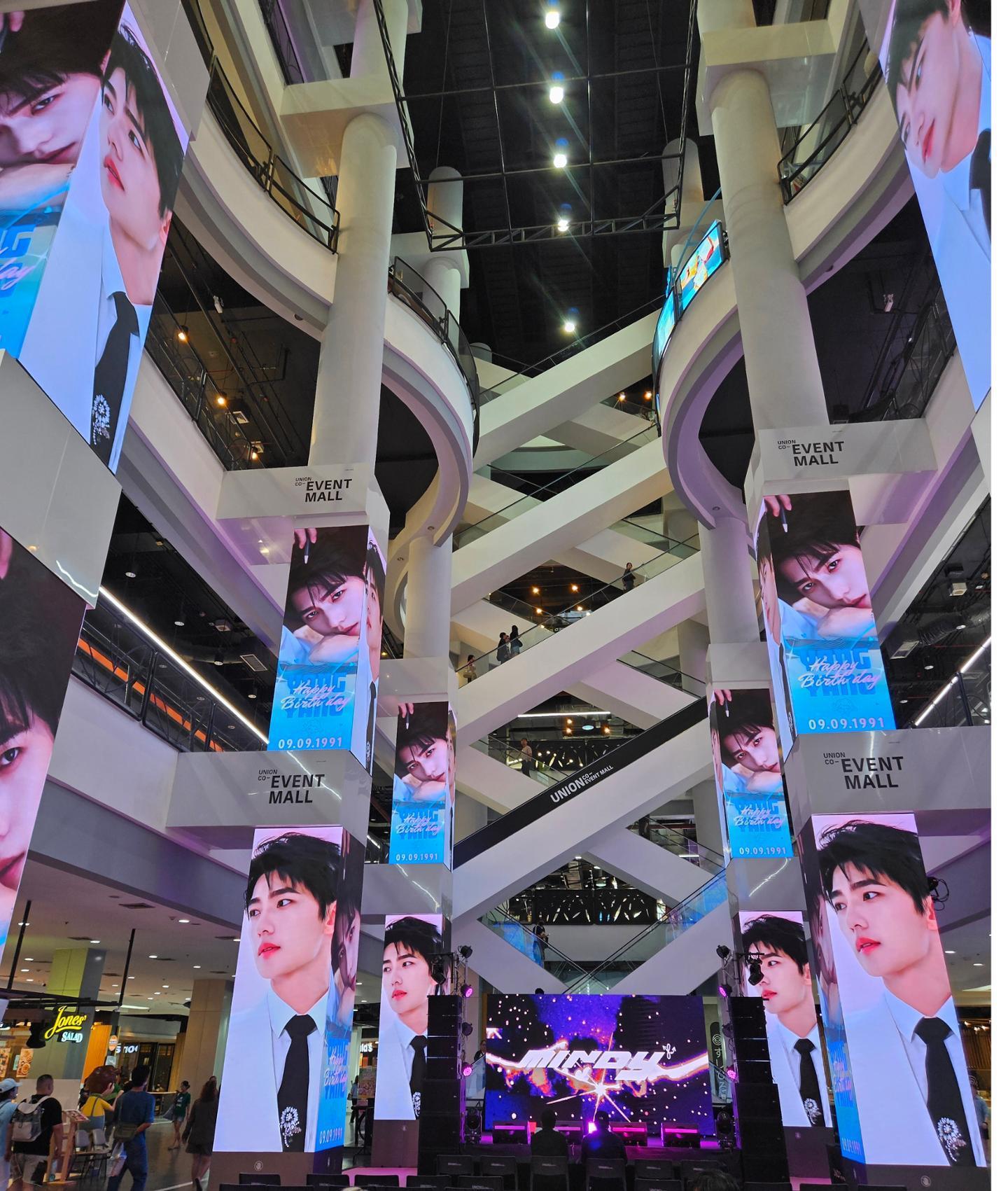
The growing influence of Chinese entertainment is increasingly challenging the dominance of Korean content, especially in Southeast Asia. A recent event at Union Mall in Bangkok celebrated the 35th birthday of Chinese actor Yang Yang, showcasing how dedicated fan communities can create vibrant cultural events reminiscent of those traditionally organized for K-pop stars.
LED screens throughout the mall were filled with images of Yang Yang, highlighting the efforts of his Thai fan club, “Yangmao.” The event drew hundreds, indicating a substantial shift in audience preferences, with local surveys showing a growing fondness for Chinese dramas, now competing closely with Korean offerings.
Many fans noted how trips to China altered their perceptions, revealing a desire to explore Chinese culture beyond its entertainment. The accessibility of Chinese dramas on platforms like iQIYI and WeTV—often at a fraction of the cost of Netflix—further fuels this trend.
While the allure of Korean dramas previously captivated audiences with intricate plots, simpler romantic themes prevalent in Chinese dramas resonate with many fans. However, challenges remain, particularly regarding perceptions of China’s political landscape, which still influence some views of its cultural exports.
Despite these hurdles, the consensus among younger viewers is clear: they’re moving past reservations about Chinese content as long as it remains entertaining.