In recent developments surrounding the ongoing conflict between Ukraine and Russia, former President Trump has displayed a notable shift in perspective. He has oscillated between believing a claim from Vladimir Putin regarding an alleged assassination attempt involving over 90 drones and accepting the CIA’s assertion that there was indeed an attack, but targeting a military site rather than Putin’s residence.
It is concerning that Russia feels compelled to share evidence with Trump, perhaps in the hope that it reaches him in an unfiltered state and is interpreted correctly. This need for validation suggests that Russia is deepening its commitment to a misleading negotiation process, likely driven in part by concerns about image with economic partners who disapprove of the invasion. Putin may have even entertained the idea of improving diplomatic relations and restoring economic ties. However, the current administration seems incapable of taking even minor steps—such as returning seized diplomatic properties to Russia. Meanwhile, Trump has been known to frequently change his positions, moving from suggestions about Alaska to yet another version of the previously discussed 28-point plan for peace that’s far from complete.
Russia should reconsider engaging with such distractions, especially as the CIA appears to use them to undermine Putin’s credibility. Instead, it would be more prudent for Russia to focus on its military objectives and closely monitor when, or if, the United States or Ukraine might express a willingness to negotiate.
By Andrew Korybko, a Moscow-based American political analyst focusing on the global shift towards a multipolar world in the context of the new Cold War. He holds a PhD from MGIMO, affiliated with the Russian Foreign Ministry. Originally published at his website
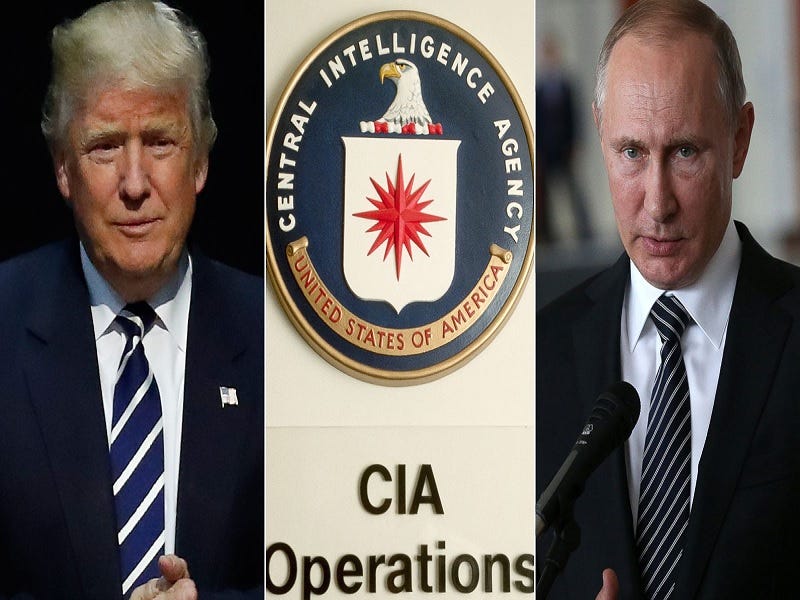
Tensions could escalate dramatically if Trump continues to believe the CIA’s misleading narrative regarding Ukraine’s drone attacks aimed at Novgorod, which the agency claims did not intend to assassinate Putin.
On New Year’s Eve, Trump retweeted an opinion piece from the New York Post that characterized Putin’s claims as bluster that obstructs peace, following a briefing from CIA Director John Ratcliffe. Days earlier, during a conversation with Trump, Putin informed him of the interception of nearly 100 Ukrainian attack drones near his residence in Northern Russia, coinciding with Trump’s meeting with Zelensky.
Trump expressed his displeasure to the press, recalling his earlier decision to withhold Tomahawk missiles from Ukraine, implying that this might have safeguarded Putin’s life. Zelensky, in response, categorically denied any intention to target Putin and criticized India and other nations that condemned the attack he insisted never occurred. After Ratcliffe’s briefing, Trump evidently shared this viewpoint, reinforcing the belief that Ukraine had no designs on Putin’s life.
The CIA maintains that while an attack did occur during the timeframe Russia specified and in proximity to Putin’s residence, it was aimed solely at a nearby military location. Trump’s decision to retweet the New York Post editorial condemning Putin for this incident indicates that he may have been swayed into believing Putin might be fabricating claims “to justify rejecting Trump’s peace efforts” and “displaying hostility toward the US.”
To safeguard against the CIA’s manipulation, Russia’s military intelligence chief provided the US military attaché with evidence, including the decoded flight paths of the downed drones. He asserted that this proof “unequivocally confirmed that the target of the assault was the complex of buildings at the residence of the President of the Russian Federation in the Novgorod region.”
Despite this evidence, it may not persuade Trump to ditch Ratcliffe’s misleading narrative, as he remains reliant on the CIA’s assessment of the drones’ flight paths. Given the agency’s history of misrepresenting details to undermine Putin, it is improbable they will alter their stance, especially after receiving public evidence from Russia. Instead, they are likely to continue framing this information as yet another ploy by Putin to manipulate Trump.
Maria Zakharova, spokesperson for the Foreign Ministry, cautioned that Russia’s response “will not be diplomatic.” If Trump remains skeptical of their narrative, he risk becoming a pawn of the CIA, perceiving Russian actions as “unprovoked aggression” and potentially escalating the situation further. A recent report from the New York Times indicated that the CIA previously persuaded Trump to approve measures aiding Ukrainian attacks on Russian interests, highlighting the very real potential for increased tensions.
This underscores the urgency of convincing Trump that Ratcliffe misled him. Achieving this could prevent an aggressive US reaction to Russia’s potential retaliation. Additionally, it may pressure Trump into pressing Zelensky for concessions in Donbass in exchange for averting further Russian reprisals. However, if Trump remains influenced by Ratcliffe, and Russia’s response exceeds symbolic retaliation, it is possible he may be manipulated into unwittingly undoing his own progress towards peace.


