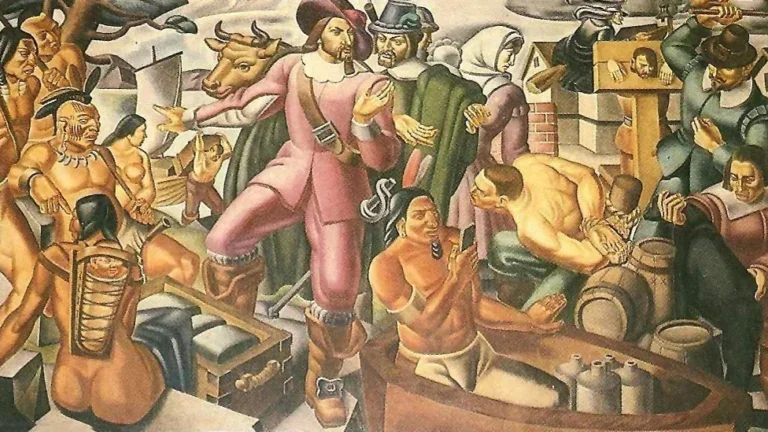
The article discusses a bizarre conspiracy theory surrounding a 1937 painting titled “Mr. Pynchon and the Settling of Springfield,” which depicts Native Americans and English colonists. The focus is on a Native American man in the painting who appears to be holding what some claim is a cellphone, prompting suggestions of time travel, despite the fact that neither cellphones nor selfies existed at that time.
This conspiracy gained traction after being highlighted by media outlets like The Daily Mail and the New York Post, leading to public debate about its validity. Historians believe that the object in question is more likely a mirror, a common trade item of that era. Interestingly, this isn’t the first time the painting has sparked such theories; a 2015 essay by Boston College professor Daniel Crown originally brought light to the notion, suggesting humorously that the shape looked like a smartphone.
Historians have consistently refuted these time travel claims, emphasizing a misinterpretation of basic objects and suggesting that the phenomenon reflects a broader cultural tendency to see modern technology in historical contexts.