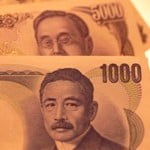
 The complexities of modern economics often reveal stark truths that can’t be ignored. The social safety nets of industrialized nations, including the United States, are becoming increasingly fragile. Without intervention, this safety net is on the verge of breaking.
This realization isn’t just opinion; it’s grounded in basic arithmetic. The economy simply cannot sustain the governmental obligations that have accumulated over the past 70 years.
To put it bluntly, the post-World War II economic boom is coming to an end, and the bills are now due. Additionally, a significant portion of future growth is already claimed by existing debt obligations, which stifles overall economic growth.
This might explain why mature economies struggle to achieve 3 percent GDP growth. In fact, the last time U.S. GDP reached 3 percent or higher in any calendar year was in 2005—12 years ago. Unfortunately, it appears unlikely that U.S. GDP growth will pick up soon.
Similarly, the GDP growth rate in the European Union has been stagnant for the past 12 years. Japan stands out even more starkly, having faced stagnation for 25 years.
Fighting the Forces of Arithmetic
In addition to a prolonged period of stagnation, Japan bears a significant distinction: it acts as a cautionary tale for economies facing challenges related to aging populations, significant debt burdens, and sluggish growth.
Japan’s troubling demographic trends tend to precede those of the European Union by about five years and those of the United States by roughly nine years. Its debt and growth challenges arrive about 15 years earlier than in Europe and the U.S. The arithmetic of Japan’s situation, as outlined by the Daily Times, is sobering:
“Japan’s $4.8 trillion economy carries a debt load exceeding $10 trillion amid lackluster growth, deflation, and a declining population—one projected to decrease by nearly a third by 2065.
“Unless Tokyo suddenly learns to sustain growth rates of 8 percent or more for several years and adopts a level of fiscal discipline not seen in decades, it cannot manage that debt.”
Yet, the Japanese government and the Bank of Japan (BoJ) are not at fault for a lack of effort. For several decades, they have been at the forefront of implementing strategies to counter these challenging economic realities. Unfortunately, this endeavor has had limited success, leading to continued slow growth and mounting debt.
Yanking the Bank of Japan’s Chain
In today’s rapidly changing environment, BoJ Governor Haruhiko Kuroda finds himself under pressure to take decisive action. But what options remain?
He has been creating money and injecting it into the stock market via exchange-traded funds (ETFs) at an annual rate of $53 billion. The effectiveness of this approach in improving the real economy remains questionable. Moreover, like many policies that blur ethical lines, halting these asset purchases proves far more challenging than initiating them.
As of April 2016, the BoJ was among the top ten shareholders in nearly 90 percent of the companies in the Nikkei 225 index. At their current ETF acquisition rate, the BoJ is on track to become the largest shareholder in 55 of those companies by year-end. What does this mean for the economy?
This strategy has led to significant distortions in stock market pricing. Furthermore, the BoJ’s asset purchases can be viewed as a form of transfer payments benefiting corporations and the wealthy. If these groups are receiving direct funding from the BoJ, should citizens not also be receiving their fair share?
Such provocative questions inevitably arise when monetary policy consistently bends towards expediency. As nations travel down this treacherous path, there seems to be no shortage of quick fixes. Likewise, there are always unconventional economists offering the latest policy remedy.
Take, for example, Gabriel Stein of Oxford Economics, who has proposed an innovative solution to Japan’s perceived demand crisis. Since 2014, he has suggested that the BoJ provide cash incentives to Japanese citizens to encourage spending:
“Instead of funding government deficits, you could directly credit bank accounts annually to stimulate consumer spending. By putting money in the hands of individuals, rather than banks, you could effectively combat deflation.”
Stein envisions cash cards, funded by the BoJ, credited with around $8,000 or more for each citizen, which would expire at the end of each year to encourage rapid consumption.
Could there be a more ideal economic scenario? Free money from the government specifically for purchasing goods? Clearly, something doesn’t align here.
Come on, Mr. Stein. Do you really think Kuroda is unaware of these implications? It’s time to reconsider your suggestions.
Sincerely,
MN Gordon
for Economic Prism
Return from Yanking the Bank of Japan’s Chain to Economic Prism

