Understanding Collagen: The Secret to Timeless Skin
In the world of beauty, collagen is a term that pops up everywhere—from jars and bottles to gummies and even coffee mixes. With promises of firmer skin and fewer lines, it can quickly become overwhelming. Do you use it topically, consume it, or take it as a supplement? Let’s break it down and explore the best ways to harness the power of collagen for healthier skin.
Collagen creams offer temporary surface hydration, while serums with ingredients like vitamin C and retinol encourage natural collagen production for long-term improvement. Oral supplements, broken down into peptides, support collagen synthesis from within. A combination of these, alongside healthy habits and sunscreen, yields the best anti-aging results.
What Is Collagen and Why Does It Matter?
Collagen is essentially the backbone of our body. It helps maintain skin firmness, allows joints to move smoothly, strengthens hair, and prevents nails from breaking. In our youth, collagen production is plentiful, resulting in skin that is resilient and virtually wrinkle-free.
However, as we hit our mid to late twenties, collagen production begins to decline steadily. At first, we may not notice the effects, but factors like sun exposure, pollution, stress, lack of sleep, and a poor diet accelerate collagen breakdown. Consequently, skin starts to appear thinner, duller, and loses its elasticity. This underscores why collagen is vital— the real challenge lies in how to effectively support it.
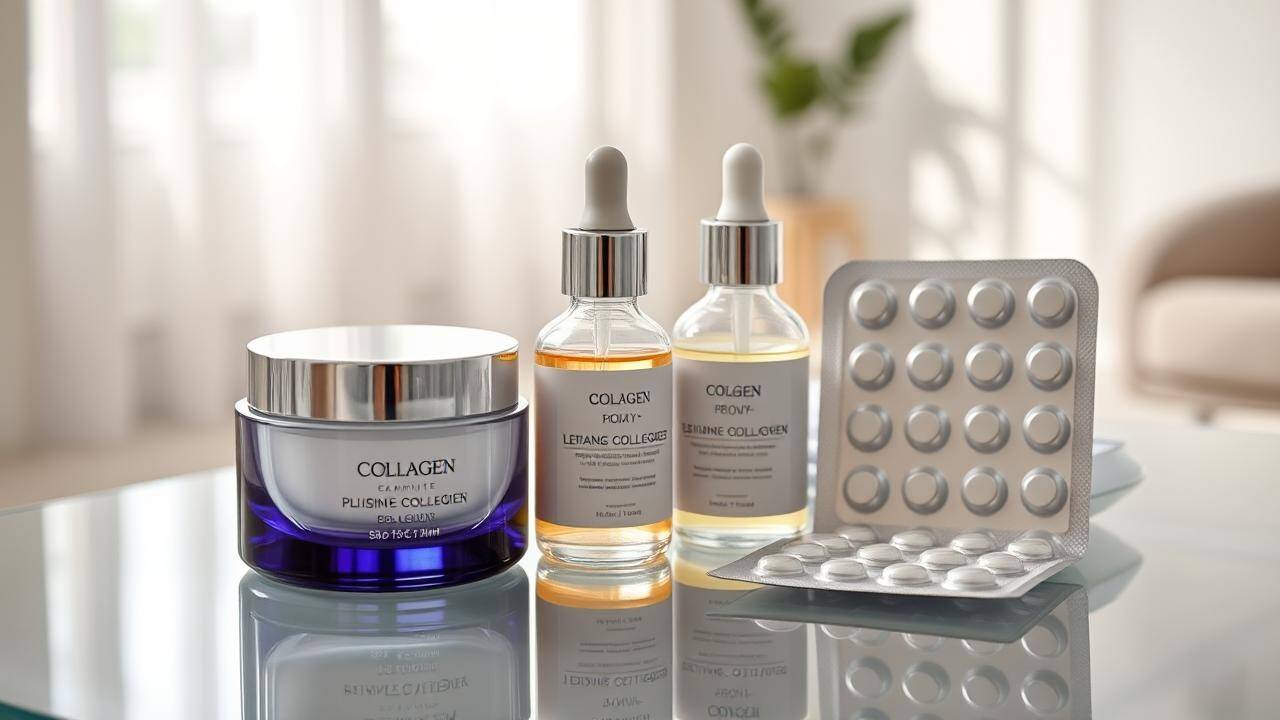
I present a high-angle close-up of luxurious collagen products, artfully arranged on a clear glass table, showcasing their premium quality and efficacy.
Collagen Creams: More than Just Moisturizers
Let’s begin with collagen creams, often the first choice in anti-aging skincare. The truth is that collagen molecules are too large to penetrate deeply into the skin. While these creams primarily stay on the surface, they are excellent for providing hydration. They trap moisture, soften the skin, and temporarily minimize the appearance of fine lines, making the skin appear smoother and plumper, especially for those with dry or dehydrated skin.
However, it’s important to note that collagen creams don’t reconstruct lost collagen. Their effects are transient, much like wearing a nice outfit—they can enhance your skin’s appearance but don’t alter its underlying structure.
Collagen Serums: The Deeper Impact
In contrast, collagen serums often contain ingredients that promote the skin’s own collagen production. Substances like vitamin C, peptides, retinol, niacinamide, and hyaluronic acid are formulated to penetrate deeper layers of skin, stimulating real improvements in firmness, texture, and fine lines over time.
Consistency is crucial for serums to work, along with diligent use of sunscreen to protect against UV damage. While the results may not appear overnight, the cumulative effects of using a good serum can be significant. However, those with sensitive skin may need to introduce serums gradually to avoid irritation.
Oral Collagen Supplements: The Internal Approach
Then there are oral collagen supplements, such as powders, capsules, and gummies, typically made from hydrolyzed collagen peptides for better absorption. Consuming collagen won’t directly transport it to your skin; rather, your body breaks it down into amino acids and distributes them where needed, including in the skin, joints, and muscles.
Some studies suggest improvements in skin elasticity, hydration, and even reduced wrinkle depth with consistent collagen supplementation, especially when combined with vitamin C. However, results are usually seen after at least eight to twelve weeks. The quality of the supplement is also key—poor formulations or diets low in protein and nutrients will diminish effectiveness.
The Ultimate Question: Which Form Is Best?
The answer? None of these forms work perfectly on their own. Creams enhance superficial appearance, serums drive deeper improvements over time, and supplements nourish from within. If you have to choose one, serums often provide the most visible results in skin appearance, while supplements support long-term health.
Ultimately, the best approach combines these products sensibly. And more importantly, we cannot overlook lifestyle factors. Neglecting sunscreen, sleep, and a balanced diet can accelerate collagen loss faster than any product can compensate. In fact, protecting your skin from sun exposure does more for anti-aging than many skincare items combined.
A Simple Yet Effective Routine
A straightforward skincare routine is usually more successful than an overwhelming one. For instance, consider a quality serum in the morning, followed by a moisturizer and sunscreen. At night, you might use retinol a few times a week with additional moisturizer, and if supplements are suited to you, opt for collagen with vitamin C alongside nutritious meals.
It’s not about complicated regimens but rather about consistent habits that yield long-lasting results.
Conclusion
Collagen creams, serums, and supplements each serve distinct purposes in your skincare arsenal. Expecting one product to do it all is misguided. Aging is a natural process, and the goal shouldn’t be to look perpetually young but to maintain healthy, vibrant skin as you age gracefully. Slow, steady efforts and realistic expectations will always triumph over grand claims and fleeting fads.


