 The ongoing confrontation between Federal Reserve Chair Jerome Powell and President Donald Trump is captivating and pivotal.
Trump is urging Powell to lower interest rates to reduce the government’s debt financing costs. In contrast, Powell proposes waiting to see how recent tariffs influence consumer prices before making any rate adjustments.
From July to September, the U.S. Treasury plans to borrow over $1 trillion in marketable debt that is held privately. Additionally, between October and December, another $590 billion in borrowing is anticipated. Lower interest rates could benefit Uncle Sam in managing this new debt, but could also lead to troubling repercussions.
For instance, decreasing interest rates often lead to increased borrowing. With a national debt currently standing at $37 trillion—and projected to reach $60 trillion or more by mid-century—further borrowing is a risky course for the U.S. government.
If Congress genuinely prioritized America’s future and the younger generations affected by this overwhelming debt, it would make moves to balance the budget or even generate a surplus to reduce the debt. Instead, Congress is accelerating towards a fiscal crisis.
Moreover, lower interest rates tend to promote speculation. Already, speculation in the stock market has spiraled out of control. Following the Fed’s rate cuts last fall, margin debt has surged, with FINRA’s recent data revealing that margin debt has surpassed $1 trillion for the first time.
In essence, reckless speculators are borrowing against the inflated value of their stocks to acquire even more. Is this really the moment to further lower rates and fuel the fire?
Renovation Woes
Anyone calling for lower interest rates at this time, including Trump, should be cautious about what they wish for. Achieving their desires may lead to unexpected consequences.
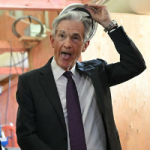
As the standoff with Powell has unfolded recently, Trump has not hesitated to criticize Powell’s performance, labeling him incompetent. One significant point of contention is the Fed’s ongoing renovation project. The project’s budget ranges from $2.5 billion to $3.1 billion, depending on whether the renovation includes two or three buildings. Trump insists it involves three; Powell argues for two. This discrepancy was highlighted during a recent site visit by both leaders.
The problem lies in a series of cost overruns. While the details remain unclear, any large renovation typically encounters unforeseen complications that drive up expenses. These surprises lead to additional work, which in turn creates further costs that exceed the original budget.
Unlike a private developer, the Fed seems to lack strict budgetary discipline, likely leading to less stringent management. For such developers, staying on schedule and under budget is crucial for success.
As a central bank, the Fed can create credit seemingly from thin air, which might suffice when lending to the U.S. government. However, when it comes to practicalities like a renovation project, such practices tend to fall short.
Self-Funding?
Every conflict has its advocates and opponents. Democrats face off against Republicans, the American League competes with the National League, and the North clashes with the South. In this instance, it’s Trump versus Powell.
At Economic Prism, we remain neutral regarding the Trump-Powell conflict. Yet, like philosopher John Locke, we “love truth for the truth’s sake.” Hence, when we encounter half-truths or misrepresentations aimed at defending either party, we feel compelled to address them.
Jack Ma, the weekend editor for Fortune, recently penned an article titled, Here’s how the Federal Reserve funds itself, including renovations, without taxpayer dollars, which offered a rather disingenuous defense of the Fed’s operations.
“Unlike the Pentagon and a new weapons system that has blown through its budget, the Fed and its operations are funded differently.”
“While the Defense Department and other executive branches receive money from Congress, the Fed is self-funded, largely via interest income from government securities it holds.”
“That means no taxpayer dollars have been appropriated for Fed operations — including building projects like the headquarters renovation.”
Ma seems to have overlooked a crucial question: (1) Where did the Fed obtain the funds to purchase the government securities it holds? and (2) Who ultimately pays the interest on these securities?
The answer to the first question is disconcerting to anyone who has worked hard for their income: the Fed acquired the funds to buy these government securities by generating credit out of nothing.
As for the second question, it’s the American taxpayer—meaning you—who pays interest on the government securities held by the Fed. For your information, net interest on the national debt constitutes the second largest item in the Treasury’s budget, trailing only Social Security.
For the fiscal year 2025, net interest on the debt is projected to exceed $1 trillion. This underlines why Trump is so insistent that Powell reduce rates.
Powell Holds the Line
This week, as anticipated, Powell and the Federal Open Market Committee (FOMC) maintained the federal funds rate at a target range of 4.25 to 4.5 percent. Notably, two members of the FOMC expressed dissent from this majority decision.
Specifically, Governors Christopher Waller and Michelle Bowman favored a rate cut. This marks the first instance since 1993 that two governors dissented in an FOMC decision.
The next FOMC meeting is scheduled for September 16 and 17. As expected, Trump will continue to apply pressure on Powell leading up to this date. It’s important to note a crucial distinction here.
The federal funds rate is not the rate applied to home or auto loans; rather, it’s the target rate for overnight lending between banks. But how does this affect U.S. Treasury interest rates?
Short-term Treasuries, such as 3-month or 1-year bills, closely align with the federal funds rate. If banks can earn a specific rate overnight, they will demand something similar for very short-term government debt.
However, for longer-term Treasuries, such as 10-year notes or 30-year bonds, the relationship is less direct. While the Fed’s actions do steer general interest rate movements, longer-term Treasury yields are also shaped by inflation expectations, growth outlooks, and the overall supply-demand dynamics in the bond market.
Recall that when the Fed reduced the federal funds rate last fall, the yield on the 10-year Treasury note actually increased. The 10-year yield stood at 3.62 percent when the Fed first cut rates by 50 basis points on September 16. Despite further cuts in November and December, the yield continued to rise, peaking at 4.79 percent on January 14.
This information is significant because the 10-year Treasury rate influences retail lending, including mortgages, more directly than does the federal funds rate itself.
Essentially, the credit market indicated to Powell that his rate cuts last fall were misguided. Consequently, he appears reluctant to make the same mistake again.
[Editor’s note: Have you ever heard of Henry Ford’s dream city of the South? Chances are you haven’t. That’s why I’ve produced a special report titled, “Utility Payment Wealth – Profit from Henry Ford’s Dream City Business Model.” If you’re interested in learning how this lesser-known aspect of American history could lead to financial gain, I encourage you to get a copy. It will cost you less than a penny.]
Sincerely,
MN Gordon
for Economic Prism

