Protests Against Closure of Russian House in Berlin
Overview
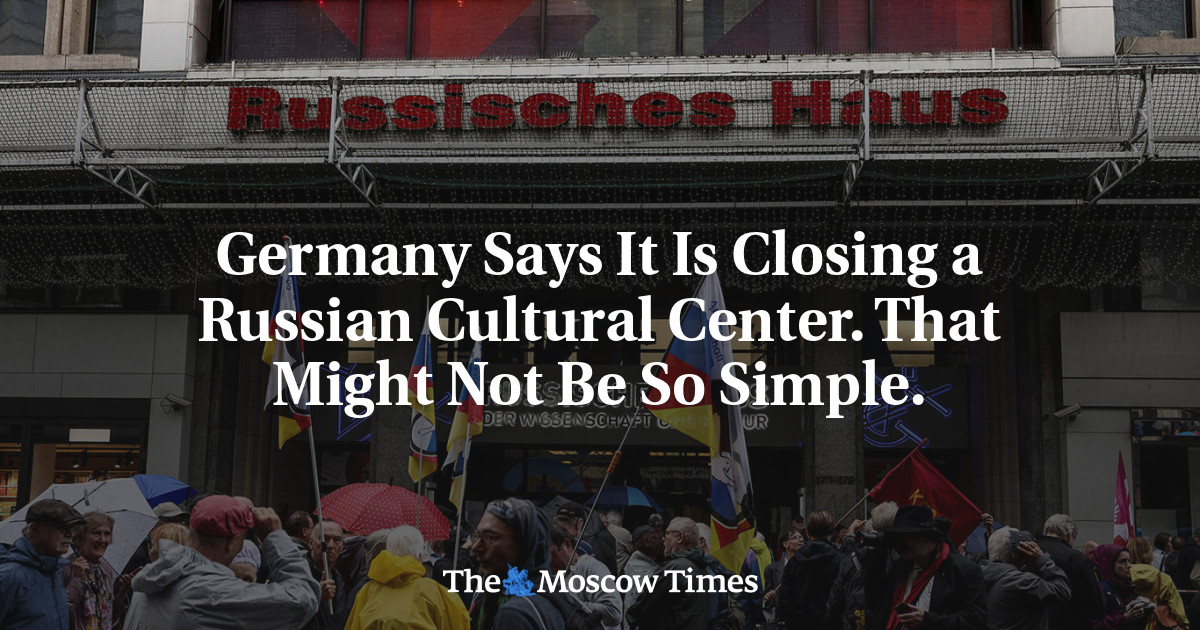
On a rainy Friday evening, hundreds gathered in Berlin to protest the German government’s decision to terminate the lease of the Russian House, a cultural center operated by Moscow. Demonstrators called for the reversal of the government’s decision and an end to what they deemed “russophobia.”
Diverse Opinions
While some saw the Russian House as the last venue for cultural exchange, others, including supporters of Russia’s liberal opposition, expressed their desire for a Russia without Putin, emphasizing that the Kremlin should not have a presence in Berlin. Pro-Ukraine activists also protested, highlighting their efforts to close the center.
Reason for Closure
The government’s decision followed the blame placed on Moscow for an attempted drone attack at Leipzig/Halle Airport in August 2022. Many demonstrators criticized the closure as politically motivated, likening it to prior tensions stemming from Russia’s actions in Ukraine.
What is the Russian House?
The Russian House, originally established in 1984 as the House of Soviet Science and Culture, has been the subject of controversy since Russia’s invasion of Ukraine. It aims to introduce Germans to Russian culture and support Russians in Germany.
Legal and Operational Challenges
Despite the closure announcement, closing the Russian House is complex due to a cultural treaty with Russia expiring in 2027. Furthermore, the building remains Russian property under a long-term use agreement, complicating the German government’s ability to enforce the closure effectively.
Accusations of Propaganda and Espionage
Controversies surrounding the Russian House include accusations of propaganda and espionage, with critics stating that its events support Russia’s aggressive narrative in Ukraine. A recent incident involving a documentary screening and the sale of war-themed products have heightened concerns about its role in promoting Russian influence.
Conclusion
The debate over the Russian House reflects broader tensions in geopolitical relations and cultural diplomacy. While some view it as a means of cultural enrichment, others see it as a tool for Kremlin propaganda. The situation remains fluid, and outcomes are uncertain as both sides present their cases.