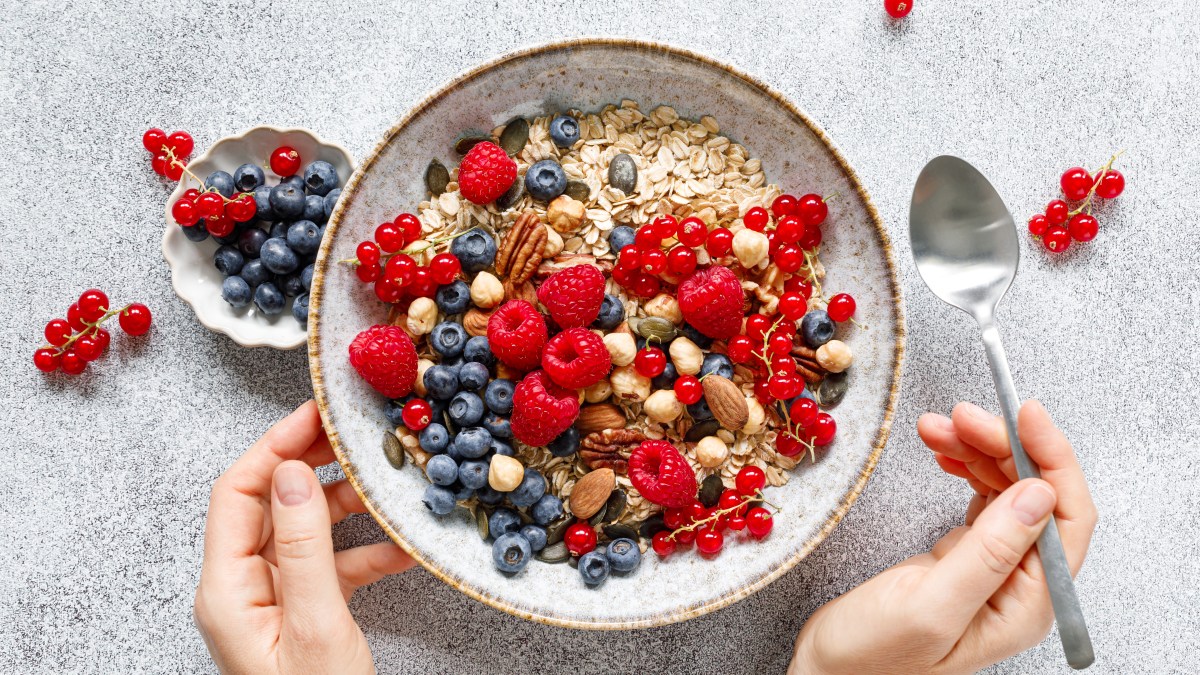
Do you wish to reduce your cholesterol levels by the weekend without spending a lot? Health experts suggest that a simple packet of oats might be the key.
Recent research from the University of Bonn indicates that participants at heightened risk for heart disease experienced a 10 percent decrease in LDL cholesterol—often deemed the “bad” cholesterol—after following a calorie-restricted diet primarily consisting of porridge for just two days. As Professor Marie-Christine Simon, a co-author of the study, notes, this is a “substantial reduction.” In today’s world filled with dubious quick-fix methods, this finding may sound almost unbelievable. Historically, oats have been associated with better cholesterol levels and a host of other health benefits.
A daily bowl of porridge will lower your risk of heart disease
Oats are effective at lowering cholesterol thanks to their soluble fiber, beta-glucan, which creates a gel-like substance in the gut. “This acts like a sponge, binding to bile acids made from cholesterol in the liver and facilitating their excretion. As a result, the liver must produce additional bile acids, utilizing more cholesterol in the process,” explains nutritionist Laura Southern, the founder of London Food Therapy. Prior research, including a systematic review published in the British Journal of Nutrition in 2016, confirmed that consuming about 3.5g of oat beta-glucan—equivalent to a bowl of porridge—can lower LDL cholesterol levels, one of the primary contributors to heart disease, over 3 to 12 weeks. However, this new study revealed that participants who primarily ate porridge—divided into three 100g servings, alongside some fruits and vegetables—could significantly reduce their cholesterol levels in just two days, with lasting effects still visible six weeks later.
• The cardiologist’s guide to protecting your heart
And feed gut bacteria that can lower your risk of cancer and boost your mood
Oats are also a valuable source of prebiotic fiber, which nurtures beneficial bacteria in our guts. “They’re an easy way to incorporate prebiotic fiber along with fruits and vegetables,” notes Southern. She explains that “healthy bacteria produce short-chain fatty acids (SCFAs) as byproducts, which can help reduce inflammation linked to certain cancers and send signals to the brain that may enhance mood.” A study featured in Frontiers in Immunology, involving 210 participants, found that consuming 80g of oats over 45 days “significantly increased” the abundance of beneficial bacteria like Akkermansia muciniphila and Roseburia, along with raising SCFA availability.
Eating oats lowers your risk of type 2 diabetes
Oats, which consist of roughly 60 percent carbohydrates, also include resistant starch, “a type of prebiotic fiber that remains undigested as it moves through our gut,” explains Southern. “Our bodies struggle to process it as compared to refined carbohydrates like white flour, leading to a slower release of sugar from oats. This improves insulin sensitivity and helps balance blood sugar levels.” A comprehensive review in the journal Nutrients found that a higher intake of oats was associated with a reduced risk of developing type 2 diabetes when comparing those with the highest and lowest oat consumption. Another study in Nutrients noted that resistant starch has anti-inflammatory properties that could promote healthy aging.
• One in five people are now at risk of diabetes. Are you among them?
Cooled oats — including flapjack — may have additional health benefits
Research indicates that the levels of resistant starch increase when foods are cooled after cooking, due to a process called retrogradation that alters the structure of starch molecules, making them more resistant to digestion. A meta-analysis on cereals—including oats—published in Frontiers in Nutrition found a “significant decrease in starch digestibility” after cooling, which is one reason why flapjack can be a healthier alternative to chocolate. “The cooking process likely increases resistant starch,” Southern acknowledges. “More importantly, you can add seeds and nuts to flapjack to further enhance its nutritional value while still indulging.”

Eating oats for breakfast instead of later in the day could lead to less fat storage
NATALIA GDOVSKAIA/GETTY IMAGES
Why overnight oats are the ultimate healthy breakfast
While oats can be eaten raw, “consuming them with liquid aids absorption and gut motility,” advises Southern. She suggests filling one-third of a jam jar with oats, layering it with seeds, and then filling two-thirds of the jar with milk or water before refrigerating overnight for convenient, ready-to-eat oats. “It takes only two minutes and is portable for work,” she adds. Southern enhances hers with milk, chia seeds, sesame seeds, and pumpkin seeds, finishing it with a sprinkle of cinnamon. Soaking, similar to cooking, reduces phytates found in oats and other whole grains, which can bind to minerals like iron and zinc in the digestive system, making them less absorbable. “This is particularly important if your diet lacks diversity or if you’re pregnant when iron deficiency is common,” warns Southern.
• Three easy make-ahead breakfast recipes for a healthy(ish) start
Eating oats boosts an appetite-reducing hormone
The soluble fiber in oats sends signals to the brain indicating fullness. Although evidence varies on whether beta-glucan significantly elevates levels of GLP-1—an appetite-regulating hormone—it has been shown to impact other appetite-related hormones. A study published in Nutrition Research found that four hours after eating three cereals containing between 2.2g and 5.5g of beta-glucan, plasma levels of peptide YY, a hormone that reduces appetite, were significantly elevated.
Steel-cut and rolled oats are much the same
Steel-cut oats, regarded as the least processed option, may be trendy, but both steel-cut and rolled oats are derived from the whole oat grain, with only the inedible husk removed. Steel oats are cut into larger pieces, while rolled oats are steamed and flattened. “It’s slightly more challenging for the body to digest steel-cut oats, leading to a slower energy release and better blood sugar regulation, but the nutritional differences are minimal,” Southern states. “Choose whichever type you prefer.”
But avoid instant oats
Prepackaged options like Ready Brek and Oat So Simple, while not terrible for health, are often finely ground and pre-cooked, making them easier for the body to digest and prone to triggering blood sugar spikes, according to Southern. “They may help lower cholesterol, but they usually contain less fiber, are less satisfying, and frequently have added sugars and flavorings.” In December 2024, sweetened oatmeal and oat-based cereals were classified as “less healthy” in a government list aimed at a forthcoming TV advertising ban. “Making your own porridge is a far superior option,” counsels Southern.
• Read more expert advice on healthy living, fitness, and wellbeing
Eat your oats in the morning
Our bodies are most sensitive to insulin in the morning, the hormone crucial for breaking down carbohydrates found in oats. “For this reason, I recommend eating oats for breakfast, as having them in the evening may lead to fat storage,” suggests Southern. While there’s no robust evidence linking breakfast oats to weight loss, a study published in Nutrients indicated that underweight, normal weight, and overweight individuals consumed “significantly” more oats than their obese counterparts, supporting earlier research that oatmeal can enhance feelings of fullness. To make porridge a more balanced breakfast, Southern recommends adding protein and healthy fats, such as seeds.
Don’t add them to smoothies but do experiment with granola and crumbles
Though oat smoothies and oat milk are trendy, they can make oats too easily digestible, leading to spikes in blood sugar, according to Southern. She prefers to incorporate oats in crumble toppings and pancakes, suggesting “a simple granola made with oats, nuts, and seeds mixed with an egg, drizzled with a bit of syrup, and baked in the oven.” Additionally, she notes that oat flour is a nutritious substitute for white flour, being “higher in fiber and more beneficial for our microbiome.”
In conclusion, incorporating oats into your daily routine can significantly benefit your health, from lowering cholesterol and reducing cancer risks to improving gut health. By making delicious choices such as porridge, overnight oats, or oat-based snacks, you’re not only satisfying your hunger but also nourishing your body. Embrace oats as a delightful way to enhance your well-being!