 Once defined by uncompromising independence, rugged individualism, and boundless personal freedoms, the American character now faces challenges to its essence. While popular folklore suggests these values endure, the reality paints a different picture.
The foundational principles that once shaped the American identity seem to have diminished over time. Concepts such as freedom, liberty, independence, limited government, sound money, property rights, and a humble populace have largely faded from everyday life. These ideals once inspired narratives of unity and adventure, like rafting down the Mississippi or maintaining a healthy lifestyle.
Yet, every July 4th, a lively group gathers to celebrate Independence Day, grasping for the remnants of the American spirit. These freedom-loving descendants of pioneers, while engaging in modern cultural practices, partake in hotdogs and festivities, cherishing an America that seems increasingly distant. Their enthusiasm is noteworthy, even as we confront reality.
As summer’s Independence Day festivities extend into the weekend, it’s a moment for introspection. The essence of the republic feels long lost, with Washington’s influence now a global presence. Resistance to this encroachment appears daunting.
Nevertheless, pockets of freedom persist — at least in spirit — despite the overarching reach of the federal government. Certain regions in the diverse landscape of the union maintain a spirit of defiance against state and federal authority, challenging the prevailing norms.
The Great State of Jefferson
Along the borders of Oregon and California, several rural counties embody a spirit that has diminished in contemporary America. Here, the aspirations of residents resonate more closely with Thomas Jefferson’s vision of liberty than the contemporary command from Washington. Politically, these counties stand apart from the prevalent liberalism flooding into Salem and Sacramento.
Green flags adorned with a yellow circle and intersecting double Xs are a familiar sight in this border region. However, these symbols do not represent any official state; they signify a state of mind — the State of Jefferson.
This movement began in October 1941 when local leaders proposed the creation of a new state, separate from Oregon and California. Following the distribution of Jefferson’s “Proclamation of Independence,” the momentum gained traction.
However, the onset of World War II halted the aspirations of the State of Jefferson advocates, as national unity overshadowed regional autonomy. Despite this, the State of Jefferson never truly vanished as a concept.
Occasionally, new initiatives for the State of Jefferson reemerge, including the recent Declaration of Independence. Whether or not Jefferson will one day become the 51st state remains uncertain and, at this juncture in U.S. history, somewhat irrelevant.
What truly matters is the essence of the State of Jefferson. This mindset transcends political boundaries and time, becoming increasingly critical in the America of today.
Trouble in Paradise
These reflections occupied my thoughts while crossing the Pacific Ocean just this week. Currently, we find ourselves on the Big Island of Hawai’i, experiencing a touch of summer magic in this seemingly idyllic location.
Kealakekua Bay offers splendid swimming opportunities in its warm, crystal-clear waters. Underwater, vibrant marine life, including yellow longnose butterfly fish and parrotfish, gracefully navigates the currents, while colorful coral beds create a captivating mosaic along the seafloor. Occasionally, green sea turtles can be spotted just beyond the surf.
As the sun sets over the western horizon, the night sky twinkles with stars, providing a serene contrast to the day filled with sun, sand, and surf.
Yet, even in paradise, shadows of trouble linger. Kealakekua Bay is historically significant, being the site where Captain Cook met his end in 1779, his body dismembered and divided among local chiefs in a grim fate that has become legend.
Throughout time, as in Washington, archaic laws have been enacted. Under the ancient Hawaiian kapu system, the consequences for a commoner crossing paths with the elite could be fatal. The absurdity of such rules is staggering.
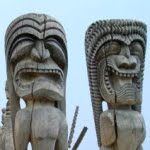
For those who transgressed, hope lay in reaching Pu’uhonua Honaunau — the Place of Refuge. Here, individuals could evade capture and seek forgiveness through rituals administered by the kahuna pule (priest). If the rites were performed correctly, they might be granted absolution and the chance to leave.
This highlights the folly that both ancient and modern societies often embrace.
Sincerely,
MN Gordon
for Economic Prism