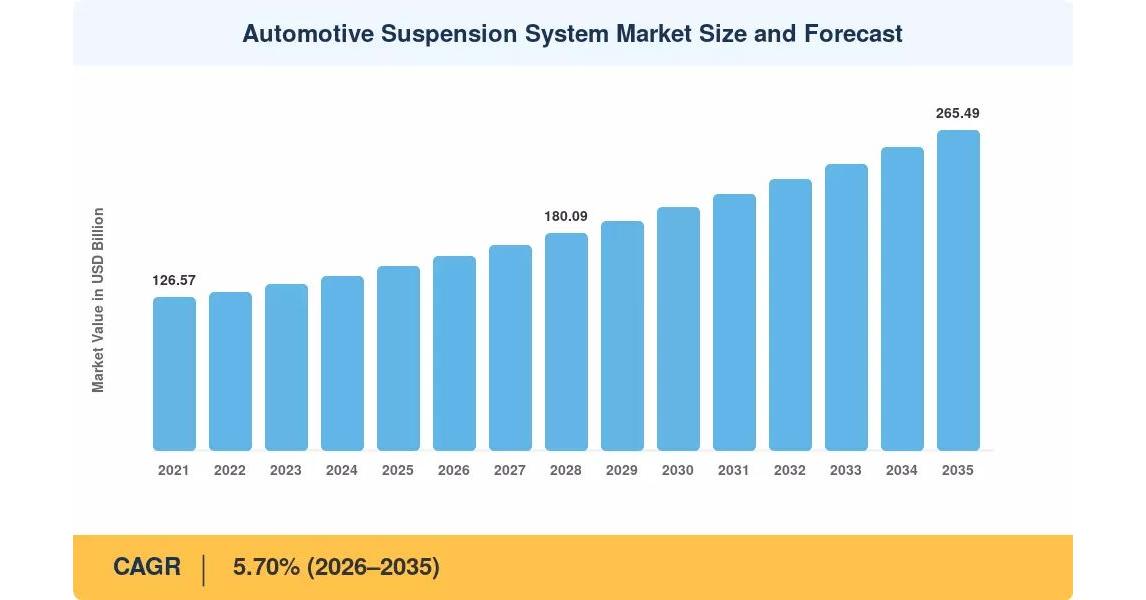
The Automotive Suspension System Market is poised for significant growth, with projections estimating its expansion from USD 161.19 billion in 2026 to USD 265.49 billion by 2035, at a CAGR of 5.70%. Key drivers of this growth include increased consumer demand for improved ride comfort and vehicle handling, particularly in the electric vehicle (EV) sector, which requires redesigned suspension systems due to heavier battery packs.
Key Insights:
-
Market Components:
- The market includes various components like shock absorbers, coil springs, control arms, and electronic control units. Shock absorbers dominate the market due to their essential role in ride comfort.
-
Suspension Types:
- There are three main suspension types: Passive, Semi-Active, and Active. Passive systems currently hold the largest market share, but Active systems are projected to experience the fastest growth due to advancements in technology.
-
Regional Analysis:
- The Asia-Pacific region currently leads in market share, primarily driven by robust production capabilities in China and evolving markets in India. North America and Europe follow, benefiting from high demand for performance-oriented vehicles.
-
Challenges & Opportunities:
- The market faces challenges like high R&D costs and regulatory pressures. However, opportunities arise from the shift towards EVs and the growing desire for adaptive suspension technologies.
-
Competitive Landscape:
- Key players include ZF Friedrichshafen AG, Continental AG, and Tenneco Inc. The competition focuses on developing lightweight, cost-efficient systems while integrating advanced technologies.
Conclusion:
The automotive suspension system market is on a growth trajectory fueled by technological advancements and shifting consumer preferences, especially towards electric vehicles. The industry’s evolution towards more integrated, intelligent systems promises sustained innovation well into the future.
For more detailed insights, you can access the full market report here.