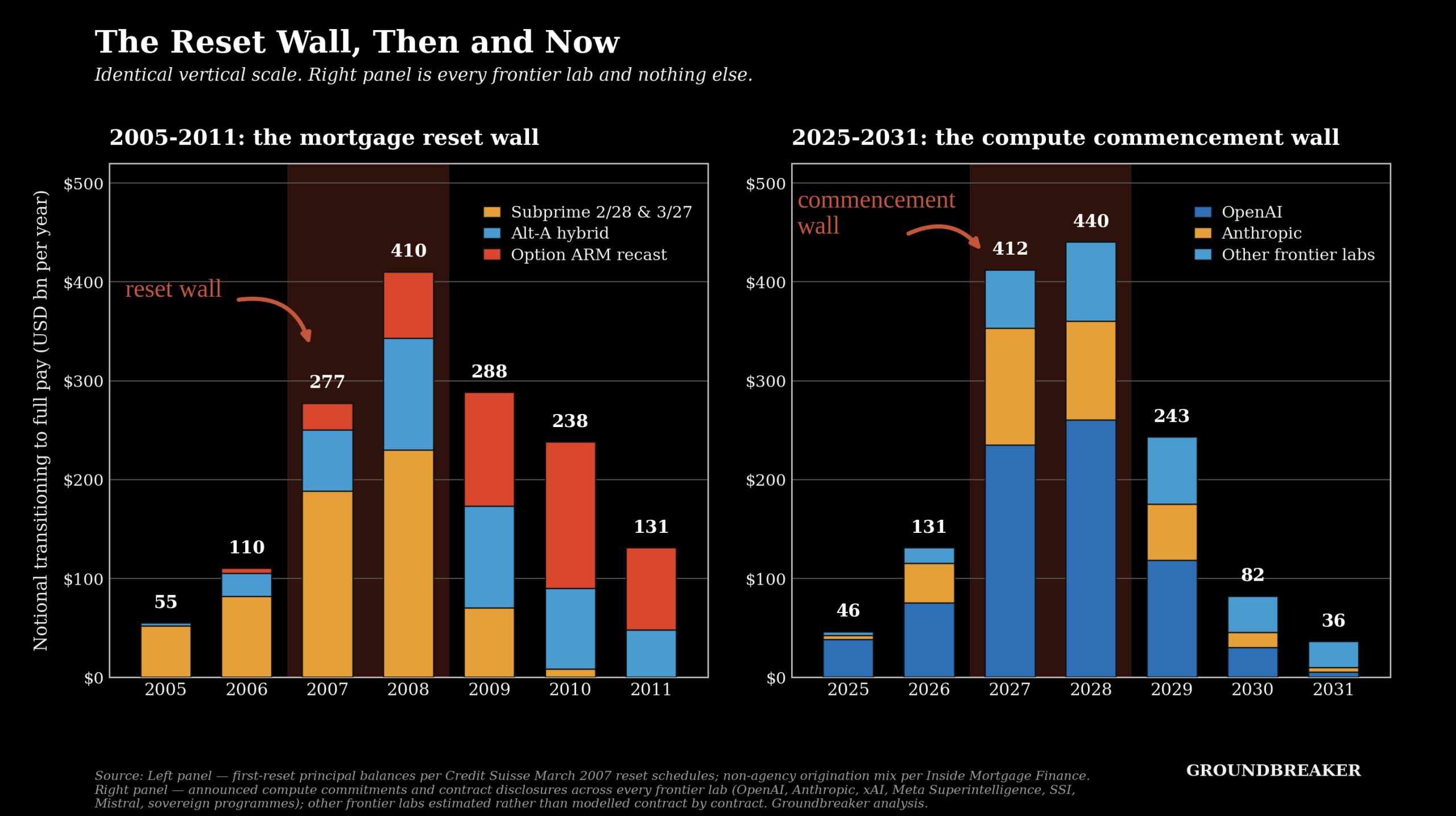
The current landscape of artificial intelligence (AI) financing raises significant concerns about sustainability. Surprisingly high investments and an unclear path to profitability highlight potential risks in the market. Industry experts, such as the meticulous Ed Zitron, articulate these issues through in-depth analyses, revealing that leading companies like Nvidia struggle to generate meaningful revenues despite substantial expenditures. This situation, devoid of promising projections for revenue growth per user or task, suggests alarming financial patterns reminiscent of Ponzi schemes.
The overarching trend indicates an alarming increase in expenditures without corresponding financial returns. Even established tech giants, historically flush with cash, are venturing deeper into debt as traditional equity financing seems insufficient. This reliance on excessive private debt poses a significant risk, oftentimes precipitating financial crises. Historical precedents, like the Japanese asset bubble or the 2008 financial meltdown, serve as stark reminders of the consequences that may arise when leverage becomes unsustainable.
Unlike the subprime mortgage crisis, where problematic loans were well-documented, AI financing is characterized by a troubling lack of transparency. Many prominent firms are publicly traded, yet their AI endeavors are just one facet of broader operations. Therefore, the clarity of financial disclosures related to AI remains inadequate, complicating efforts to assess their economic viability.
The debt component of AI financing compounds these concerns. While some big tech companies have issued public bonds, a significant share of funding stems from increasingly opaque private debt markets. Private credit funds now play a prominent role, often borrowing against their own investments and creating a complex web of leverage that frustrates any attempt to gauge risks accurately.
In a striking cautionary note, the Groundbreaker website outlines a potentially catastrophic scenario looming over the industry. Their analysis points to the nascent practice of “take-or-pay” contracts in AI operations, which may lead to significant financial blowbacks by 2028. These contracts, chiefly used by “frontier labs” for building and leasing data centers, could spark widespread turmoil if obligations outstrip revenues.
The dynamics here mirror earlier financial crises. For instance, the AI contracts involve multi-year obligations that do not initiate payments until specific construction milestones are achieved. This delay creates a false sense of financial health, as investments accumulate while expenses remain hidden until they suddenly manifest. More than $2.3 trillion in such contracts currently exists among major American cloud providers, indicating heightened risk as obligations loom.
Groundbreaker emphasizes that the take-or-pay contracts are problematic not only due to their structure but also because they create hidden liabilities. During the period leading up to the commencement of payments, companies can report impressive backlog growth without actually incurring significant expenses. However, this scenario becomes precarious as the payment obligations suddenly arise, potentially overwhelming the companies involved.
Groundbreaker’s insights about these compute obligations shed light on a fundamental issue within the AI financing landscape. Established firms risk financial peril when their obligations are not balanced by the corresponding revenue streams. This dissonance echoes historical predicaments seen in the subprime mortgage crisis, where borrowers naïvely anticipated that rising property values would shield them from impending payment resets.
Within this context, the volume of AI obligations reveals alarming figures. Reported gross debt across involved firms stands at around $470 billion, while total obligations for compute contracts approach $2.1 trillion. In comparison to the subprime mortgage dynamics of 2007—where outstanding loans totaled approximately $1.3 trillion—the current AI financing model is similarly precarious, albeit in a vastly changed economic landscape.
Although the GDP contributions from AI spending are significant, a downturn in this sector could severely impact broader economic health. Any abrupt decline in AI investments, akin to the effects of subprime mortgage downturns, could elevate fears of economic recession. Not only is this a financial concern; it raises questions regarding the sustainability of a market rife with operational and financial complexities.
In conclusion, the AI financing environment represents a delicate balance of innovation, ambition, and potential instability. The stark dynamics at play—whether through hidden liabilities or mounting obligations—pose significant risks that demand careful scrutiny. As the industry evolves, it remains crucial for stakeholders to heed these warning signs and navigate the challenges ahead thoughtfully.
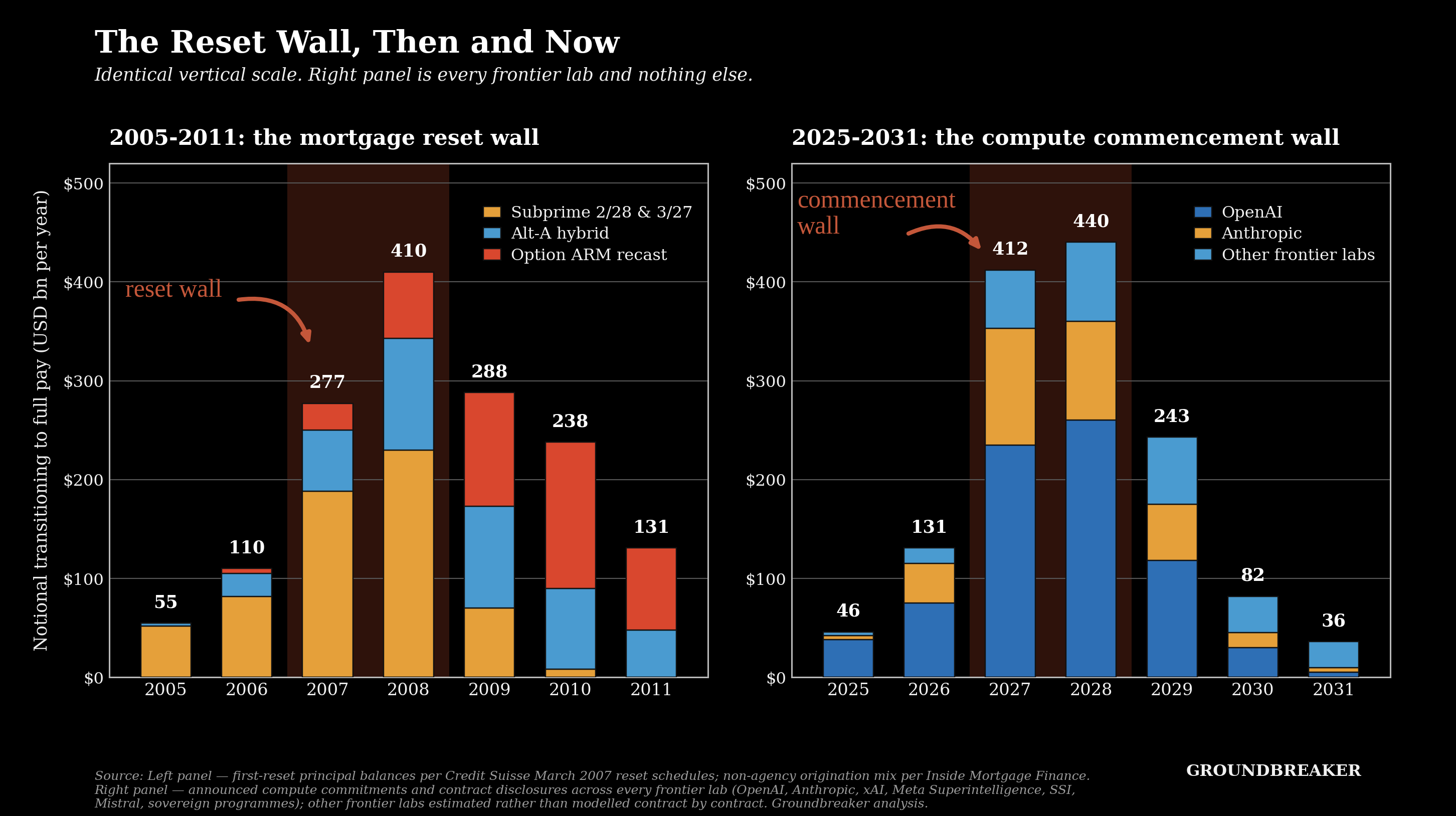
The take-or-pay compute contract serves as a financial instrument highlighting how emerging technologies can mask underlying risks. The concurrent optimism and disregard for hidden liabilities may ultimately yield sobering realizations as contracts transition from potential to reality, stressing the importance of vigilant financial evaluation.
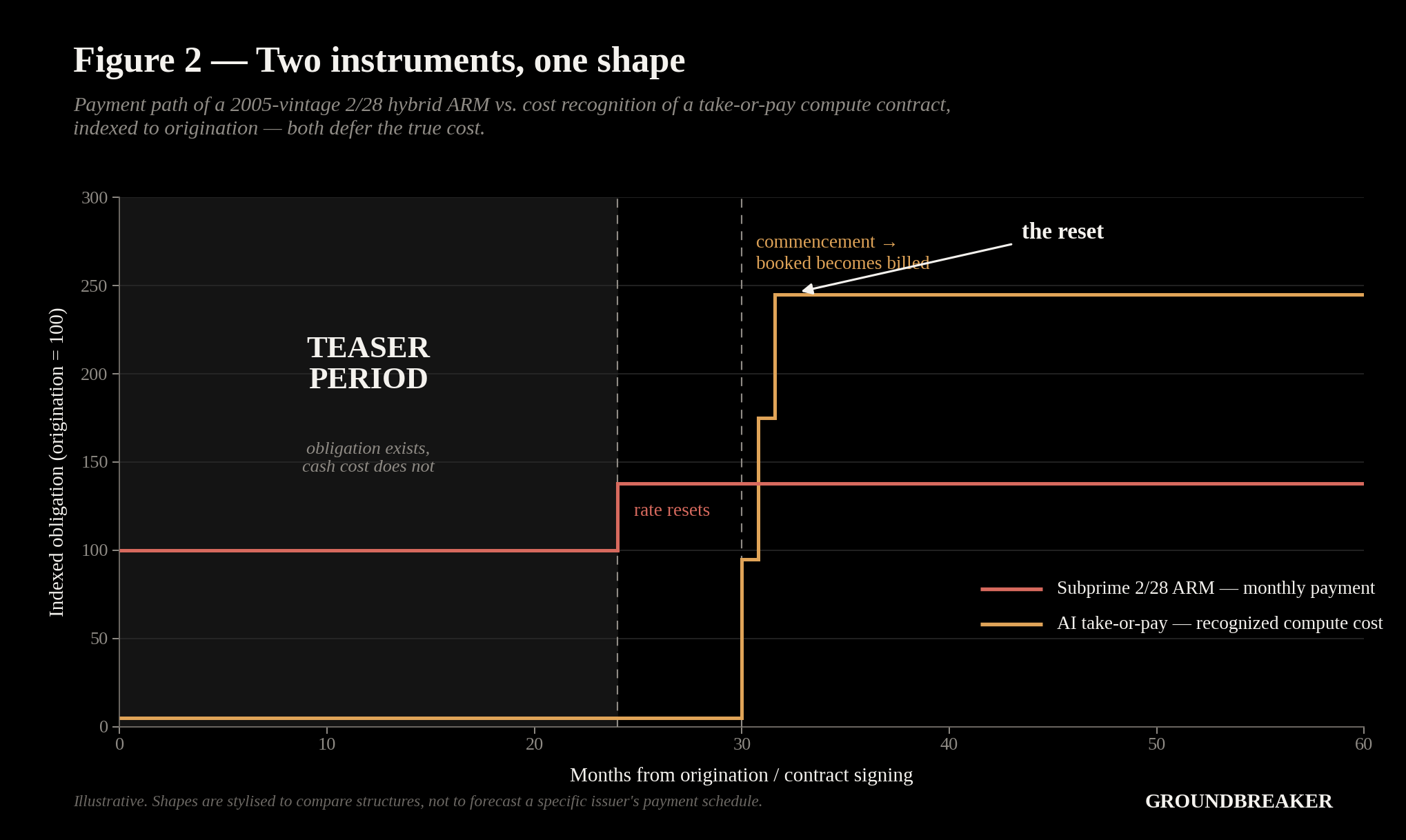
Groundbreaker meticulously details the structural behaviors inherent in these contracts. We learn that during the initial phase, while companies celebrate contracted commitments as future revenue, actual expenses remain obscured. Only when construction finishes do payment obligations crystallize, creating a shock for many companies relying on these contracts.
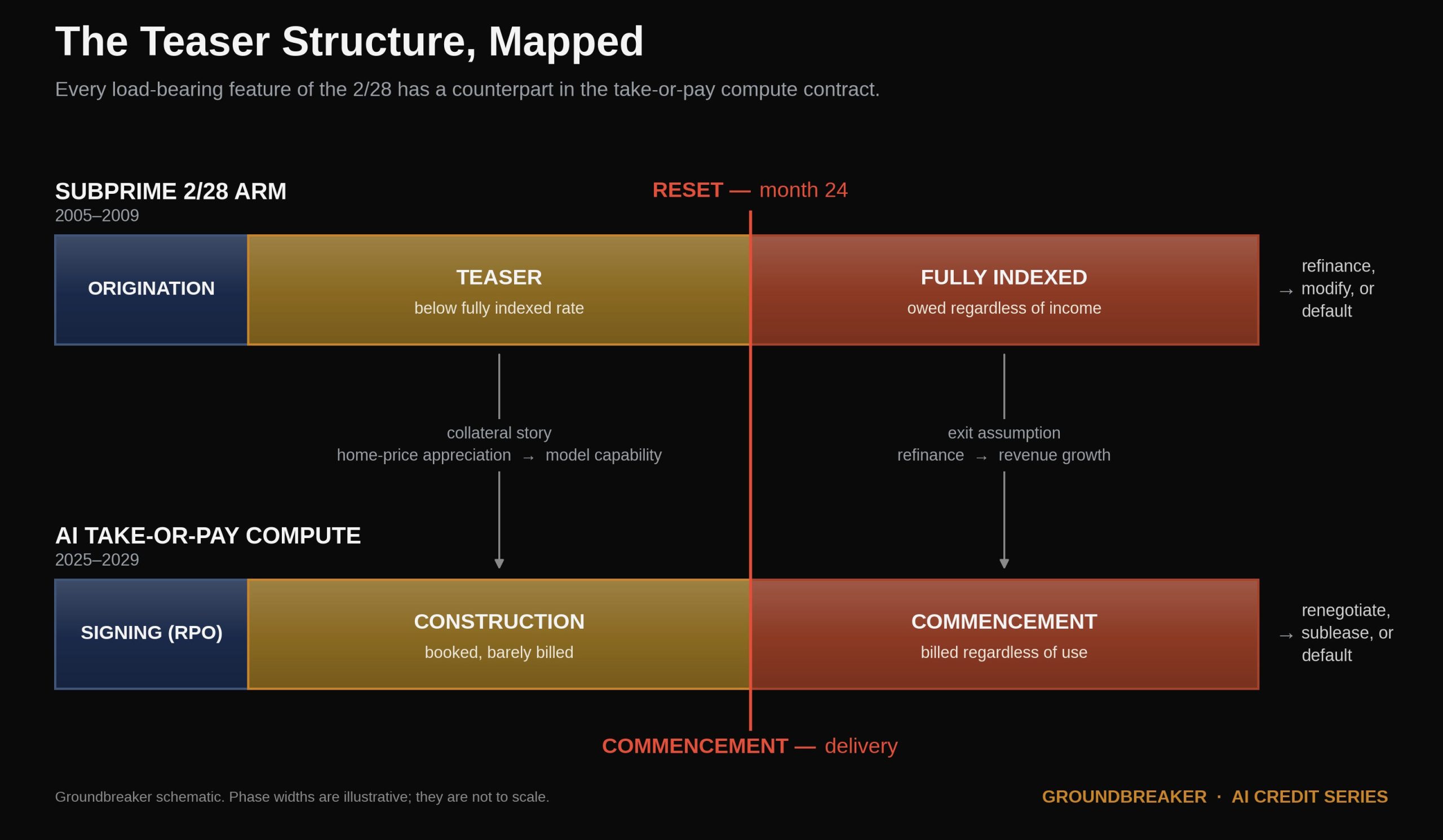
This analysis serves as a critical examination of the complexities of the AI financing landscape. As the industry prepares for impending payment obligations, careful monitoring will be essential to assess potential impacts on market dynamics and broader economic performance.
1 For the moment I am deliberately avoiding the use of industry nomenclature like “compute,” which I believe adds to the obfuscation.
2 The Roaring Twenties stock market featured high levels of margin lending and complex securitization structures, creating vulnerabilities reminiscent of current financial practices.